10 Best PromptMonitor Alternatives for AI Visibility Tracking in 2026

AI search is eating into traditional Google traffic. ChatGPT, Perplexity, Google AI Overviews, and Claude are increasingly becoming the first stop for product research and brand discovery.
If you're not tracking where your brand appears in these AI-generated answers, you're flying blind.
PromptMonitor ($29/month) has emerged as a popular solution for tracking AI visibility, but it's far from your only option. Some alternatives offer free tiers. Others provide deeper analytics. A few focus specifically on enterprise compliance.
This guide compares the 10 best PromptMonitor alternatives based on pricing, features, and which business types they serve best.
Quick comparison:
| Tool | Starting Price | Best For |
|---|---|---|
| Otterly.AI | $29/mo | AI search monitoring with citation tracking |
| Mangools AI Search Watcher | Free | Budget-conscious teams wanting basics |
| Peec AI | €89/mo | European brands needing multi-language support |
| RankShift | €49/mo | Agencies with unlimited user needs |
| Scrunch AI | $300/mo | Brands wanting source-level optimization |
| AthenaHQ | $270/mo | Competitive intelligence focus |
| Writesonic GEO | $99/mo | Teams needing content + visibility in one |
| Gauge | Custom | Action-oriented optimization |
| Profound AI | $499/mo | Enterprise with compliance requirements |
| Atomic AGI | $10/mo | Bootstrapped startups on tight budgets |
Why You Need AI Visibility Tracking
Before diving into alternatives, here's what AI visibility monitoring actually does:
The problem: When someone asks ChatGPT "What's the best project management tool for small teams?", the AI generates an answer citing various brands. If your product isn't mentioned, you're invisible to a growing segment of potential customers.
What these tools track:
- How often your brand appears in AI-generated answers
- Which prompts trigger mentions of your brand vs. competitors
- What sources AI models cite when mentioning you
- Sentiment analysis of how AI describes your brand
- Changes in visibility over time
For indie hackers and bootstrapped SaaS founders, this matters because AI search is increasingly where buyers start their research.
A study from Scrunch AI found that brands actively optimizing for AI visibility saw up to 40% increases in referral traffic.
1. Otterly.AI
Best for: Teams wanting detailed citation and link tracking alongside visibility monitoring
Pricing
- Lite: $29/month (15 prompts)
- Standard: $189/month (100 prompts)
- Premium: $489/month (400 prompts)
- Pro: $989/month (1,000 prompts)
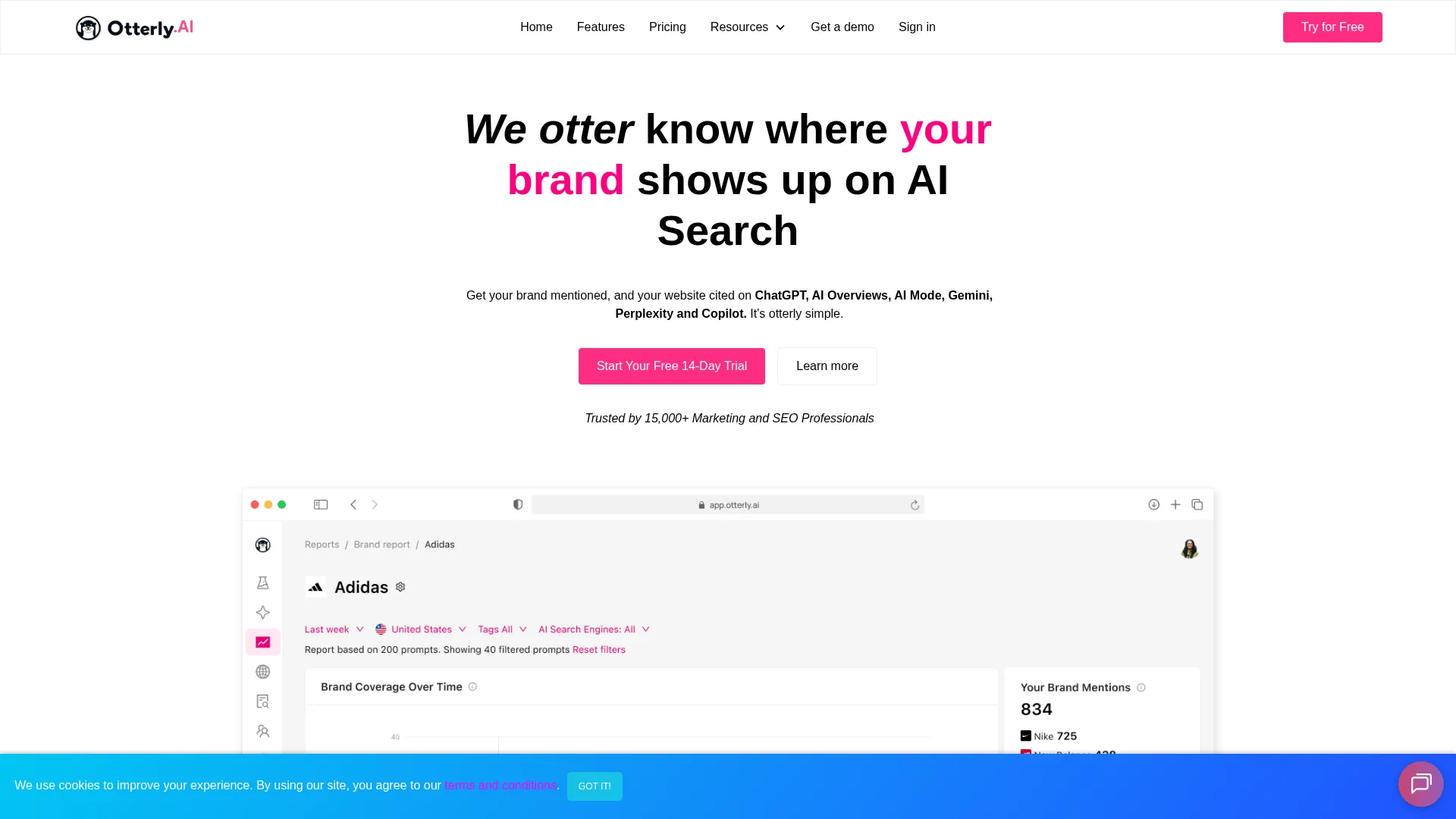
Otterly.AI pioneered a critical distinction that matters for SEO teams: the difference between being mentioned and being cited with a link.
When AI search engines like Perplexity or Google AI Overviews include your URL as a source, that's fundamentally more valuable than a passing brand mention. Otterly tracks both, giving you visibility into citation rates across different AI platforms.
Key Features
- Brand Visibility Index tracking across ChatGPT, Perplexity, Google AI Overviews, Copilot
- Source vs. Visibility distinction (links vs. mentions)
- AI Keyword Research tool for discovering what prompts trigger brand mentions
- Weekly domain ranking analytics
- GEO audit with SWOT analysis
- Competitive benchmarking
Pros:
- Used by 15,000+ marketing professionals
- Strong focus on citation/link tracking
- Clean, intuitive interface
- Regular feature updates
Cons:
- Prompt-based pricing can get expensive at scale
- Gemini and AI Mode require add-on purchases
- Learning curve for new users
Bottom line: If you care about where AI gets its information about you (the links), not just whether you're mentioned, Otterly's citation-focused approach is worth the premium over PromptMonitor.
2. Mangools AI Search Watcher
Best for: Budget-conscious teams or those wanting to test AI visibility tracking before committing
Pricing
Free with Mangools account (8 AI models included)
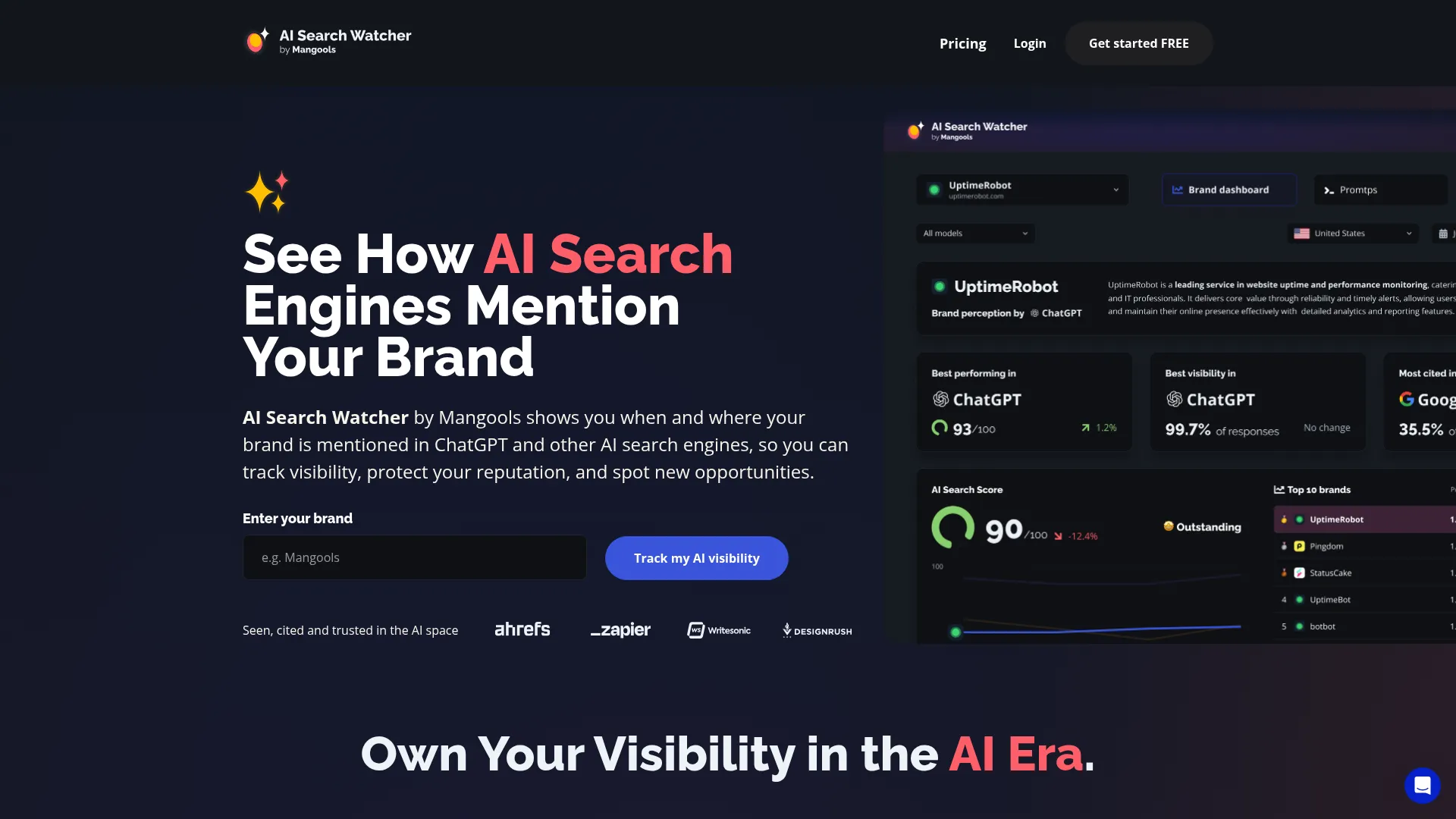
This is the only completely free AI visibility tracker with meaningful features. Mangools, known for their affordable SEO tools like KWFinder, released AI Search Watcher and AI Search Grader as free additions to their ecosystem.
Key Features
- Tracks 8 AI models: ChatGPT, Gemini, Claude, Perplexity, DeepSeek, Grok, Mistral, Llama
- AI Search Grader provides visibility scores and rankings
- Prompt suggestions tailored to your business
- Competitor side-by-side comparisons
- Runs prompts multiple times for accurate average positioning
Pros:
- Completely free (no credit card required)
- Covers more AI models than most paid competitors
- Integrates with existing Mangools SEO toolkit
- Good for validating whether AI visibility matters for your niche
Cons:
- Limited prompt volume
- Basic reporting compared to paid tools
- No advanced features like sentiment analysis or actionable recommendations
- Part of broader Mangools suite, not standalone
Bottom line: If you're a micro SaaS founder or just starting to explore AI visibility, Mangools gives you enough to understand the landscape without spending anything. Graduate to paid tools once you've validated the channel.
3. Peec AI
Best for: European brands or companies needing multi-language, multi-country monitoring
Pricing
- Starter: €89/month
- Intermediate: €199/month
- Advanced: €449/month (includes sentiment analysis)
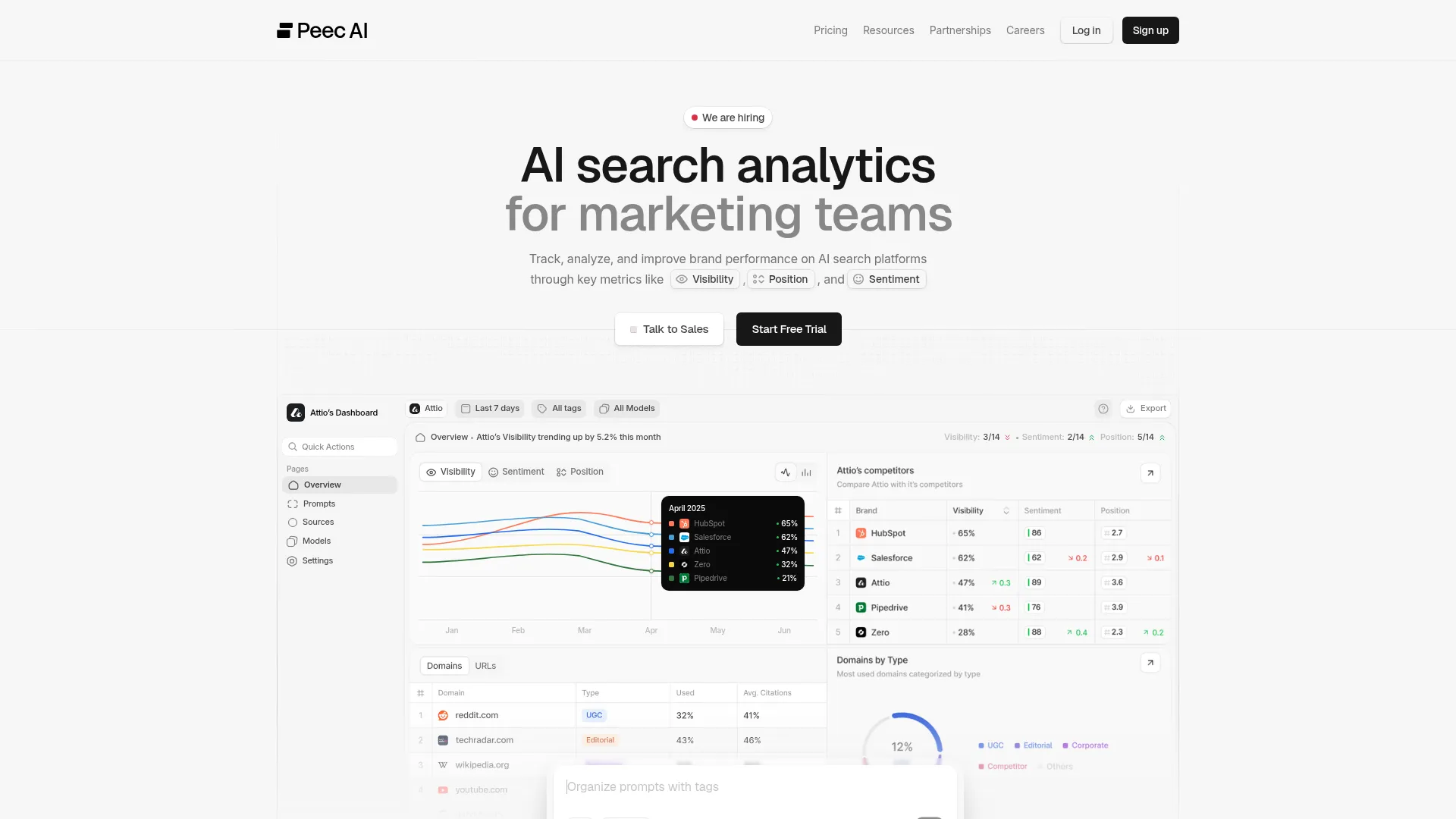
Peec AI, based in Berlin, brings a distinctly European approach to AI visibility tracking. Their standout feature is comprehensive multi-language and multi-country monitoring, supporting 115+ languages.
Key Features
- Multi-country and multi-language visibility monitoring
- Source vs. Visibility distinction (like Otterly)
- Competitive benchmarking with one-click comparison charts
- Brand sentiment tracking (on higher tiers)
- Custom alerts for visibility shifts
- Direct Slack access to support team
Pros:
- Best-in-class multilingual support
- Affordable entry pricing
- Clean, user-friendly interface
- Responsive customer support via Slack
- Flexible pricing model
Cons:
- Better at monitoring than providing optimization recommendations
- No SSO or API access
- Limited actionability—shows "what's happening" but not "what to do"
- Enterprise features lagging behind US competitors
Bottom line: If you operate in multiple markets or non-English speaking regions, Peec AI's language support makes it a natural choice. For English-only brands, other options offer more optimization guidance for similar pricing.
4. RankShift
Best for: Agencies managing multiple clients who need unlimited users and projects
Pricing
- Free trial: 7 days, 700 credits
- Starter: €49/month (5,000 credits)
- Growth: €149/month (20,000 credits)
- Accelerator: €299/month (50,000 credits)
- Big Business: €639/month (100,000 credits)
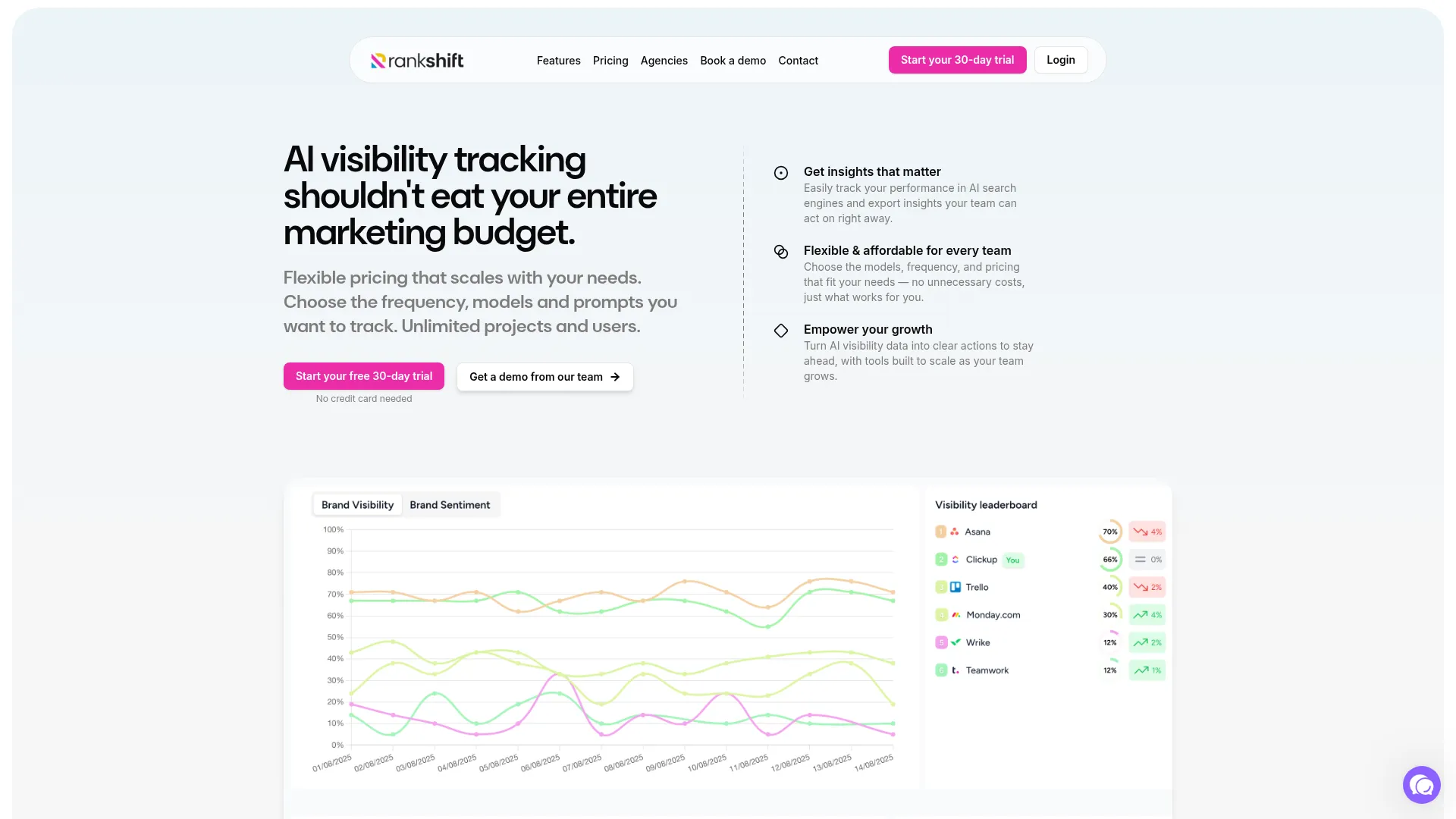
RankShift addresses a major pain point for agencies: per-seat pricing. Their credit-based model means unlimited users and projects on every plan.
Key Features
- Tracks ChatGPT, AI Overviews, AI Mode, Gemini, Claude, Mistral, Llama
- Unlimited users and projects on all plans
- Multi-workspace support for agency client management
- Personalized content and citation recommendations
- Sentiment analysis
- No geographic restrictions
Pros:
- Best pricing model for agencies
- Strong AI model coverage
- Multi-client workspace management
- 7-day free trial with no credit card
- Scalable credit-based pricing
Cons:
- Newer platform with less track record
- Limited user reviews available
- Credit system can be confusing initially
- English-only support
Bottom line: If you're an agency tired of paying per-seat fees, RankShift's unlimited user model makes it the obvious choice. The credit-based pricing scales reasonably for high-volume monitoring.
5. Scrunch AI
Best for: Brands wanting deep source-level analysis and a path to AI-optimized content
Pricing
- Starter: $300/month (350 prompts, 3 personas)
- Growth: ~$600/month
- Pro: ~$1,200/month
- Enterprise: $3,000+/month
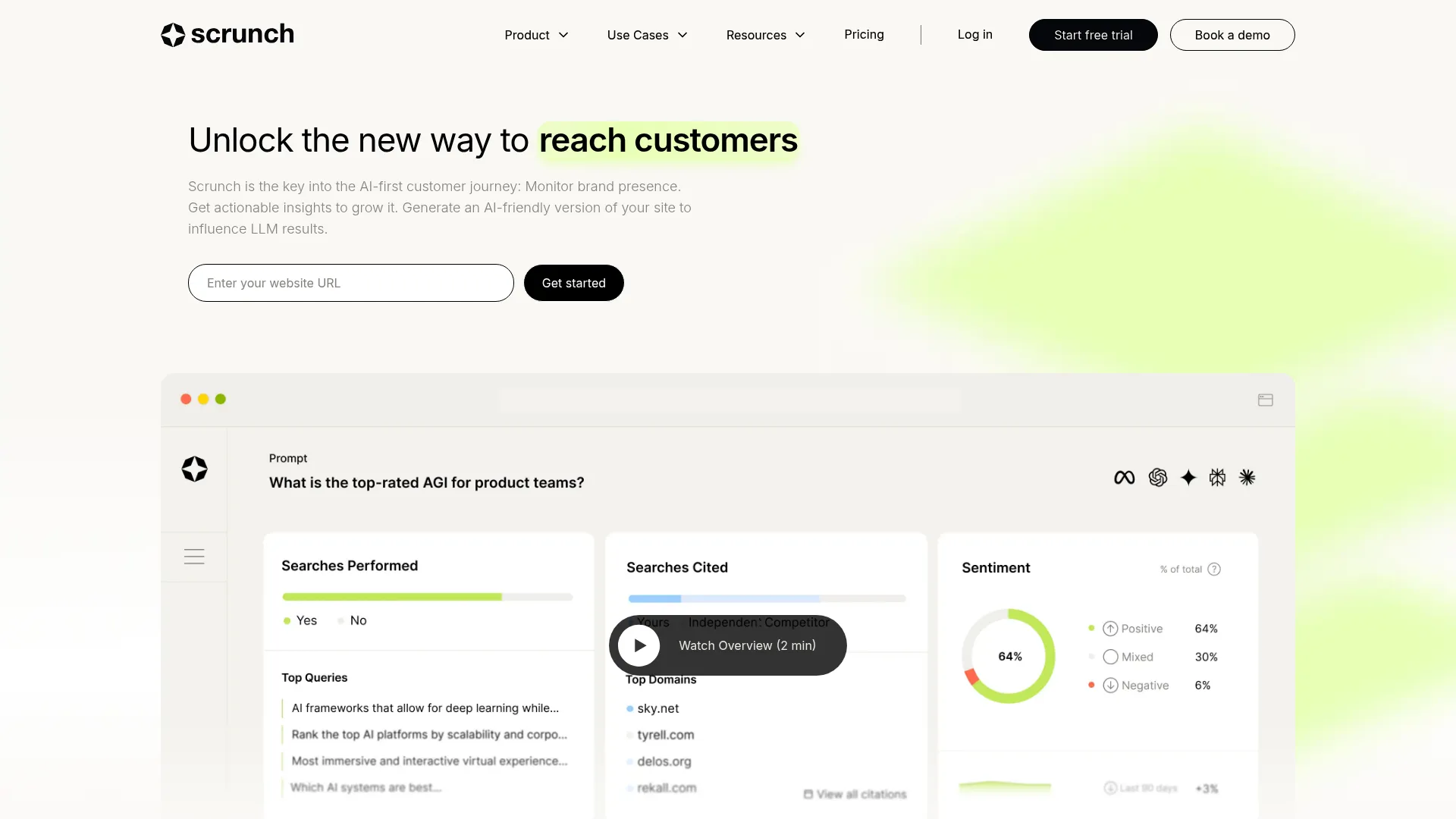
Scrunch AI raised $19M in funding (Seed + Series A) and serves 500+ brands globally. Their differentiation is the Agent Experience Platform (AXP)—infrastructure for creating AI-optimized versions of your website for LLM crawlers.
Key Features
- Three core modules: Monitoring, Insights, and Agent Experience Platform
- Persona-based analysis (how different user types see your brand)
- Source-level citation transparency
- Share of voice and competitor benchmarking
- Misinformation detection
Pros:
- Deep source analysis shows exactly what content AI uses
- Forward-thinking AXP platform (though still in waitlist)
- Customers report 40% boost in referral traffic
- Strong sentiment analysis
- Good UI and filtering options
Cons:
- Expensive entry point ($300/month)
- No free trial
- Tracking occasionally skips days for certain LLMs
- Reporting/export capabilities limited
- AXP feature not yet available
Bottom line: Scrunch is for brands ready to invest seriously in AI visibility as a channel. The source-level insights help you understand why AI says what it says about you, enabling targeted content improvements.
6. AthenaHQ
Best for: Teams needing competitive intelligence and AI blindspot detection
Pricing
- Lite: $270/month (3,500 credits, billed annually)
- Growth: $545/month
- Enterprise: $2,000+/month
AthenaHQ, backed by Y Combinator, positions itself as an action-oriented platform. Their AI Blindspot Detection feature identifies topics where you're invisible but shouldn't be.
Key Features
- AI Visibility Tracking across ChatGPT, Gemini, Perplexity, DeepSeek, AI Overviews
- AI Blindspot Detection
- Content Gap Identification
- Competitive share of voice analysis
- AI-powered recommendation engine
- Citation rate and mention rate metrics
Pros:
- Y Combinator backing adds credibility
- Strong competitive intelligence features
- Actionable recommendations (not just data)
- Clean, granular interface
- Good for identifying optimization opportunities
Cons:
- Credit-based pricing leads to unexpected costs at scale
- Higher entry price than PromptMonitor
- Steeper learning curve
- Some sentiment/competitive features too basic
- Self-serve users limited to basic tools
Bottom line: AthenaHQ's strength is turning visibility data into action. If you're overwhelmed by "so what now?" after seeing your AI visibility stats, their recommendation engine helps prioritize improvements.
7. Writesonic GEO
Best for: Teams wanting AI visibility tracking bundled with content creation tools
Pricing
- Standard: $99/month (includes Brand Presence Tracking)
- Advanced: $499/month (full GEO access)
- Enterprise: $1,499+/month
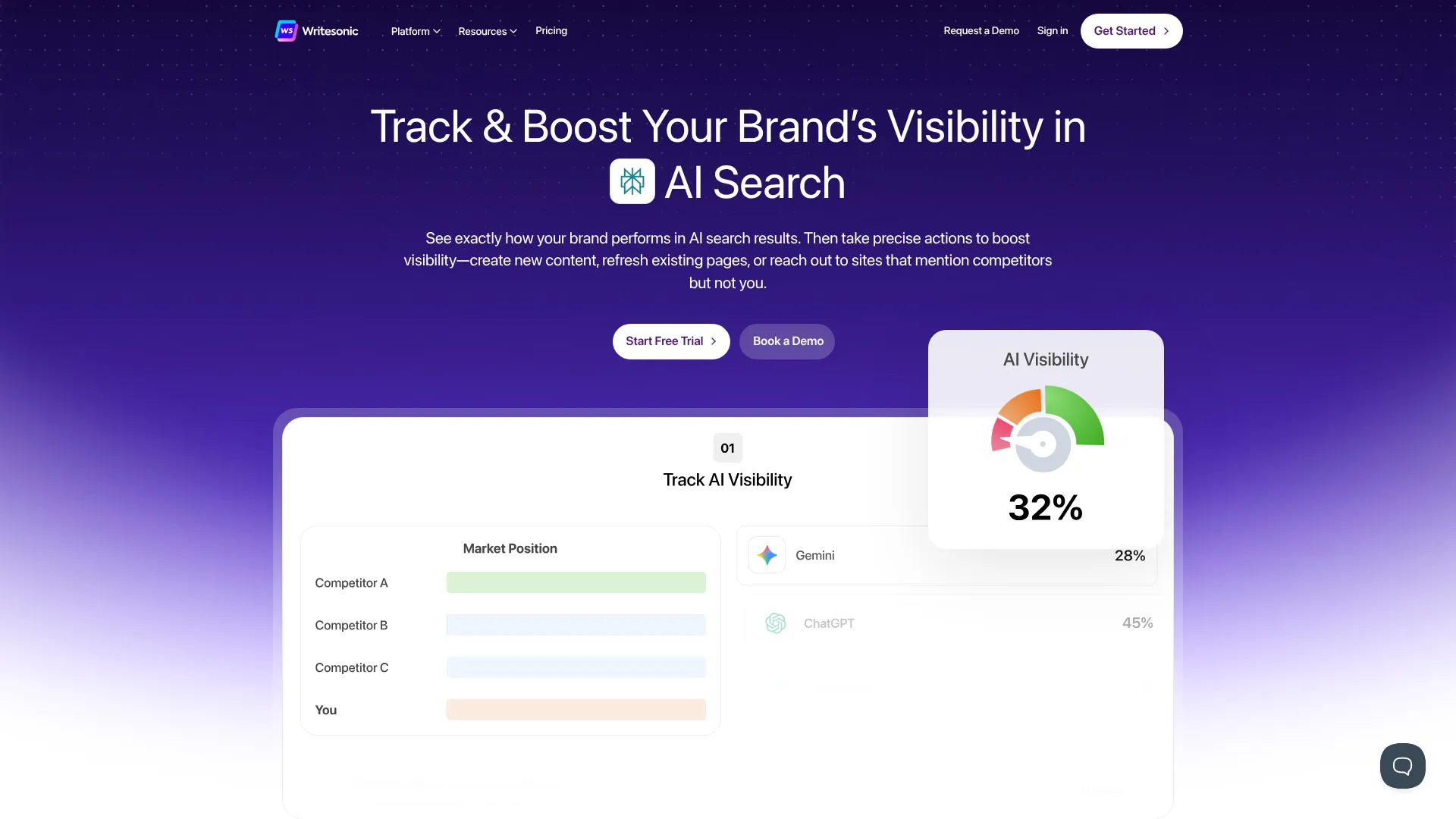
Writesonic packages AI visibility tracking (GEO) within their broader AI content platform. If you're already using AI writing tools, consolidating into Writesonic means one less subscription.
Key Features
- Tracks ChatGPT, Gemini, Perplexity, Claude, and 10+ platforms
- Prompt Explorer for discovering trending AI queries
- AI Prompt Search Volume (like keyword research for AI)
- Sentiment analysis of brand mentions
- Content creation and optimization tools bundled
- Site audit integration
Pros:
- All-in-one platform (content + GEO)
- Prompt search volume data unique to Writesonic
- Competitive pricing for bundled features
- 20% annual billing discount
- Regular feature updates
Cons:
- GEO only available on Standard+ plans ($99+)
- 100-200 prompt limits on non-Enterprise plans
- Jack-of-all-trades risk—may not be best at any single feature
- Less specialized than pure GEO tools
Bottom line: If you already use or need AI content tools, Writesonic's bundled approach offers good value. Pure GEO tools may be more focused, but Writesonic covers more ground for similar pricing.
8. Gauge
Best for: Action-oriented teams wanting prioritized optimization recommendations
Pricing
Custom (moderate range, estimated $200-500/month for base plans)
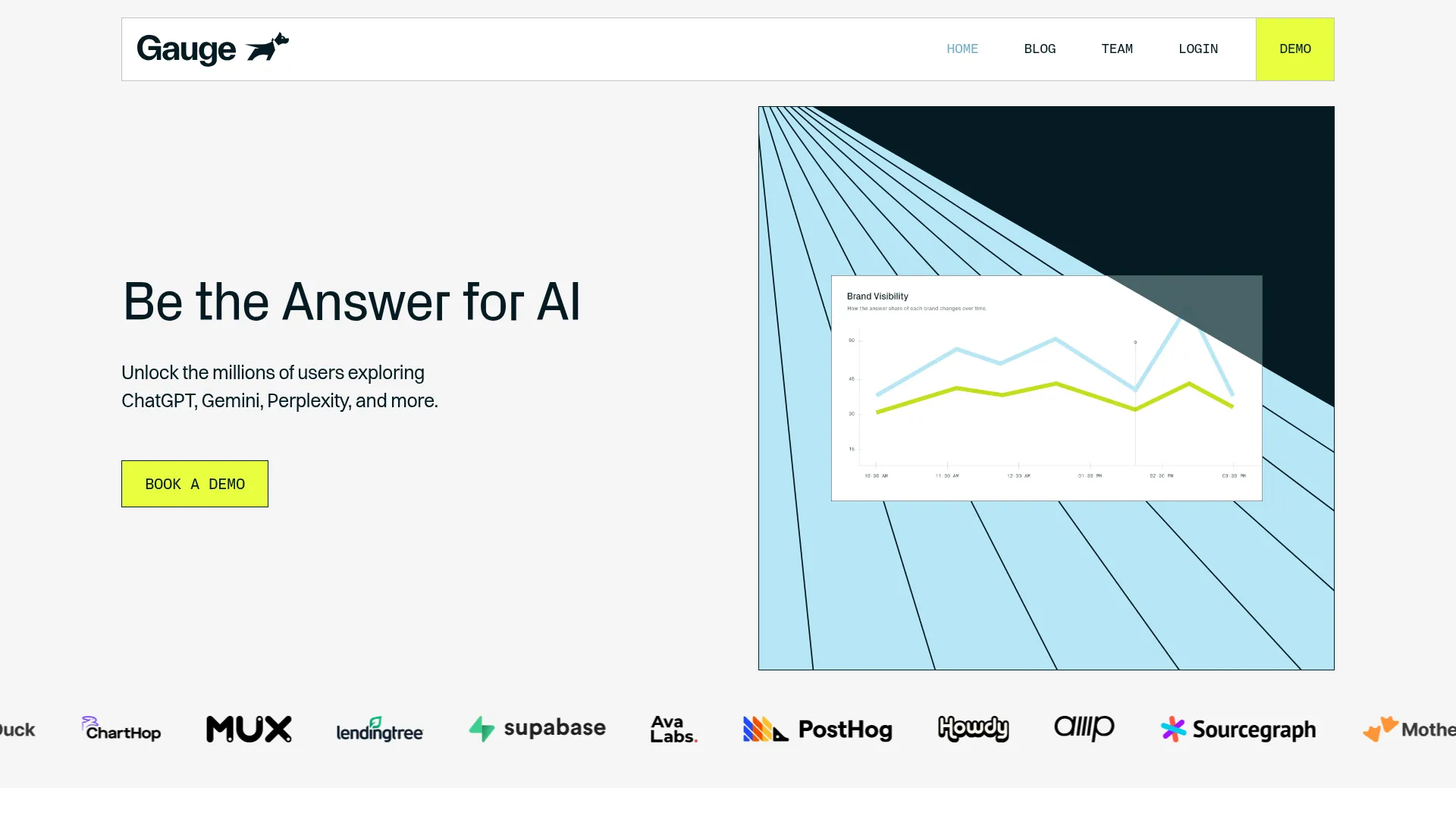
Gauge, another Y Combinator startup, emphasizes turning visibility data into specific actions. Their Action Center surfaces a prioritized list of highest-impact content and citation opportunities.
Key Features
- Tracks ChatGPT, Claude, Gemini, Perplexity, Copilot, AI Mode, AI Overviews
- Action Center with prioritized recommendations
- Gap Analysis showing where you're missing from AI answers
- Citation Analysis revealing which sources AI relies on
- Competitor Analysis with brand comparison
- Mention Rate vs. Citation Rate breakdown
Pros:
- Strong focus on actionability
- Claims 3-5x visibility uplift within first month
- Case studies show 2-5x growth in weeks
- Good onboarding and support
- Reasonable pricing for feature set
Cons:
- No public pricing (requires demo)
- Still newer with limited user reviews
- Custom pricing creates uncertainty
- Less established than competitors
Bottom line: Gauge is for teams who want their AI visibility tool to tell them exactly what to fix. The Action Center approach reduces analysis paralysis common with data-heavy platforms.
9. Profound AI
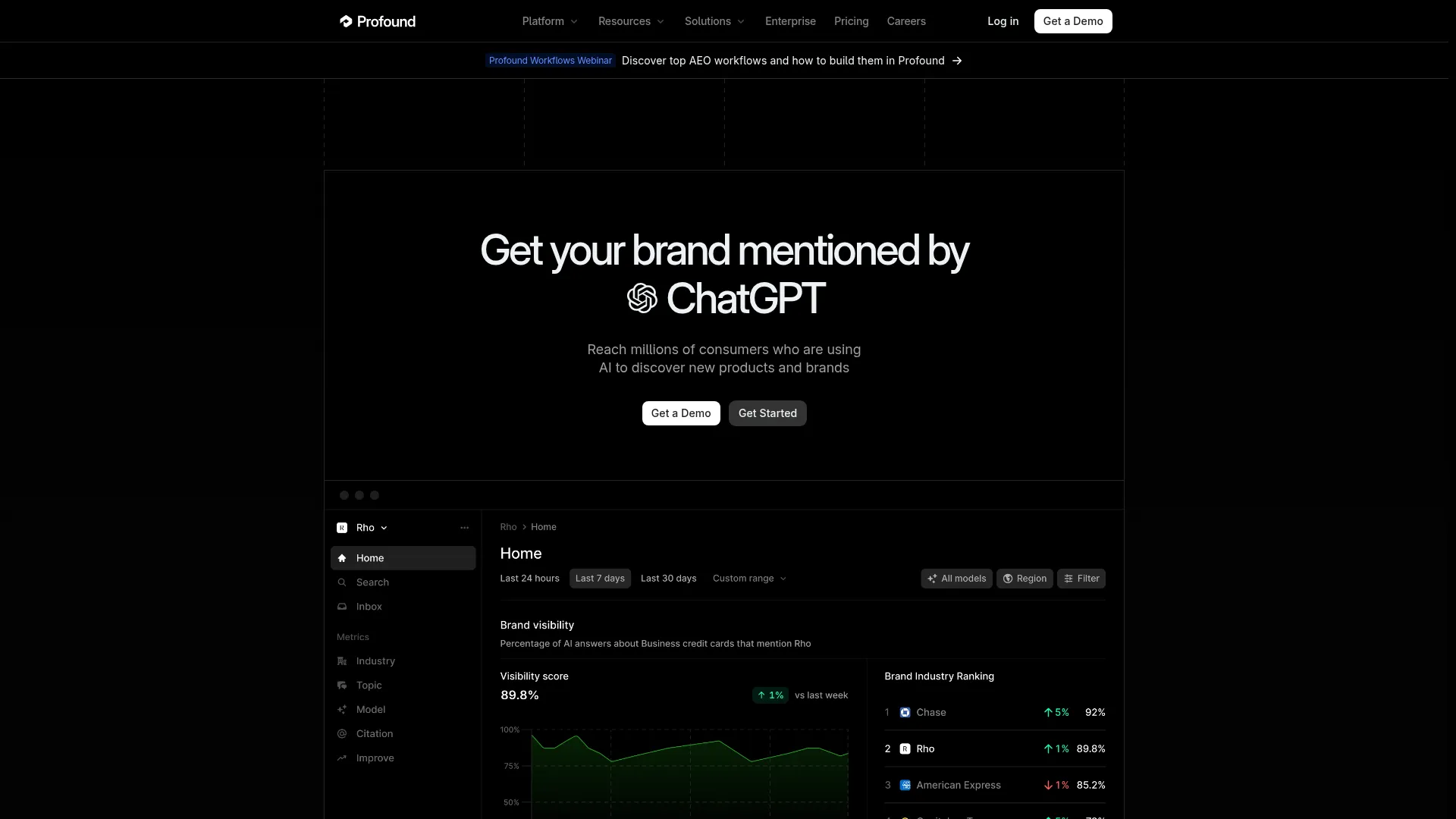
Best for: Enterprise brands requiring compliance, security, and white-glove support
Pricing
- Lite: $499/month (4 engines, 200 prompts, billed annually)
- Enterprise: Custom pricing (typically several thousand/month)
Profound AI raised $35M in Series B funding and works with brands like MongoDB and Ramp. They're the clear enterprise leader with SOC 2 Type II compliance, SSO, and dedicated customer success managers.
Key Features
- 10+ AI engines on Enterprise: ChatGPT, Perplexity, Copilot, AI Overviews, AI Mode, Gemini, Claude, Meta AI, Grok, DeepSeek
- Daily monitoring frequency
- SOC 2 Type II compliance
- Enterprise SSO integration
- Conversation Explorer for deep AI conversation analysis
- Multi-market and multi-language support
- Dedicated customer success manager
Pros:
- Most comprehensive enterprise features
- Industry-leading compliance (SOC 2)
- White-glove support and onboarding
- Broadest AI engine coverage
- Works with Fortune 500 companies
Cons:
- Expensive ($499/month minimum)
- Lite plan limited to 4 engines and 200 prompts
- Enterprise pricing not transparent
- Overkill for small businesses
Bottom line: If you need AI visibility tracking that passes enterprise security reviews, Profound is the safe choice. The premium pricing reflects enterprise support and compliance features smaller tools can't match.
10. Atomic AGI
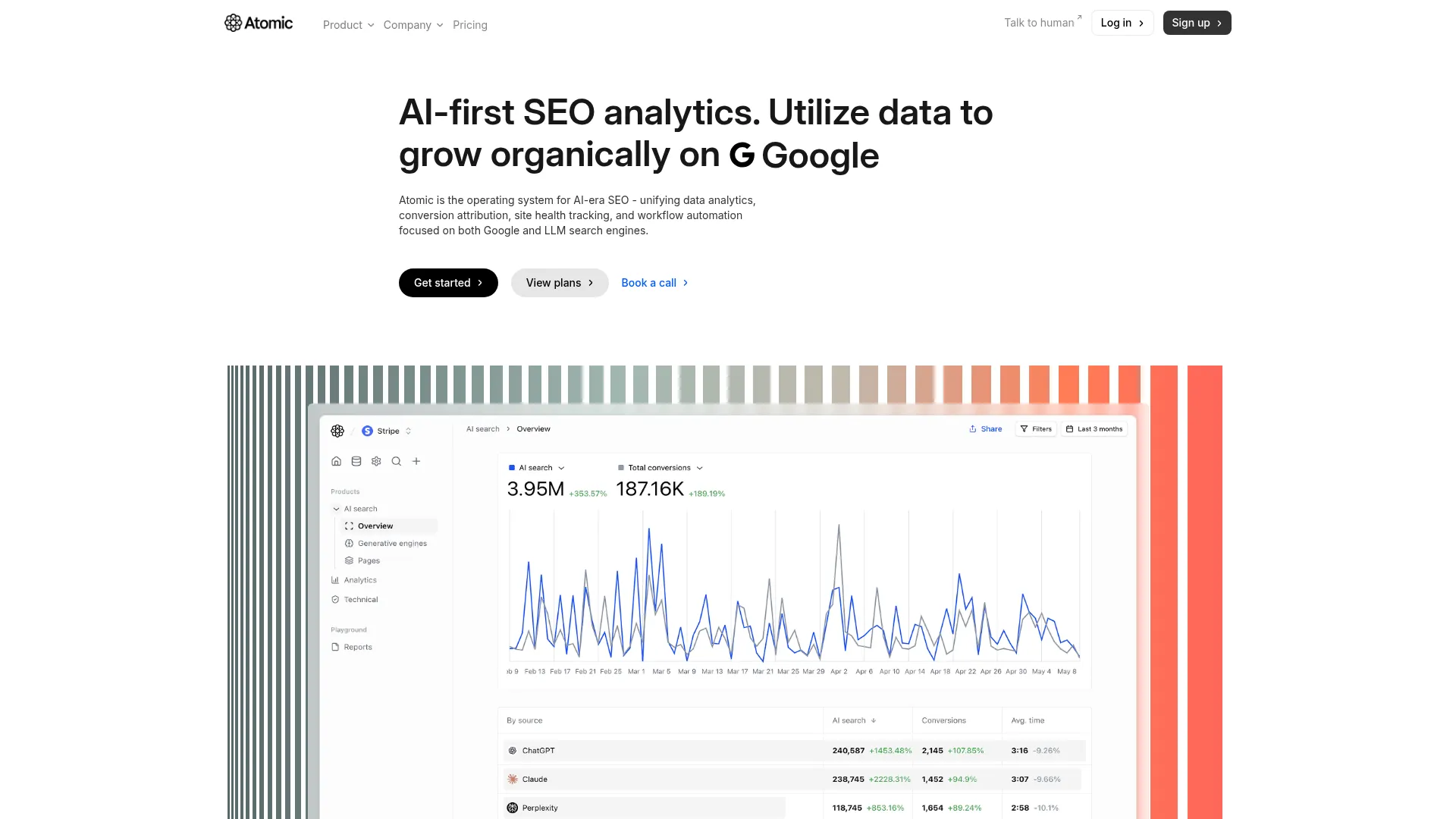
Best for: Bootstrapped startups wanting the cheapest possible entry point
Pricing
Starting at $10/month
Atomic AGI positions itself as the budget option for teams just starting with AI visibility tracking. At $10/month, it's 3x cheaper than PromptMonitor.
Key Features
- Basic AI visibility tracking
- Core LLM coverage (ChatGPT, Claude, Perplexity)
- Brand mention monitoring
- Competitor comparisons
Pros:
- Cheapest option on the market
- Low-risk way to test AI visibility tracking
- Simple, no-frills interface
- Good for validation before investing more
Cons:
- Limited features compared to competitors
- Smaller team with less support
- Fewer AI models covered
- May outgrow quickly
Bottom line: Atomic AGI is the starting point for bootstrapped founders who want to understand AI visibility without significant investment. Use it to validate the channel, then upgrade when you need deeper insights.
How to Choose the Right Tool
Consider your budget
| Budget | Best Options |
|---|---|
| Free | Mangools AI Search Watcher |
| Under $50/mo | Atomic AGI, PromptMonitor |
| $50-200/mo | Otterly.AI, Peec AI, RankShift, Writesonic |
| $200-500/mo | AthenaHQ, Scrunch AI, Gauge |
| $500+/mo | Profound AI |
Consider your use case
For agencies: RankShift (unlimited users) or AthenaHQ (competitive intelligence)
For enterprises: Profound AI (compliance) or Scrunch AI (source optimization)
For bootstrapped startups: Mangools (free) or Atomic AGI ($10/month)
For SEO teams: Otterly.AI (citation tracking) or Writesonic (bundled tools)
For international brands: Peec AI (115+ languages)
Consider what you actually need
Most teams should start with basic monitoring before investing in optimization tools:
- Validation phase: Use Mangools (free) or Atomic AGI ($10) to see if AI visibility matters for your niche
- Monitoring phase: Graduate to Otterly or Peec for consistent tracking
- Optimization phase: Add tools like Gauge or AthenaHQ for actionable recommendations
The Reality of AI Visibility Tools
A key point from Otterly's team: "AI optimization software doesn't directly improve visibility—the actual work happens through traditional SEO, brand awareness campaigns, and building backlinks."
These tools help you measure and identify opportunities, but the improvement comes from:
- Creating authoritative content that AI sources want to cite
- Building backlinks from sites AI models trust
- Ensuring your website is technically crawlable by AI bots
- Publishing helpful, accurate information about your brand
If you're tracking visibility but not actively creating content, you're just watching numbers without changing them.
Key Takeaways
- PromptMonitor is good value at $29/month, but alternatives exist for every budget and use case
- Free options work for validation—Mangools lets you test the waters before committing
- Citation tracking matters more than mentions—tools like Otterly distinguish between links and brand mentions
- Agency pricing models vary wildly—RankShift's unlimited users vs. per-seat alternatives can mean 10x cost differences
- Enterprise needs enterprise tools—Profound's SOC 2 compliance and SSO isn't optional for large companies
- Start simple, upgrade when needed—validate the channel before investing heavily
- Tools measure, not improve—actual visibility gains come from content and SEO work
Ready to Build?
AI visibility is becoming as important as traditional SEO for brand discovery. Whether you start with a free tool or invest in enterprise analytics, the key is understanding where you stand in AI-generated answers.
Join 3000+ indie hackers getting weekly case studies of founders who've built profitable SaaS businesses.
Subscribe to Superframeworks →
Last updated: January 2026
Related Guides

11 Best AI & Vibe Marketing Tools in 2026 (Tested) | Superframeworks
Compare 11 proven AI and vibe marketing tools with verified pricing. From Jasper to Gumloop to Manus — find the right AI stack for your marketing team.

5 Best Content Repurposing Tools to Grow on Social Media with AI
In today's fast-paced digital world,

Top 10 Best LLM Brand Visibility Tools in 2025
While you've been optimizing for Google's crawler, AI models have been learning to read differently. That's the shift you're feeling. We asked one question for testing these tools- what's the least effort for maximum AI visibility impact? And what are the points that matter. Check out the guide to find out