Free Tool
Free Headline Analyzer Tool
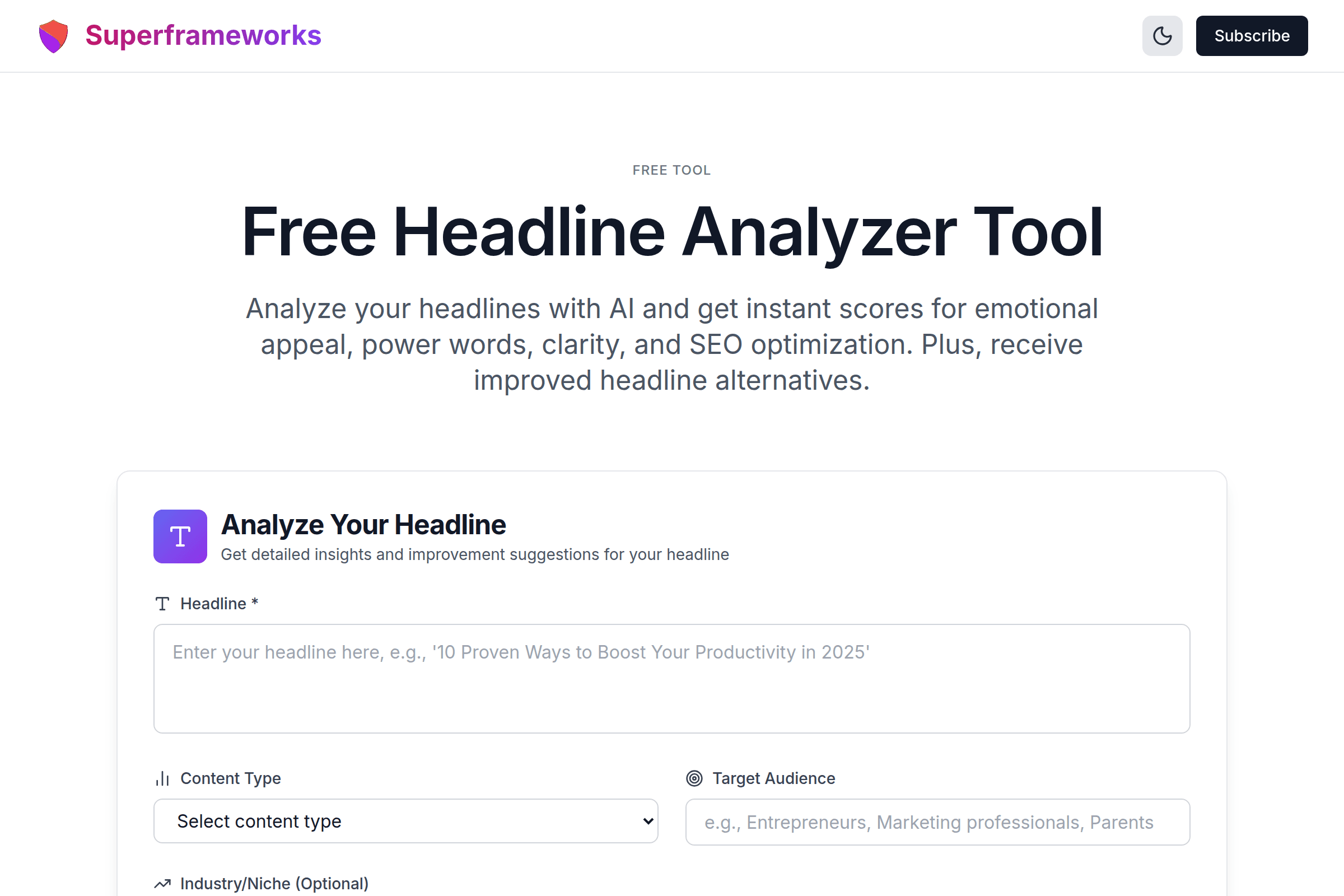
Analyze your headlines with AI and get instant scores for emotional appeal, power words, clarity, and SEO optimization. Plus, receive improved headline alternatives.
Analyze Your Headline
Get detailed insights and improvement suggestions for your headline
Detailed Scoring
Get comprehensive scores for emotional appeal, power words, clarity, and SEO optimization.
AI-Powered Alternatives
Receive 5 improved headline variations with explanations of what makes each one better.
Actionable Insights
Get specific recommendations for improving your headline based on expert copywriting principles.
What You'll Get From Our Headline Analyzer
Overall Score (0-100)
Get an instant overall score that tells you how effective your headline is at grabbing attention and driving clicks.
Emotional Appeal Analysis
Understand how well your headline connects emotionally with readers and triggers curiosity or desire.
Power Words Detection
Discover which persuasive power words you're using and get suggestions for adding more compelling language.
Clarity Score
Learn how clear and understandable your message is. Avoid confusing jargon and communicate value instantly.
SEO Optimization Score
Get insights on headline length, keyword placement, and search intent alignment for better rankings.
5 Improved Alternatives
Receive AI-generated improved versions of your headline with explanations of what makes each one better.
How It Works
Enter Your Headline
Paste your headline, title, or subject line that you want to analyze and improve.
Add Context (Optional)
Specify content type, target audience, and industry for more tailored analysis.
AI Analyzes
Our AI evaluates emotional appeal, power words, clarity, SEO, and overall effectiveness.
Get Results
Review detailed scores, insights, and improved headline alternatives instantly.
Tips for Writing Great Headlines
Use Numbers and Lists
Headlines with numbers (like "7 Ways" or "10 Tips") perform 36% better than those without. They set clear expectations and promise specific value.
Include Power Words
Words like "proven," "ultimate," "secret," "transform," and "essential" trigger emotional responses and increase click-through rates.
Keep It Under 60 Characters
For SEO, aim for 50-60 characters so your headline displays fully in search results without being cut off.
Create Curiosity Gaps
Tease valuable information without giving everything away. Make readers want to click to learn more.
Make It Specific
Vague headlines don't convert. Be specific about what readers will learn or gain. "How to Start a Blog" vs. "How to Start a Profitable Blog in 30 Minutes."
Address Your Audience
Use "you" and "your" to speak directly to readers. Make it personal and relevant to their needs.
Test Multiple Versions
Always write at least 5-10 headline variations and test them. Use our analyzer to compare different options.
Front-Load Keywords
Place important keywords at the beginning of your headline for better SEO and immediate impact.
Who Should Use This Headline Analyzer?
Perfect for anyone who wants to write headlines that grab attention and drive results.
Content Writers
Write blog titles, article headlines, and content that ranks higher and gets more clicks.
- Optimize blog post titles for SEO
- Increase organic click-through rates
- Learn what makes headlines effective
Marketers
Craft high-converting ad copy, email subject lines, and landing page headlines.
- Improve email open rates
- Boost ad click-through rates
- Optimize landing page conversions
Social Media Managers
Create attention-grabbing social media posts and YouTube video titles that drive engagement.
- Increase social media engagement
- Optimize YouTube video titles
- Create viral-worthy headlines
Master the Art of Headline Writing
Join our newsletter for weekly tips on copywriting, content marketing, and creating headlines that convert.
Why Your Headline Is the Most Important Element
80% of People Read Headlines, Only 20% Read the Rest
According to legendary copywriter David Ogilvy, 8 out of 10 people will read your headline, but only 2 out of 10 will read the rest of your content. Your headline is the first—and often only—impression you make. It determines whether someone clicks, opens, or scrolls past.
Headlines Directly Impact Your Bottom Line
A great headline can increase click-through rates by 500% or more. For email marketing, your subject line is the difference between a 10% open rate and a 40% open rate. For blog posts, it determines whether you get 100 views or 10,000 views. Small changes in your headline can have massive impacts on traffic, engagement, and revenue.
SEO Starts With Your Headline
Search engines use your headline as one of the most important ranking factors. A well-optimized headline with the right keywords can be the difference between ranking on page 1 or page 10. But it's not just about keywords—search engines also look at click-through rates, which are directly influenced by how compelling your headline is.
Great Headlines Are Written, Not Born
Professional copywriters spend hours crafting the perfect headline. They write dozens of variations, test different angles, and optimize every word. Our headline analyzer tool helps you do the same in minutes. Get instant feedback on what's working, what's not, and how to make your headlines irresistible.
See the Headline Analyzer in action
Explore Related Tools
Discover more tools to help you build and grow your business
AI SaaS Ideas Generator
Generate innovative AI-powered SaaS ideas based on market trends and opportunities.
Blog Ideas Generator
Generate engaging blog post ideas to drive traffic and establish thought leadership.
Slogan Generator
Create catchy slogans and taglines that capture your brand essence and resonate with customers.
Tweet Generator
Generate engaging tweets for Twitter/X with hashtags, emojis, and viral-worthy content strategies.
Frequently Asked Questions
What makes a good headline score?
A good headline score is 70 or above. Scores of 80+ are considered excellent. However, the score is just one factor—what matters most is whether your headline resonates with your specific audience and achieves your goals (clicks, opens, engagement). Use the detailed breakdown to understand which areas to improve.
How does the headline analyzer work?
Our AI analyzes your headline across multiple dimensions: emotional appeal (does it trigger curiosity or desire?), power words (persuasive language), clarity (how easy is it to understand?), and SEO optimization (length, keywords, search intent). It then provides a comprehensive score and specific recommendations for improvement.
What are power words in headlines?
Power words are persuasive words that trigger emotional or psychological responses. Examples include "proven," "secret," "ultimate," "essential," "transform," "exclusive," and "guaranteed." They make headlines more compelling and increase click-through rates. Our analyzer detects power words in your headline and suggests additional ones you could use.
What's the ideal length for a headline?
For SEO, aim for 50-60 characters so your headline displays fully in Google search results. For social media, keep it under 100 characters for best engagement. Email subject lines should be 6-10 words or 40-50 characters. However, clarity and value matter more than strict character counts—never sacrifice your message just to hit a number.
Should I use numbers in my headlines?
Yes! Headlines with numbers consistently outperform those without. Numbers set clear expectations ("7 tips" promises exactly 7 tips), make content feel more scannable, and attract attention. Odd numbers (7, 5, 9) tend to perform slightly better than even numbers. Lists and numbered headlines are especially effective for how-to content and tips.
How can I improve my headline's emotional appeal?
Emotional appeal comes from triggering curiosity, desire, fear, or urgency. Use power words, ask questions, make bold promises, or hint at exclusive information. Instead of "Ways to Save Money," try "7 Secret Ways to Save $10,000 This Year (Even If You're Broke)." The second version creates curiosity, uses numbers, includes a power word ("secret"), and addresses a specific pain point.
What's the difference between a headline and a title?
The terms are often used interchangeably, but technically: a headline is designed to grab attention and drive clicks (especially for ads, emails, and social media), while a title is more descriptive and informational (like an article or book title). In practice, your blog post title should function like a headline—it needs to both describe the content AND make people want to click.
Can I use this for email subject lines?
Absolutely! Email subject lines are headlines for your emails. The same principles apply—they need to be clear, emotionally engaging, and create curiosity. Select "Email subject line" as your content type when analyzing to get tailored feedback. Our analyzer will help you optimize for open rates and avoid spam trigger words.
How many headline variations should I test?
Professional copywriters write 25-50 headlines before choosing the best one. At minimum, create 5-10 variations and use our analyzer to compare them. Test different angles, word choices, and structures. Even small changes like adding a number or power word can significantly impact performance. The headline alternatives we provide give you a great starting point.
Is this headline analyzer free to use?
Yes! Our headline analyzer is completely free with no limits. No sign-up required, no hidden costs. We built this tool to help content creators, marketers, and business owners write better headlines. Analyze as many headlines as you want and use the insights to improve your content marketing results.