Lovable vs Bolt.new vs v0 (2026): Which AI App Builder Should You Use?
Three of the biggest AI app builders, compared. Lovable for full-stack SaaS, Bolt.new for framework-flexible builds, v0 for Vercel-native Next.js. Honest pricing, trade-offs, and the right pick for your stack.

Quick Verdict
Best for shipping full SaaS MVPs
Lovable
Auth + Supabase + Stripe scaffolded by default
Best for framework flexibility
Bolt.new
React, Vue, Svelte, Next, Astro — any JS stack
Best for Vercel / Next.js teams
v0
Native Vercel deploy, shadcn/ui by default
Three AI app builders dominate the indie hacker and solo-founder conversation in 2026: Lovable, Bolt.new, and v0. They all turn prompts into deployable apps — but they optimize for very different jobs.
Lovable is the most full-stack: it wires up auth, a Supabase database, and Stripe by default, so a solo founder can go from idea to paying users in a weekend. Bolt.new is the most framework-flexible, running an in-browser Node environment that supports any JS stack. v0 is the most Vercel-native, with the cleanest code output and one-click deploys to the Vercel platform.
This comparison covers where each wins, where they overlap, and how to pick the right one for your stack.
Three builders, head to head
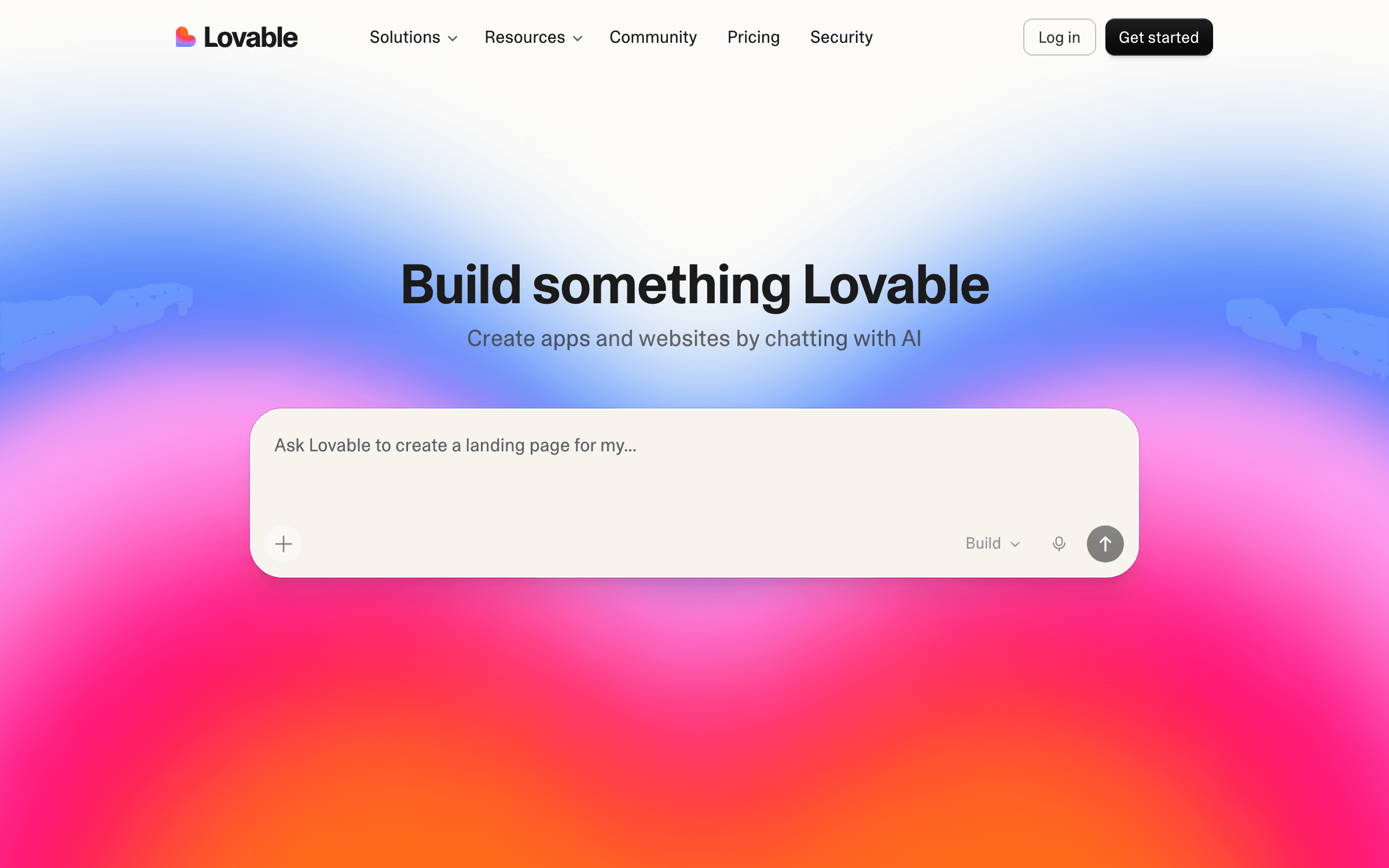
A full-stack AI app builder that generates React front-ends wired into a Supabase back-end. Ships with auth, database, file uploads, and Stripe integration out of the box — the fastest way to go from idea to a deployed SaaS MVP in one tool.
Best for: Solo founders shipping full SaaS MVPs fast
Pros
- Genuinely full-stack: auth, database, storage, payments wired in by default
- Supabase integration is deep — tables, RLS, and queries auto-scaffolded
- GitHub sync with two-way editing, so you can drop into code when needed
- Stripe + Resend integrations mean you can go from idea to paying users in a day
Cons
- Credits-based pricing gets expensive for iterative, multi-prompt work
- Locked into React + Supabase — limited flexibility for other stacks
- Generated code quality varies; larger projects need human cleanup
- Teams plan adds per-seat cost that stacks for collaborators
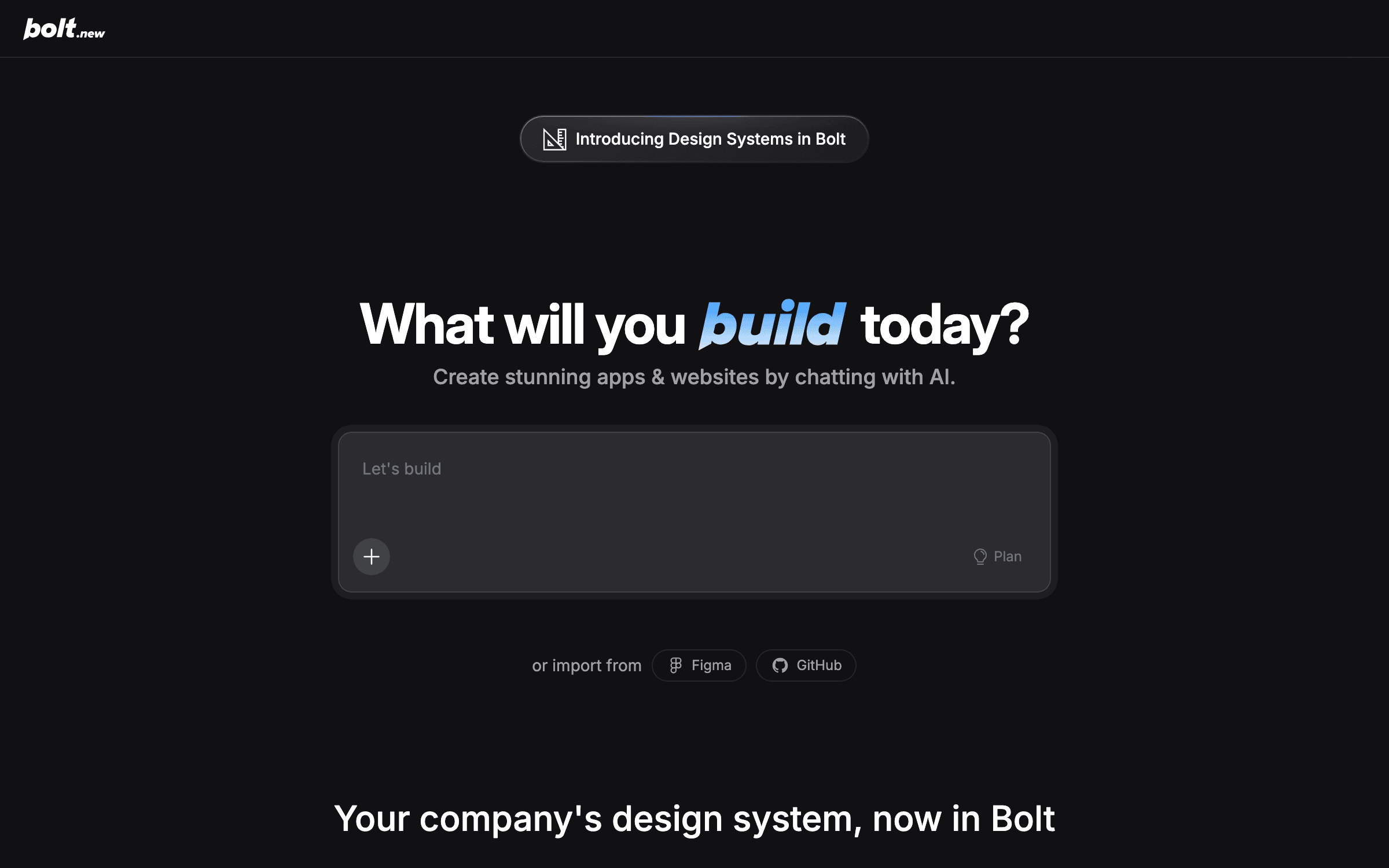
StackBlitz’s in-browser full-stack AI builder. Runs a complete Node environment via WebContainers, so it can install packages, run dev servers, and execute any JS framework — React, Vue, Svelte, Astro, Next, or plain HTML.
Best for: Developers who want framework flexibility in-browser
Pros
- Framework-agnostic — spin up React, Vue, Svelte, Astro, or Next in seconds
- WebContainers run a full Node environment in the browser — no cloud dev box needed
- One-click Netlify deploy and GitHub sync included
- Strong at full-stack: can run Express, Prisma, SQLite, or Supabase wiring
Cons
- In-browser dev environment can hit limits on larger projects
- Less opinionated than Lovable — you assemble your own stack
- No built-in Stripe / auth / database scaffold like Lovable
- Debugging complex TypeScript projects is harder than in a native IDE
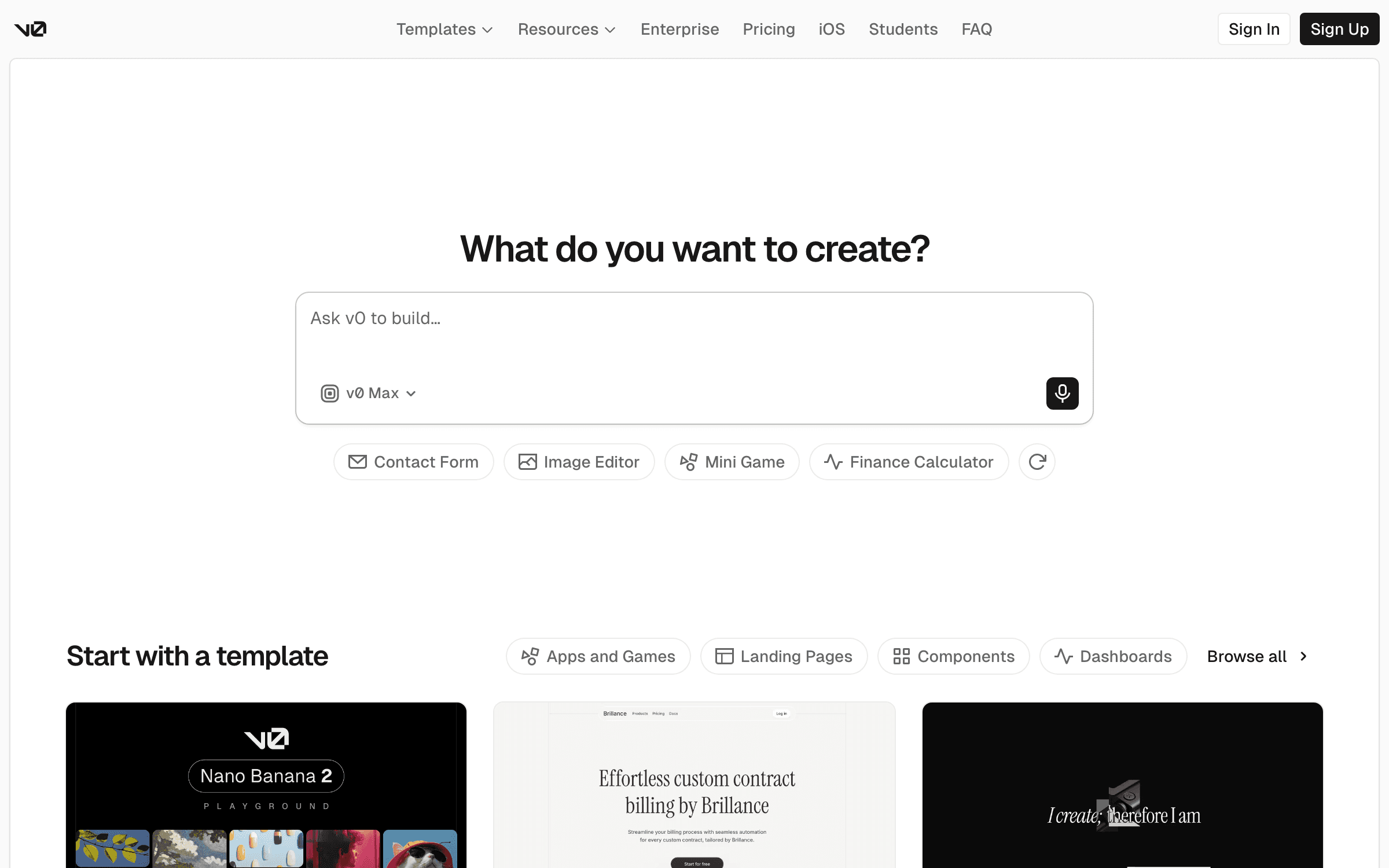
Vercel’s AI app builder. Started as a shadcn/ui + Tailwind component generator and expanded into full Next.js apps with server components, routes, and database wiring. Native deployment to Vercel; integrates with Neon, Supabase, and Vercel KV.
Best for: Teams committed to Next.js and the Vercel platform
Pros
- Best-in-class component quality — shadcn/ui + Tailwind generated by default
- Native Vercel deployment with one click; environment variables auto-wired
- Strong at Next.js server actions, routes, and App Router idioms
- Uses multi-model backend (Claude + GPT-5) for generation quality
Cons
- Next.js only — no Vue, Svelte, or vanilla stacks
- Backend integrations are Vercel-ecosystem-first (Neon, Vercel KV)
- Less full-stack-opinionated than Lovable — no Stripe / auth by default
- Premium plan limits can bite on heavy generation days
Feature-by-feature comparison
| Capability | Lovable | Bolt.new | v0 |
|---|---|---|---|
| Full-stack auth + database by default | Partial | Partial | |
| Stripe / payments integration | |||
| Framework flexibility (not just React/Next) | |||
| Runs a real dev server in-browser | |||
| One-click deploy to production | |||
| GitHub two-way sync | |||
| shadcn/ui + Tailwind scaffolding | Partial | ||
| Native Supabase wiring | Partial | Partial | |
| Server components / App Router support | Partial | ||
| Multi-model LLM backend | |||
| Free tier | |||
| Team / agency plans | |||
| Starting price (paid) | $25/mo | $20/mo | $20/mo |
Get weekly AI app builder updates
Lovable, Bolt, and v0 are shipping new features every week. Get a weekly digest of what actually matters for solo founders and indie hackers.
How to decide between Lovable, Bolt, and v0
You want to ship a SaaS MVP with users and payments
Lovable. It’s the only one of the three that scaffolds auth, a Supabase database, and Stripe by default. You can go from prompt to a deployed app with paying users in a weekend — the other two need more manual wiring.
You want framework flexibility or non-React stacks
Bolt.new. Its WebContainers run a full Node environment in the browser, so you can ship Vue, Svelte, Astro, or plain Next apps just as easily as React. It’s the only one of the three that isn’t locked to a specific framework or deploy target.
You’re already on Vercel / Next.js
v0. Native Vercel deploys, shadcn/ui components by default, App Router idioms, and tight integration with Neon and Vercel KV. The output reads like code any Next.js developer on your team could pick up. If Next.js is your commitment, v0 is the best fit.
Budget is your first filter
All three have free tiers. Bolt.new and v0 start at $20/mo Pro; Lovable at $25. For heavy iteration, watch the credits model — Lovable’s can burn fast on multi-prompt sessions. Budget-minded solo founders often start with v0 or Bolt and only upgrade to Lovable when they commit to a SaaS build.
Frequently Asked Questions
What is the difference between Lovable, Bolt.new, and v0?
Lovable is the most full-stack — it scaffolds auth, database (Supabase), and Stripe by default, so you can ship a SaaS MVP end-to-end. Bolt.new is the most framework-flexible — it runs a full Node environment in the browser and supports any JS framework (React, Vue, Svelte, Next, Astro). v0 is the most Vercel-native — it generates Next.js apps with shadcn/ui components and deploys straight to Vercel. Pick based on the stack you’re targeting.
Which AI app builder is best for a solo founder?
Lovable is the shortest path from idea to a deployed SaaS MVP for a solo founder because auth, database, and payments are wired in by default. v0 is a strong alternative if you’re already committed to the Vercel ecosystem. Bolt.new wins if you need a framework other than React or want more control over the stack from the start.
Can I use Lovable, Bolt.new, and v0 together?
Yes — many indie hackers use them for different stages. v0 is great for polishing individual components and screens. Bolt.new is useful for quick framework-specific prototypes. Lovable is better for full-stack MVPs. You can also export from any of them to GitHub and continue in Cursor or Claude Code.
Is Lovable actually full-stack?
More than Bolt.new or v0, yes. Lovable scaffolds a Supabase project (tables, RLS, auth), wires up Stripe, and can integrate email via Resend — all from prompts. Bolt and v0 can do some of this but require more manual setup. For a true end-to-end SaaS app with users and payments, Lovable is the most opinionated of the three.
Which one produces the highest-quality code?
v0 tends to produce the cleanest, most conventional code because it’s optimized for Next.js + shadcn/ui patterns that are familiar to most React developers. Lovable’s output is pragmatic and production-shaped but can require cleanup at scale. Bolt.new sits in the middle — quality varies more because it supports more frameworks.
Which one is cheapest for heavy iteration?
All three have free tiers for trial. On paid plans, Bolt.new Pro ($20/mo) and v0 Premium ($20/mo) are the cheapest entry points. Lovable Pro is $25/mo and its credit-based pricing can burn through faster on iterative multi-prompt work. For truly heavy use, all three have Teams or higher tiers in the $30-$50 range.
Related reading
10 Best AI Landing Page Builders for SaaS Founders in 2026
Broader ranking of landing-page and app builders, including Framer, Webflow, and Unbounce.
Read articleThe Solopreneur AI Stack Costs Under $200/Month in 2026
How these builders fit into the wider AI stack a one-person SaaS actually runs on.
Read articleStill choosing?
All three have free tiers — try the one whose default stack matches where you want to ship. Or subscribe for weekly breakdowns of the AI app builder space.