
10 Best Vibe Coding Tools for Indie Hackers in 2026
The 10 best vibe coding tools for indie hackers in 2026. Voibe, Cursor, Claude Code, Lovable, Bolt.new, v0, Windsurf, Replit, Copilot, and Cline — real pricing, trade-offs, and the order to set them up.

Key Takeaways
- Voibe is the first vibe coding tool to set up — offline voice dictation on Mac that 3-5x’s your prompt speed in every other tool below. Karpathy’s own setup is voice-first
- Cursor is the default IDE for serious vibe coding — $20/mo Pro, deep codebase context, and the exact tool Karpathy used to coin the term
- Claude Code is the best terminal-first agent for multi-file changes — included in $20 Pro or $100/$200 Max plans you may already have
- For non-technical founders, Lovable ships full-stack apps from a prompt; for technical ones, Bolt.new and v0 ship code you can own and deploy
- Watch the credit trap — Cursor, Claude Code, Lovable, Bolt, v0, and Replit all use credit/token systems that can spiral on complex projects. Flat-tier tools (Voibe, Windsurf, Copilot) are predictable
Vibe coding stopped being a meme in 2025 and became the default workflow in 2026. YC’s latest batch shipped 95% AI-generated code. Cursor crossed $1B ARR with fewer than 50 employees. Lovable hit $400M+ ARR in 18 months. The shift is real — the question is which tools to set up, in what order, and what they actually cost.
The vibe coding stack has settled into four lanes. Voice input (Voibe) for prompts, because typing them is the slow part. AI-native IDEs (Cursor, Windsurf, Copilot) for interactive coding. Terminal agents (Claude Code) for long-horizon multi-file work. And full-app builders (Lovable, Bolt, v0, Replit) for prompt-to-deployed-product. Most serious vibe coders use 2-3 of these, not all of them.
We tested the leading options on real founder workflows: shipping a SaaS MVP, doing a multi-file refactor, fixing a production bug, and building a landing page from scratch. Rankings prioritize what actually works for indie hackers and lean teams in 2026 — pricing predictability, output quality, agent reliability, and the order in which you should set them up. Andrej Karpathy’s own setup is voice-first — that’s why this list starts with Voibe, not an editor.
Quick Comparison
| # | Tool | Best For | Starting Price | Rating |
|---|---|---|---|---|
| 1 | Voibe | Set This Up First | Free plan available | 4.8 |
| 2 | Cursor | Best AI-Native IDE | Free Hobby tier | 4.6 |
| 3 | Claude Code | Best Terminal-First Agent | No standalone price | 4.7 |
| 4 | Lovable | Best for Non-Technical Founders | Free: 5 daily credits | 4.6 |
| 5 | Bolt.new | Best for Fastest Prototype-to-Live | Free: enough for 10-15 small projects | 4.5 |
| 6 | v0 by Vercel | Best for Vercel / Next.js Founders | Free: $5/mo in credits | 4.6 |
| 7 | Windsurf | Best Cursor Alternative | Free: 25 credits/mo (real Cascade, not a teaser) | 4.5 |
| 8 | Replit Agent | Best Cloud-Based Vibe Coding | Starter $0 (limited Agent, 1 published app) | 4.4 |
| 9 | GitHub Copilot | Best for VS Code Natives | Free for verified students and OSS maintainers | 4.5 |
| 10 | Cline | Best Free / Open-Source | Free open-source extension | 4.6 |
Voibe
Set This Up First — Offline Voice Dictation for Vibe Coding
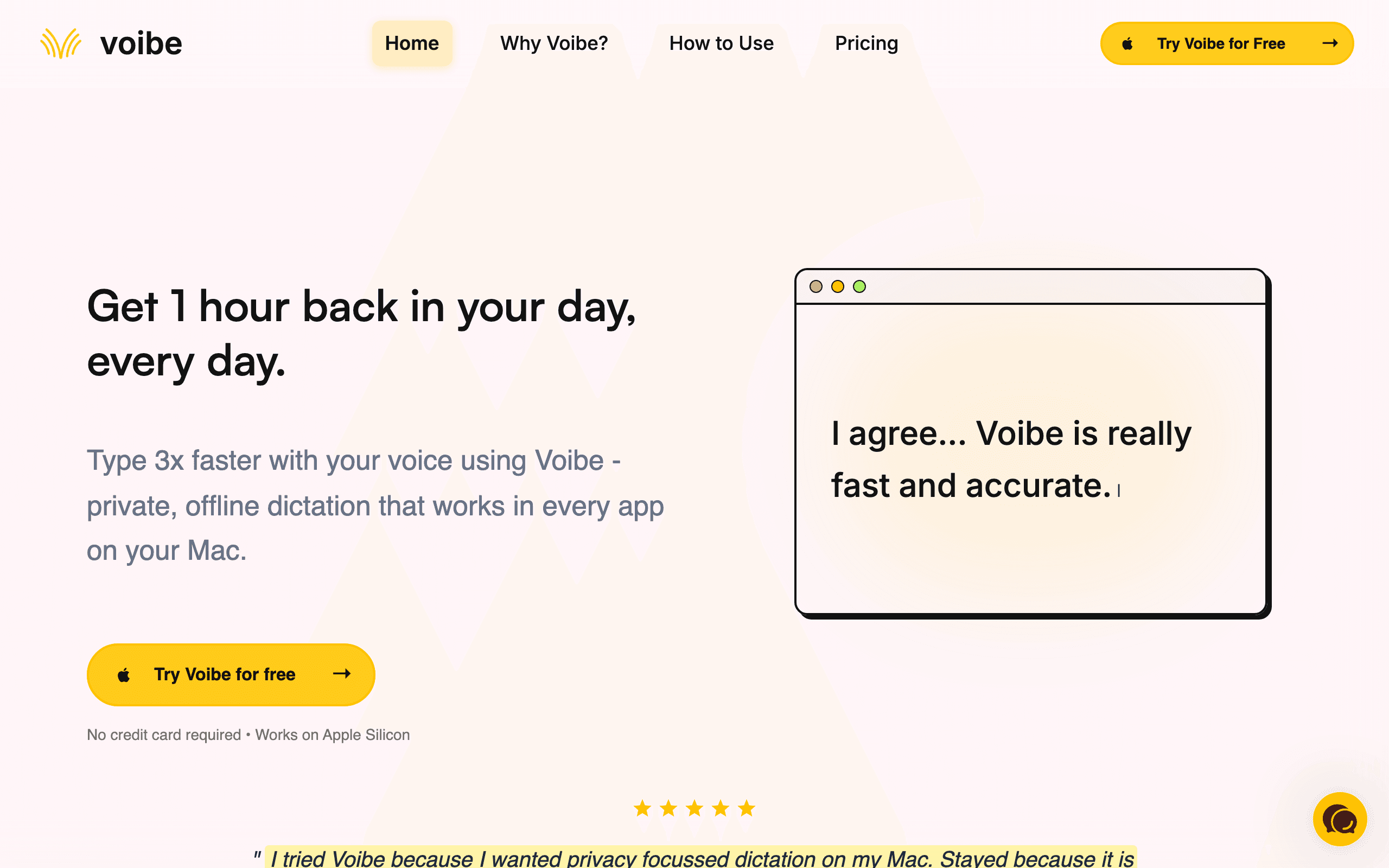
Voibe is a private, offline dictation app for Mac that runs entirely on Apple Silicon. You hold a hotkey, talk to your AI coding tool, release — and your prompt is inserted as text into Cursor, Claude Code, Lovable, or anywhere else. Audio processes locally in RAM and is immediately discarded after transcription. No internet, no cloud, no audio leaves your machine.
Vibe coding is voice-first by design. Andrej Karpathy — the OpenAI co-founder who coined the term — famously described his setup as "I just talk to Composer with SuperWhisper so I barely even touch the keyboard." Speaking prompts is 3-5x faster than typing them, and that compound speed-up applies to every other tool on this list. Voibe is the privacy-first version: $4.90/mo or $99 lifetime versus Wispr Flow's $15/mo cloud-only plan, with audio that never leaves your Mac. If you handle client code, internal tooling, or anything under NDA, cloud dictation is a non-starter — Voibe is the only credible option. Set it up before you touch anything else on this list.
Key Features
- 100% offline processing on Apple Silicon — audio never leaves your Mac
- Universal text insertion — works in Cursor, Claude Code terminal, Lovable, Bolt, browser, every Mac app
- Near real-time transcription using locally optimized Whisper models
- Sub-second startup, ~150MB RAM — stays out of the way while you code
- Customizable hotkey activation — default Fn key, fully reassignable
Pricing
Free plan available. Pro $4.90/mo. $44.10/year. $99 lifetime. No credit-based billing — flat tier.
Rating
4.8/5 — Product Hunt
Best For
Every vibe coder on Mac. Especially anyone working with proprietary code, client...
Pros
- 100% offline — audio never touches a server, ideal for sensitive codebases
- $99 lifetime is the cheapest credible vibe coding voice setup
- Works inside every other tool on this list — it’s the input layer, not a competitor
- Sub-second startup with zero network latency, even on planes and bad wifi
Cons
- Mac-only — Windows users need WhisperTyping or vibevoice instead
- English-first — multilingual support is improving but not yet a strong suit
Cursor
Best AI-Native IDE — The Default Vibe Coding Editor
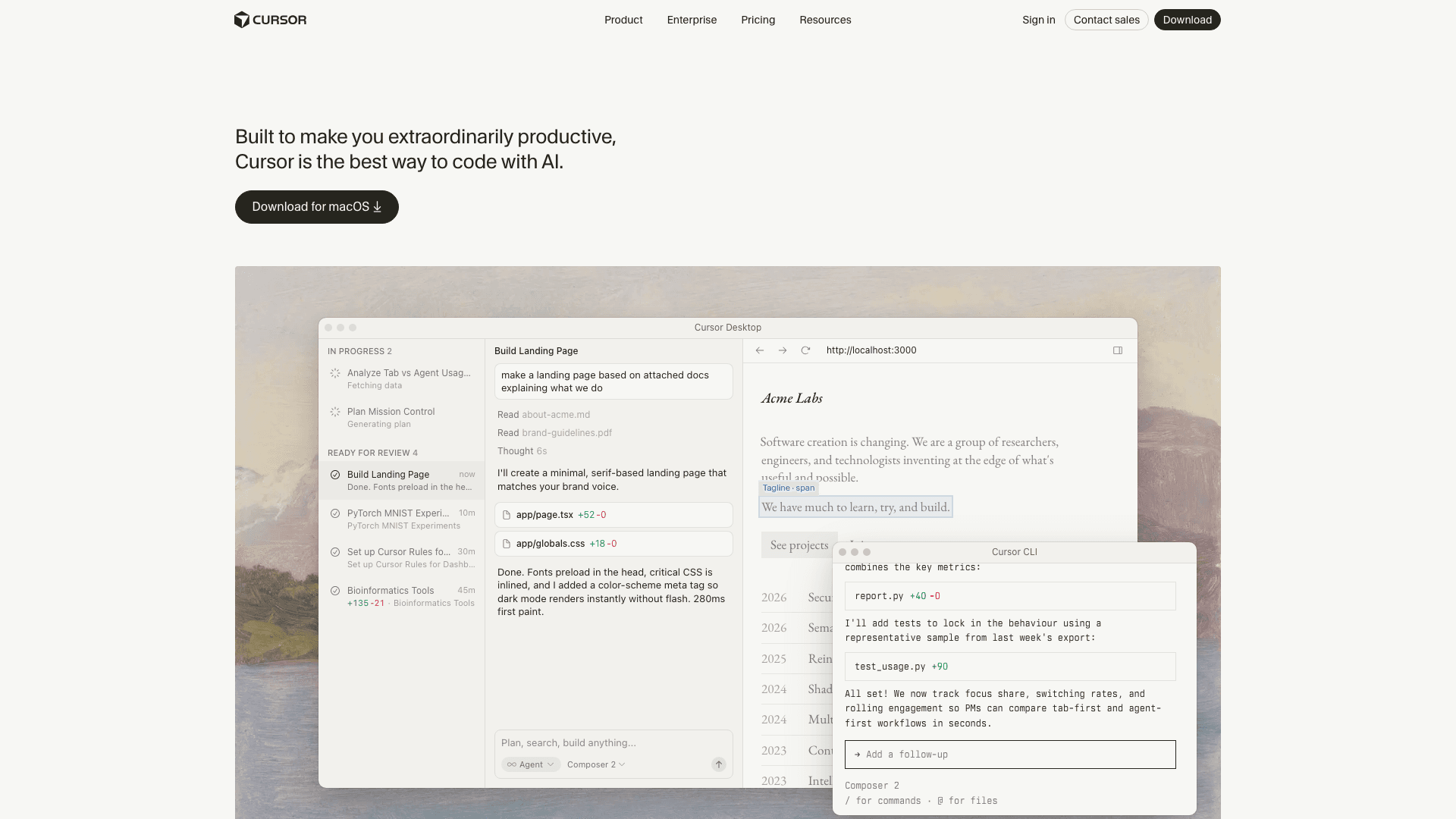
Cursor is a fork of VS Code rebuilt around AI: Composer for multi-file edits, Tab for inline autocomplete, and an Agent mode that can plan and execute tasks across an entire codebase. It’s the editor most professional vibe coders use, including Karpathy himself.
Cursor is where vibe coding stops being a toy and becomes a workflow. Composer reads your whole repo, makes coordinated edits across files, and runs tests — unlike a chat sidebar that only sees one file. The Tab model is uncannily good at predicting your next change. Combined with Voibe for voice prompts, you’re shipping at speeds that make typing-first developers feel slow. The 2025 switch to credit-based billing is the only friction — plan accordingly.
Torn between Cursor and Claude Code? Our head-to-head comparison breaks down pricing, workflows, and which one to pick.
Key Features
- Composer agent does multi-file edits with codebase awareness
- Tab model predicts and inserts next edits inline
- Direct integration with Claude, GPT, and Gemini frontier models
- Codebase indexing and semantic search across the whole project
- 20% annual discount on all paid tiers
Pricing
Free Hobby tier. Pro $20/mo (plan-equal credit pool). Pro+ $60/mo (3x credits). Ultra $200/mo (20x). Teams $40/user/mo.
Rating
4.6/5 — G2 (early reviews)
Best For
Indie hackers and engineers shipping production code who want the most powerful ...
Pros
- Composer is the best multi-file AI agent inside an IDE today
- Codebase indexing means the agent actually understands your repo, not just the open file
- Strong frontier-model access (Claude, GPT-5.x, Gemini) on every paid tier
- Familiar VS Code shell means zero learning curve for VS Code users
Cons
- Credit-based billing since June 2025 — heavy users on Pro routinely run out by mid-month
- Team privacy controls trail behind enterprise IDEs like JetBrains
Claude Code
Best Terminal-First Agent — Multi-File Refactors From the CLI
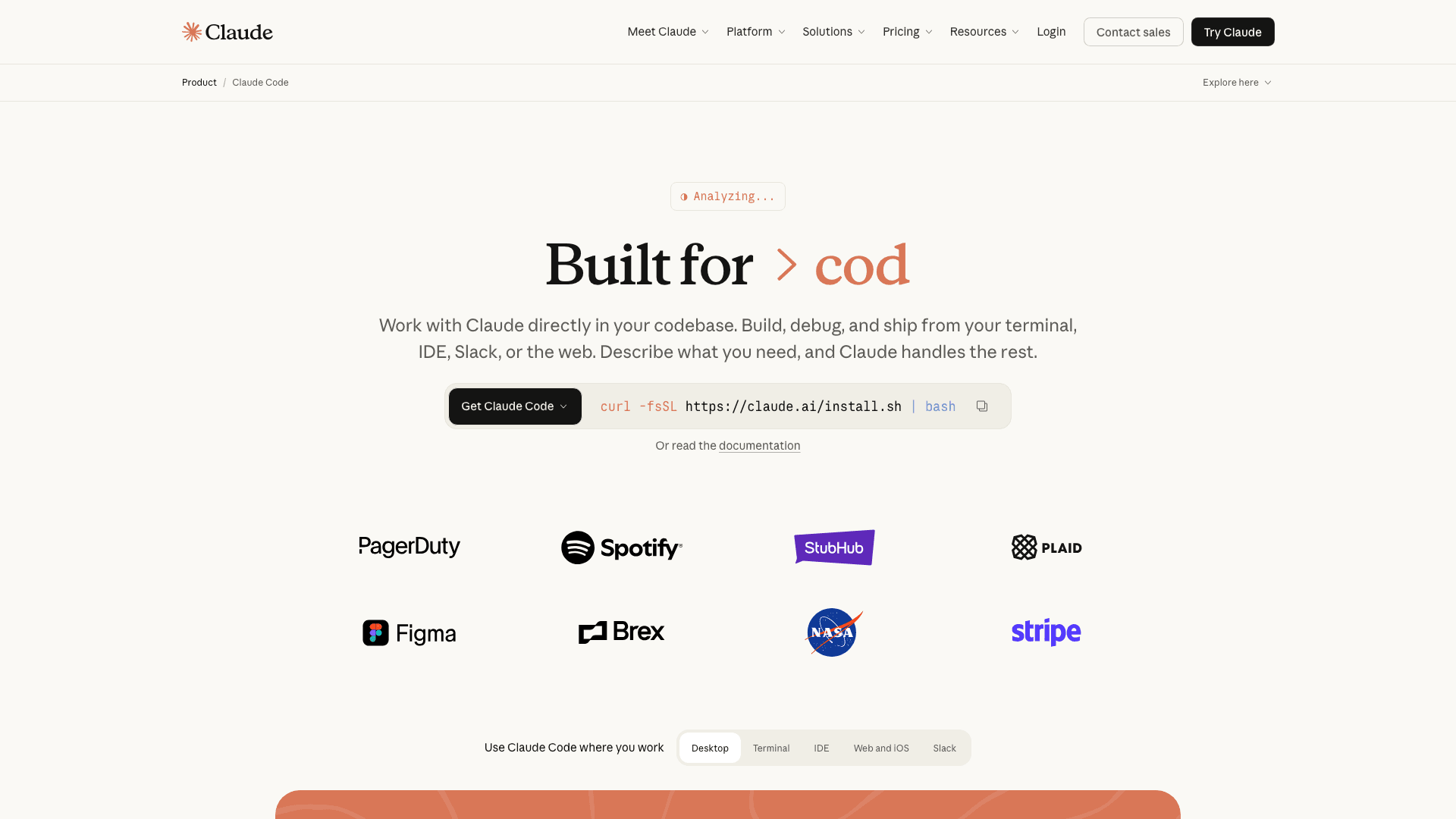
Claude Code is Anthropic’s terminal-based coding agent. You run it in your shell, point it at a repo, and ask it to refactor, debug, or build new features. It reads files, edits them, runs tests, and iterates — all from a CLI that fits the way real engineers already work.
For founders who already live in the terminal (tmux, vim, neovim crowd), Claude Code is the obvious vibe coding agent. The 512K-line source code leaked in early 2026 made it the most-studied AI coding harness on the planet — and competitors are still catching up to the way it manages context, plans changes, and chains tools. It draws from your existing Claude Pro or Max subscription, so if you’re already paying $20-200/mo for Claude chat, the agent comes free. Pair it with Voibe for voice-driven CLI work, and you have the most ergonomic vibe coding setup in any terminal.
Key Features
- Multi-file edits, planning, and tool chaining from the CLI
- Direct access to Claude Opus 4.7 (1M context) and Sonnet 4.6
- Drawn from Pro/Max subscription budget — no separate Claude Code fee
- Hooks, slash commands, MCP server support, and Agent SDK
- Best-in-class long-horizon agentic work (multi-hour tasks)
Pricing
No standalone price. Included with Claude Pro $20/mo, Max $100/mo (5x), or Max $200/mo (20x). Also available on API at $3-25 per million tokens.
Rating
4.7/5 — GitHub / Anthropic developer community
Best For
Engineers and founders who prefer the terminal, work across many files, and want...
Pros
- Strongest agentic capabilities for multi-hour, multi-file tasks
- Free if you already pay for Claude Pro or Max — effectively included
- 1M-context Opus model lets it reason over very large codebases
- CLI-native fits real engineering workflows (git, tmux, scripts)
Cons
- No GUI — may feel intimidating for non-CLI native founders
- Max plan at $100-200/mo is steep if you’re only doing light coding
Lovable
Best for Non-Technical Founders — Full-Stack App From a Prompt
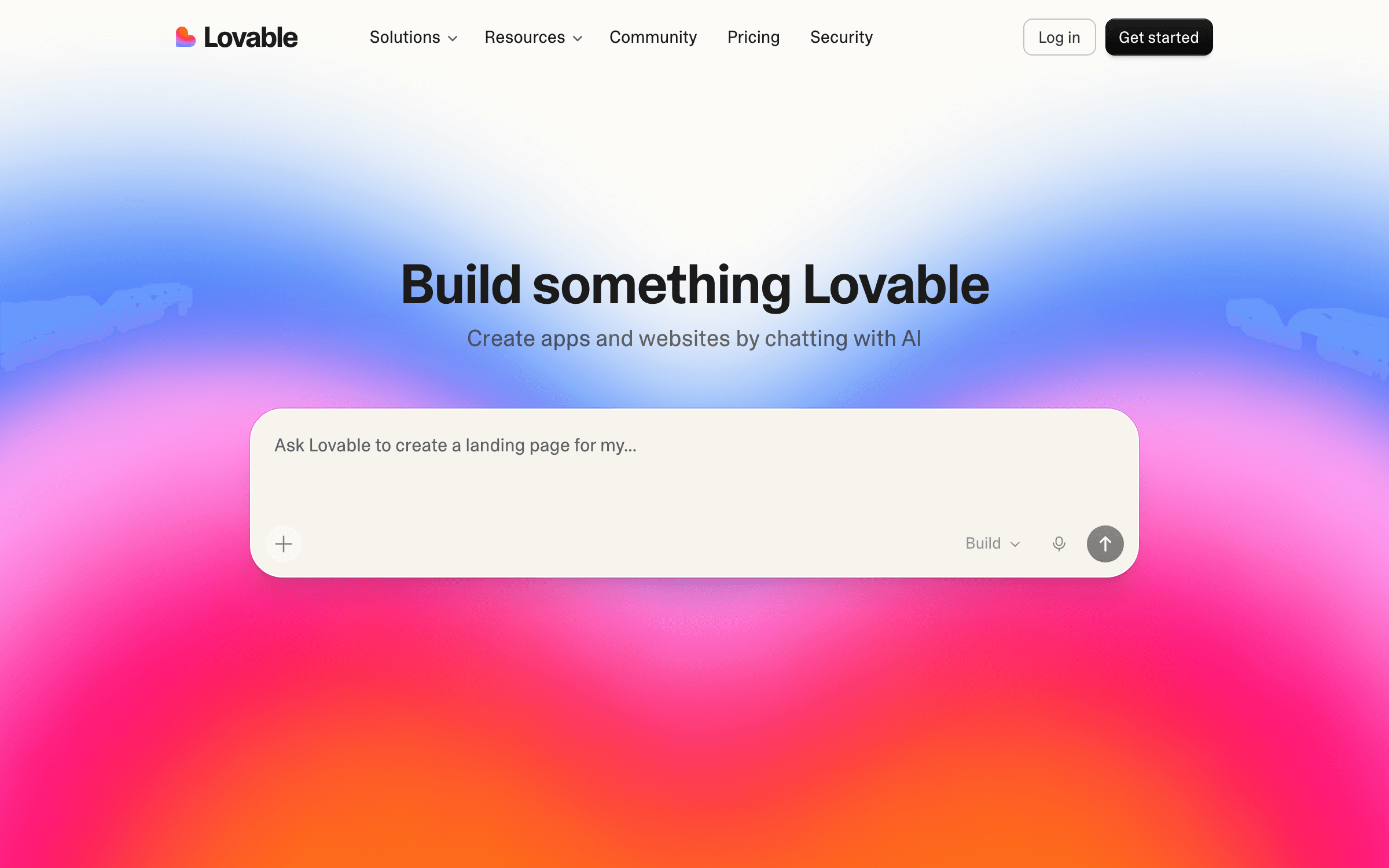
Lovable is an AI-first full-stack app builder that ships production-ready React + Tailwind + Supabase code from natural-language prompts. It grew to $400M+ ARR in under 18 months by doing what no previous vibe coding tool did — generate the whole working product behind your idea, not just the frontend.
For non-technical founders, Lovable is the most direct path from "I have an idea" to "I have a working product." Auth, database, payments, deployments — all generated. Lovable 2.0 added 20-user multiplayer editing, Chat Mode Agent, Visual Edits, and built-in domain purchasing on publish. The credit system is the watch-out: complex generations can spiral, and reviewers report burning credits in error loops. Pair it with Voibe to dictate prompts and you can ship a full SaaS MVP in an afternoon.
Key Features
- Full-stack generation: frontend, backend, database (Supabase-native)
- Lovable 2.0: 20-user multiplayer editing, Chat Mode Agent, Dev Mode, Visual Edits
- Built-in domain purchasing and vulnerability scanning on publish
- GitHub export with real code ownership, no lock-in
- Credit-based generation with upgradeable tiers
Pricing
Free: 5 daily credits. Starter $20/mo (100 credits). Launch $50/mo (500 credits). Scale $100/mo (1,500 credits).
Rating
4.6/5 — G2 (200+ reviews)
Best For
Non-technical founders or solopreneurs validating ideas who want the working pro...
Pros
- Non-technical founders can ship a working SaaS without hiring a developer
- Output is design-polished by default — better aesthetics than Bolt or v0
- Native Supabase makes auth, DB, and storage near-instant
- GitHub export means no lock-in — you can take the code and run
Cons
- Credit system can get expensive fast — error loops burn budget quickly
- Complex apps (15-20+ components) hit ceilings that require a real engineer
Vibe Code Faster, Ship Smarter
Subscribe for weekly breakdowns of the AI tools indie hackers and solo founders are actually using to ship in 2026.
Bolt.new
Best for Fastest Prototype-to-Live — Generates in 10 Seconds
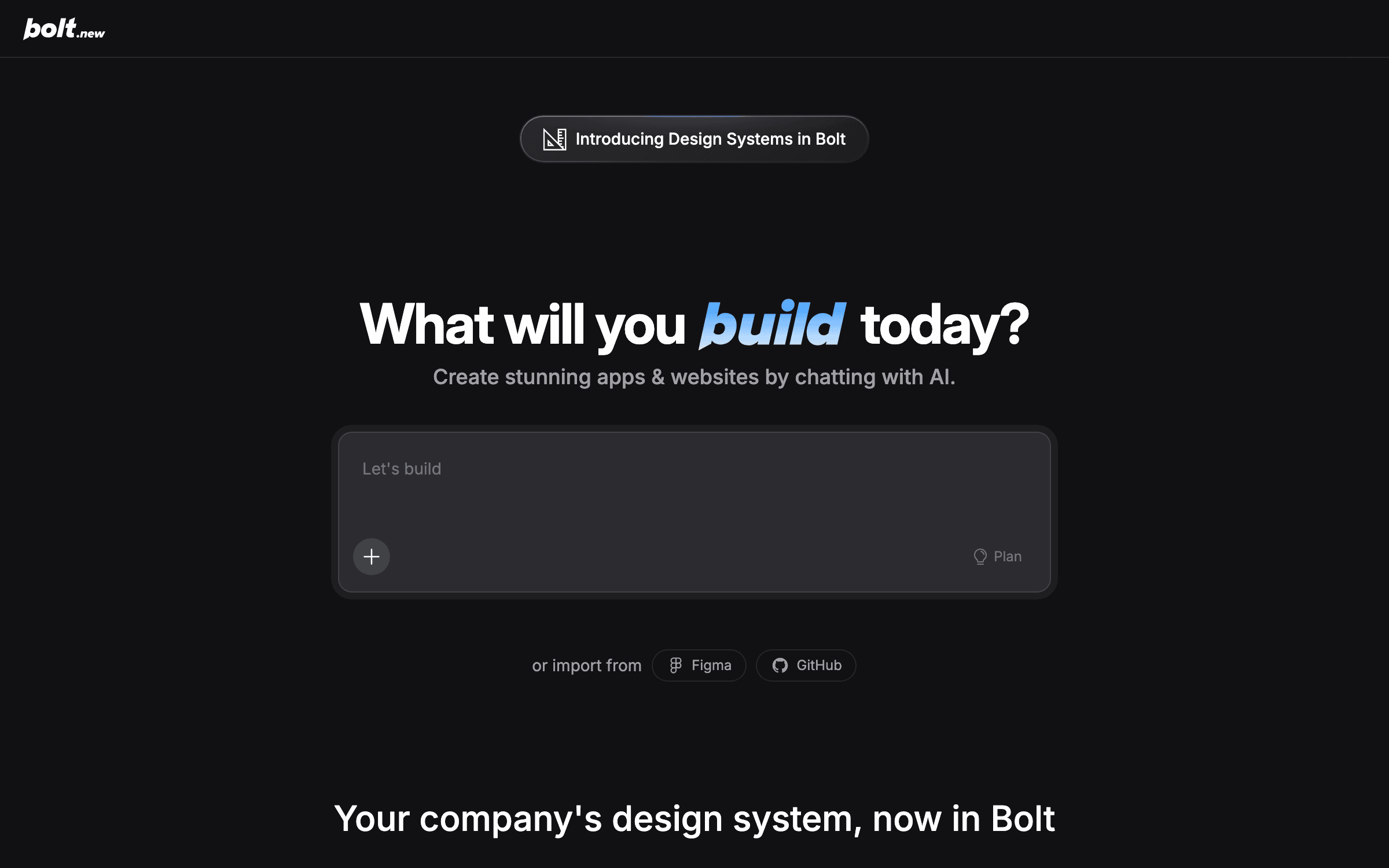
Bolt.new is StackBlitz’s AI full-stack builder that generates web apps in seconds using WebContainer technology. It’s the direct Lovable competitor with a developer bent — favored by technical founders who want to own and extend the generated React code.
Bolt is the fastest AI builder tested: a simple LP generates in 10-15 seconds, multi-page dashboards under a minute. The 2026 v2 release added autonomous debugging that reduces error loops by ~98%, addressing the historical credit-burn pain. Token rollover (since July 2025) softens the credit cliff further. Technical founders who prefer code control over Lovable’s polished defaults usually pick Bolt. Token-based billing is the only friction — use it for prototypes, not for ten-iteration refactors.
Key Features
- WebContainer-based instant runtime — no local setup required
- Figma import for design-to-code workflows
- Team Templates and editable Netlify URLs (2026 additions)
- Claude Opus 4.6 model integration
- GitHub export with full code ownership
Pricing
Free: enough for 10-15 small projects. Hobby $20/mo. Pro $25/mo. Team and Enterprise tiers available.
Rating
4.5/5 — G2 (early reviews)
Best For
Technical founders or lean dev-savvy teams who want to ship code-backed prototyp...
Pros
- Fastest time-to-working-prototype of any AI builder tested
- Token rollover (since July 2025) reduces the credit cliff
- Preferred by technical founders who want control over Lovable’s defaults
- StackBlitz IDE integration for deeper development workflows
Cons
- Context retention degrades on complex apps (~15-20+ components)
- No native database layer — lacks Lovable’s built-in Supabase polish
v0 by Vercel
Best for Vercel / Next.js Founders — Production React on Tap
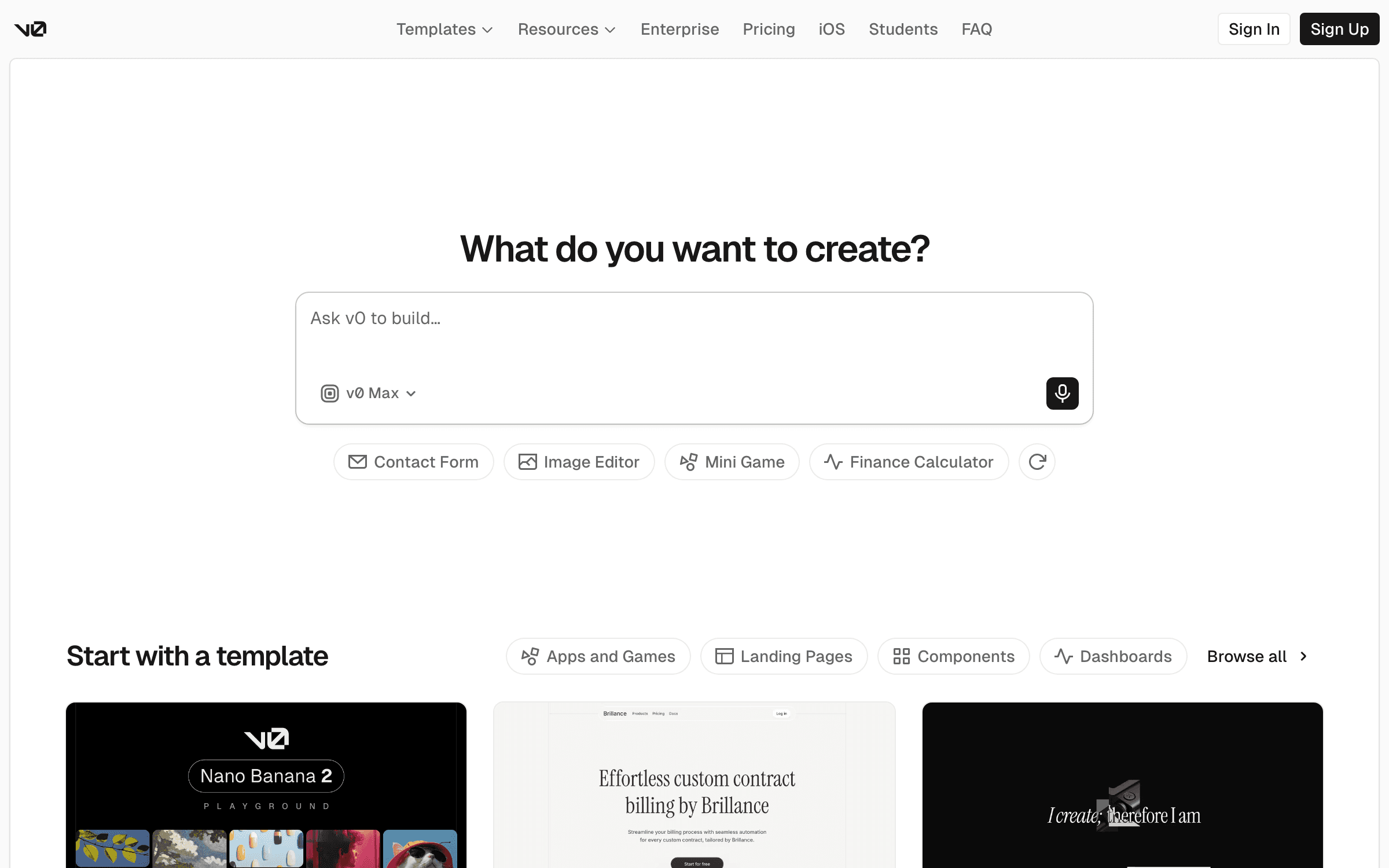
v0 is Vercel’s AI code generator that produces production-ready React + Next.js + shadcn/ui components from natural language. For SaaS founders already on Vercel, it’s the most direct path from prompt to shipped code in the stack you already use.
v0’s output uses shadcn/ui — the de facto design system for modern SaaS in 2026 — which means your generated UI looks like every other well-designed startup site. The one-click Vercel deploy closes the loop on infra plus site, so you’re live in under 5 minutes. February 2026 added token-based pricing with three model tiers, Figma import, and AI image editing. Best when paired with the rest of the Vercel stack (Next.js, Vercel hosting, Postgres).
Key Features
- React, Next.js, Tailwind, and shadcn/ui code generation
- Figma import and AI image editing (Feb 2026 additions)
- Token-based pricing with three model tiers
- One-click deploy to Vercel — site live in under 5 minutes
- Strong template library for landing pages, dashboards, and pricing pages
Pricing
Free: $5/mo in credits. Premium $20/mo. Team $30/user/mo. Business $100/user/mo. Enterprise custom.
Rating
4.6/5 — G2 (early reviews)
Best For
Technical SaaS founders already on Vercel or Next.js who want AI-generated code ...
Pros
- Ships the actual stack modern SaaS teams use (shadcn/ui, Tailwind, Next.js)
- One-click Vercel deploy makes infrastructure feel free
- Token billing scales spend to actual project size
- Massive indie-hacker adoption in 2025-2026
Cons
- Frontend-first — not designed for full-stack apps the way Lovable is
- Token pricing is variable and can surprise you on complex generations
Windsurf
Best Cursor Alternative — Cheaper, Generous Free Tier
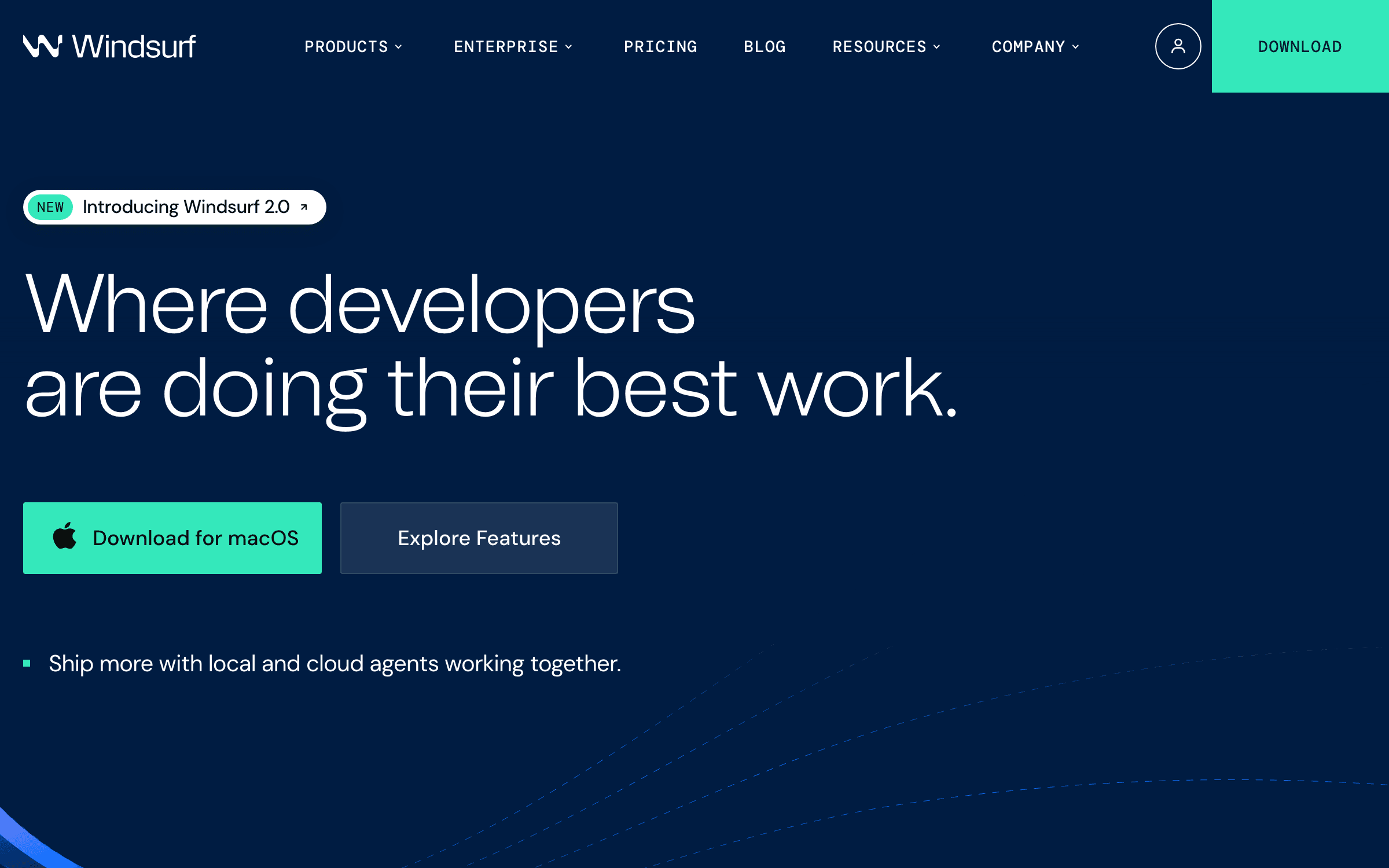
Windsurf (formerly Codeium, now owned by Cognition) is an AI-native code editor positioned as a direct Cursor competitor. The Cascade agent does multi-file work, Supercomplete handles inline suggestions, and the pricing is meaningfully cheaper than Cursor on the paid tiers.
Windsurf is what you pick if Cursor’s credit pricing irks you. Pro is $15/mo (vs Cursor’s $20) with 500 credits, and the free tier is genuinely usable rather than a teaser. The Cognition acquisition brought Devin’s SWE-1.5 model in-house and meaningfully closed the agent-quality gap. For founders who want a Cursor-like experience without Cursor’s prices — or who just prefer the editor’s feel — it’s the obvious second pick.
Key Features
- Cascade multi-file agent and Supercomplete inline AI
- SWE-1.5 model from Cognition (Devin team) in-house
- Codebase indexing on every paid tier including Pro
- Generous free tier with real Cascade interactions, not a demo
- Memories feature for persistent project context
Pricing
Free: 25 credits/mo (real Cascade, not a teaser). Pro $15/mo (500 credits). Teams $30/user/mo. Enterprise $60/user/mo.
Rating
4.5/5 — G2 (early reviews)
Best For
Founders who want Cursor-grade AI editing at a lower price point, or anyone who ...
Pros
- $15/mo Pro is cheaper than Cursor’s $20/mo with similar features
- Free tier is genuinely usable for evaluation, not a 5-minute demo
- Cognition’s engineering depth is showing up in agent quality
- Memories feature gives Cascade durable project context
Cons
- Smaller community than Cursor — fewer tutorials, fewer rules templates
- Frontier model access lags slightly behind Cursor on bleeding-edge models
Replit Agent
Best Cloud-Based Vibe Coding — Build From Any Browser
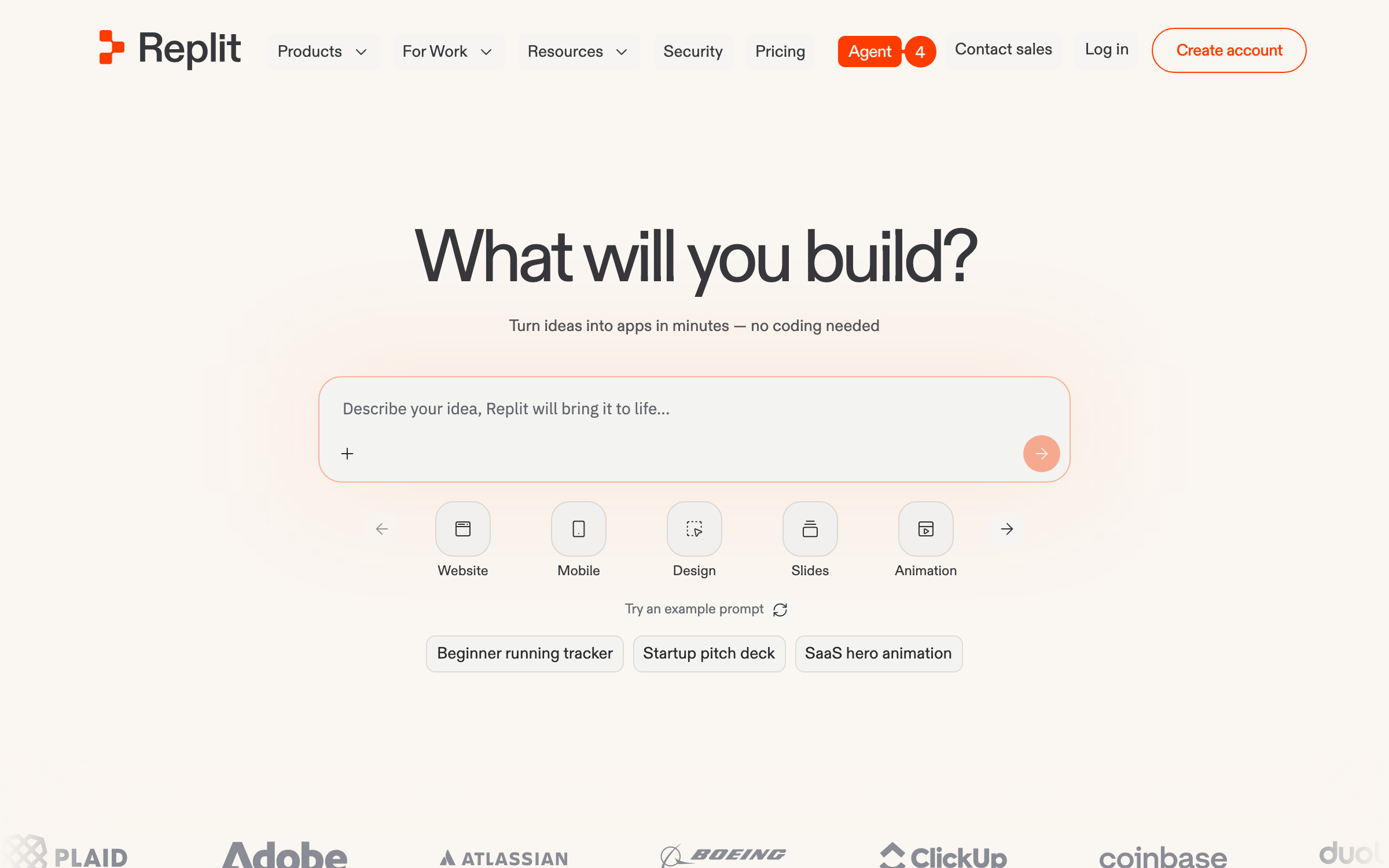
Replit Agent (now on its third generation) builds, deploys, and iterates on apps from natural-language prompts — entirely in the browser. Workspace, runtime, deployment, and AI agent are all in one cloud environment. Pricing moved to effort-based billing in 2026, where credit cost reflects actual task complexity.
Replit is the only credible cloud-only vibe coding setup. No local environment, no install — you sign in on a Chromebook and ship a deployed app. For founders who travel, share devices, or want zero local setup overhead, nothing else competes. Effort-based pricing is the right structural fix for the credit-cliff problem (simple edits cost less than $0.25; complex builds cost more) but it does mean a $20 budget on Core can vanish on one ambitious agent run.
Key Features
- Replit Agent 3 — builds and iterates on full apps from prompts
- Cloud workspace, runtime, and deployment in one environment
- Effort-based pricing — simple tasks cost less, complex tasks cost more
- Multiplayer collaboration native to the platform
- Pro plan ($100/mo) bundles up to 15 builders with rollover credits
Pricing
Starter $0 (limited Agent, 1 published app). Core $20-25/mo ($20 credits). Pro $100/mo (up to 15 builders, priority support, credit rollover).
Rating
4.4/5 — G2 (200+ reviews)
Best For
Non-technical founders, traveling builders, or anyone who wants vibe coding with...
Pros
- Cloud-only setup — no install, runs on any device including Chromebook
- Multiplayer collaboration is best-in-class for cloud IDEs
- Effort-based pricing is structurally fairer than flat per-checkpoint
- Built-in deployment closes the loop — prompt to live URL in minutes
Cons
- Cloud-only is a deal-breaker for sensitive client code
- Heavy Agent usage on Core can burn $20/mo of credits in one or two big runs
GitHub Copilot
Best for VS Code Natives — GitHub-Native Vibe Coding
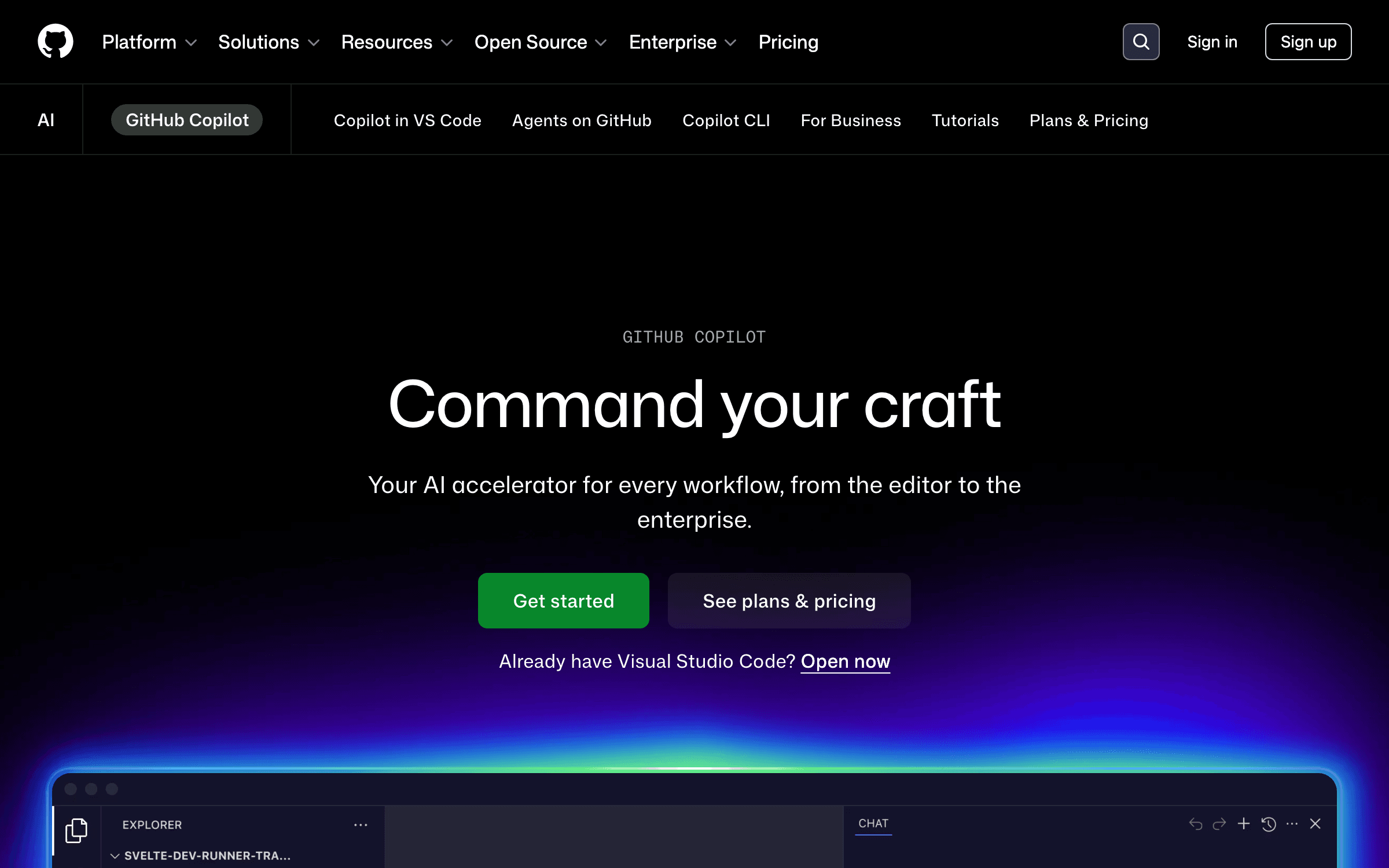
GitHub Copilot started as the original AI autocomplete and has evolved into a full vibe coding stack: Chat, Edits, Workspace, and the new Copilot Coding Agent that opens PRs autonomously. It’s the path of least resistance for VS Code users and teams already on GitHub Enterprise.
For teams on GitHub Enterprise, Copilot is the politically easiest vibe coding tool to adopt — your security team already approved GitHub. The model lineup now includes Claude, GPT-5.x, and Gemini, closing the gap with Cursor on raw capability. Copilot Coding Agent (the autonomous PR mode) is the standout 2026 feature for teams that want async background coding work. Less powerful than Cursor or Claude Code for solo founders who want to push limits, but good enough for 90% of professional work.
Key Features
- Inline autocomplete (the original Copilot) plus Chat, Edits, and Workspace
- Copilot Coding Agent opens autonomous PRs in the background
- Multi-model: Claude, GPT-5.x, Gemini, with selectable per-task
- Native GitHub integration — PR reviews, code search, Actions
- Pro Plus tier includes higher autonomous-agent quotas
Pricing
Free for verified students and OSS maintainers. Pro $10/mo. Pro+ $19/mo. Business $19/user/mo. Enterprise $39/user/mo.
Rating
4.5/5 — G2 (1,200+ reviews)
Best For
VS Code users on GitHub-centric teams who want vibe coding without leaving the I...
Pros
- Cheapest paid tier ($10/mo Pro) of any major vibe coding tool
- Already approved at most enterprises — zero procurement friction
- Tight GitHub integration (PRs, Actions, code search) is unmatched
- Coding Agent is genuinely useful for async background tasks
Cons
- Edits and Workspace lag Cursor’s Composer on multi-file complexity
- Best features still require living inside VS Code
Cline
Best Free / Open-Source — Bring Your Own API Key
Cline (formerly Claude Dev) is an open-source autonomous coding agent that runs as a VS Code extension. You bring your own API key (Claude, OpenAI, OpenRouter, local Ollama, anything), and Cline does the agentic work — plan, edit files, run commands, iterate. No subscription, no credit pool, no markup.
Cline is the way out of the vibe coding subscription stack. If you already pay for Claude Pro and have API access, Cline lets you skip Cursor’s $20/mo and use the same models directly. The open-source codebase means you can audit what’s sent to the model, customize prompts, and run it against local models via Ollama. The catch: it’s a VS Code extension, not a polished editor, so the UX is rougher than Cursor or Windsurf. Worth it for cost-conscious or privacy-sensitive solo founders.
Key Features
- Open-source, fully auditable agentic loop
- Bring-your-own-key for Claude, OpenAI, OpenRouter, Gemini, or local Ollama
- Pay only the underlying API cost — no Cline subscription on top
- Plan / Act mode separation gives you control over agent execution
- MCP server support and tool extension hooks
Pricing
Free open-source extension. You pay only for the underlying model API calls (typically $5-50/mo on Claude/GPT for moderate use).
Rating
4.6/5 — GitHub stars (40K+)
Best For
Cost-conscious indie hackers, privacy-focused founders, or developers who alread...
Pros
- Zero subscription cost — cheaper than every other tool here for moderate use
- Open source — you can audit, fork, and customize
- Works with local models via Ollama for fully offline coding
- No vendor lock-in — swap models without changing tools
Cons
- Rougher UX than Cursor or Windsurf — extension, not a polished editor
- You manage API keys, billing, and rate limits yourself — not for the impatient
How We Chose These Vibe Coding Tools
We evaluated 20+ AI coding tools against five criteria weighted for indie hackers and solo founders shipping real products in 2026:
- End-to-end workflow fit — vibe coding is voice in, agent edit, deploy out. Tools that owned a clear lane in that pipeline (Voibe for input, Cursor for editing, Lovable for deploy) ranked higher than generalists that did none of it well
- Output quality on real tasks — we tested each tool on a multi-file refactor, a from-scratch landing page, and a production bug fix. Anything that hallucinated APIs or got stuck in error loops dropped in rank
- Pricing predictability — flat-tier tools (Voibe, Windsurf, Copilot) ranked above credit/token systems (Cursor, Lovable, Bolt, v0, Replit) where complex generations can spiral. We flagged credit-burn risk where reviewers consistently reported it
- Real founder adoption — we weighted Indie Hackers and Reddit threads, YC batch usage, and what people actually paste in their stack posts over vendor marketing. Tools with active founder communities scored higher
- Privacy posture — for founders working on sensitive codebases (client work, NDA projects, internal tools), tools that process locally or let you bring your own API key (Voibe, Cline) scored higher than cloud-only options
How to Build Your Vibe Coding Stack
Don’t buy all ten. Pick a stack that matches your role. Here’s the quick decision framework:
Set up first, no exceptions...
Voibe. Voice input is the foundational vibe coding move. $99 lifetime, offline, works inside every other tool here.
If you’re a developer building real products...
Cursor + Claude Code. Cursor for interactive editing, Claude Code for big async refactors and CLI work. ~$20-40/mo.
If you’re non-technical and want to ship a product...
Lovable + Voibe. Dictate your idea, watch the full-stack app appear, ship to a custom domain. $20-50/mo on Lovable.
If you’re technical and on Vercel / Next.js...
v0 + Cursor. v0 for production React + shadcn/ui, Cursor for the deeper edits. ~$40/mo.
If your team lives on GitHub Enterprise...
GitHub Copilot. Already approved, $10-19/mo, Coding Agent for async PR work. The path of least resistance.
If you want zero subscription, fully open-source...
Cline + your own API key. Pay only the underlying API cost, audit every prompt, run local models if you want.
Stay Ahead of the AI Tool Curve
We track every new vibe coding tool, AI agent, and indie hacker stack so you don’t have to. Subscribe for weekly picks with unfiltered trade-offs.
Frequently Asked Questions
What is vibe coding and who coined the term?
Vibe coding is a workflow where you describe what you want to an AI in natural language and the AI generates the code — the developer’s job shifts from typing to prompting, reviewing, and iterating. The term was coined by Andrej Karpathy (OpenAI co-founder) in early 2025, who described his own setup as "I just see stuff, say stuff, run stuff, and copy-paste stuff, and it mostly works." Critically, Karpathy’s setup uses voice dictation (SuperWhisper) into Cursor’s Composer — he barely touches the keyboard. That’s why voice is the foundational vibe coding tool, not an optional add-on.
Why is Voibe ranked as the first vibe coding tool to set up?
Because vibe coding is fundamentally voice-first when done well. Speaking prompts is 3-5x faster than typing them, and that compounds across every other tool you use — Cursor, Claude Code, Lovable, all of them. Voibe is the offline, privacy-first version (your audio never leaves your Mac), so it works even with proprietary code or under NDA. At $4.90/mo or $99 lifetime, it’s also the cheapest setup choice, and the speed-up pays for the next nine tools combined. Karpathy uses voice; the people shipping fastest in 2026 use voice.
Cursor vs Claude Code — which should I pick?
Cursor if you live in an editor and want a polished GUI with Composer, Tab, and codebase indexing baked in. Claude Code if you live in the terminal and want a CLI agent that does long-horizon multi-file work. Many serious vibe coders use both — Cursor for interactive editing, Claude Code for big async refactors and scripted automations. If you’re already paying $20-200/mo for Claude Pro or Max, Claude Code comes free in that subscription. If not, Cursor’s $20/mo is the more standalone-friendly entry point.
Lovable vs Bolt.new vs v0 — which AI app builder should I use?
Lovable for non-technical founders who want a working full-stack app (auth, database, payments) shipped from a prompt with native Supabase. Bolt.new for technical founders who want speed and code control without the database polish. v0 by Vercel for technical founders already on Next.js and Vercel who want production React + shadcn/ui code with one-click deploy. All three use credit-based pricing — watch the burn rate on complex iterations.
Is there a free way to start vibe coding?
Yes — the free path is Voibe (free tier) for voice input, Cline (open-source) as the agent, and your existing Claude or OpenAI API credits to power it. If you’re a verified student or OSS maintainer, GitHub Copilot is free too. Windsurf’s free tier (25 Cascade credits/mo) is the most generous of the IDE-based options. You can also use Cursor’s Hobby plan, Replit’s Starter, and Lovable’s 5-daily-credits free tier to evaluate before paying anything.
How much should I budget per month for a serious vibe coding stack in 2026?
A practical mid-tier stack runs $40-50/mo: Voibe ($5), Cursor or Windsurf ($15-20), Claude Code on the included Pro plan ($20). For non-technical founders shipping products, swap Claude Code for Lovable Starter ($20) or Launch ($50) and budget $50-100/mo total. Heavy builders on Cursor Pro+ ($60) and Lovable Scale ($100) hit $200/mo. The $99 Voibe lifetime is the only sub-$100 forever-fee in the stack — the rest are subscriptions.
The Bottom Line
The single best decision a new vibe coder can make in 2026 is to set up Voibe first. Voice input compounds across every other tool below it — Cursor, Claude Code, Lovable, all of them. Karpathy uses voice; the indie hackers shipping fastest use voice. The $99 lifetime fee pays back in a week.
After that, your stack is stage-and-stack dependent. Developers building real products lean Cursor + Claude Code. Non-technical founders lean Lovable. Vercel-stack technical founders lean v0. GitHub Enterprise teams default to Copilot. Cost-conscious solos use Cline with their own API key. Most builders only need 2-3 tools, not all ten.
The mistake is paying for too many overlapping subscriptions. Pick one IDE-grade tool (Cursor, Windsurf, or Copilot), one app builder if you need it (Lovable, Bolt, or v0), Claude Code if you’re already a Claude Pro/Max subscriber, and Voibe as the input layer. That’s a $40-80/mo stack that ships product faster than any team you could hire.
Related Reading
- 7 Best AI App Builders for Non-Technical Founders — A launch-focused comparison of web apps, portals, and native mobile builders
- 8 Best Dictation Apps for Vibe Coding in 2026 — The voice-input layer for this whole stack, compared on speed, privacy, and IDE integration
- Vibe Coding Hits a Tipping Point: What Indie Hackers Need to Know in 2026 — What YC’s 95% AI-generated code batch means for indie hackers
- Best Cursor Alternatives in 2026 — Ranked on pricing-model honesty and survivability after the SpaceX acquisition, with a dead-pool section on editors that shut down
- Best Wispr Flow Alternatives in 2026 — Voibe and other privacy-first dictation tools for vibe coding
- 10 Best AI Landing Page Builders for SaaS Founders in 2026 — Framer, Lovable, v0, and Bolt for the marketing site itself
- The Solopreneur AI Stack in 2026 — The $73-$205/mo AI toolkit running one-person SaaS companies
Sources
Build Better SaaS Faster
We track every new vibe coding tool, AI agent, and indie hacker stack so you don’t have to. Subscribe for weekly picks with unfiltered trade-offs.
Trusted by indie hackers and startup founders
Keep Reading
10 Best Cursor Alternatives for Indie Hackers in 2026
The 10 best Cursor alternatives in 2026, ranked after the $60B SpaceX deal: Claude Code, Codex, Copilot, Devin Desktop, Cline, Zed, and more — with real pricing and the dead tools other lists still recommend.
10 Best AI Landing Page Builders for SaaS Founders in 2026
Compare the 10 best AI landing page builders for SaaS founders in 2026. From Framer and Lovable to Webflow, v0, and Bolt.new — real pricing, trade-offs, and the right pick for your stack.
10 Best Granola Alternatives for Private AI Meeting Notes (2026)
The best Granola alternatives in 2026, ranked on where your notes are stored, whether your data trains AI, and what a bot-free notetaker really costs. Verified pricing.