$40–60M ARR From Cookie Banners — Grow Efficiently, Then Buy the Cross-Sell
What Didomi Does
You know the “Accept all cookies” popup? Didomi builds it for big websites.
- It asks visitors for consent, as privacy laws like GDPR and CCPA require
- It stores proof of every choice
- It lets sites keep using their data, legally
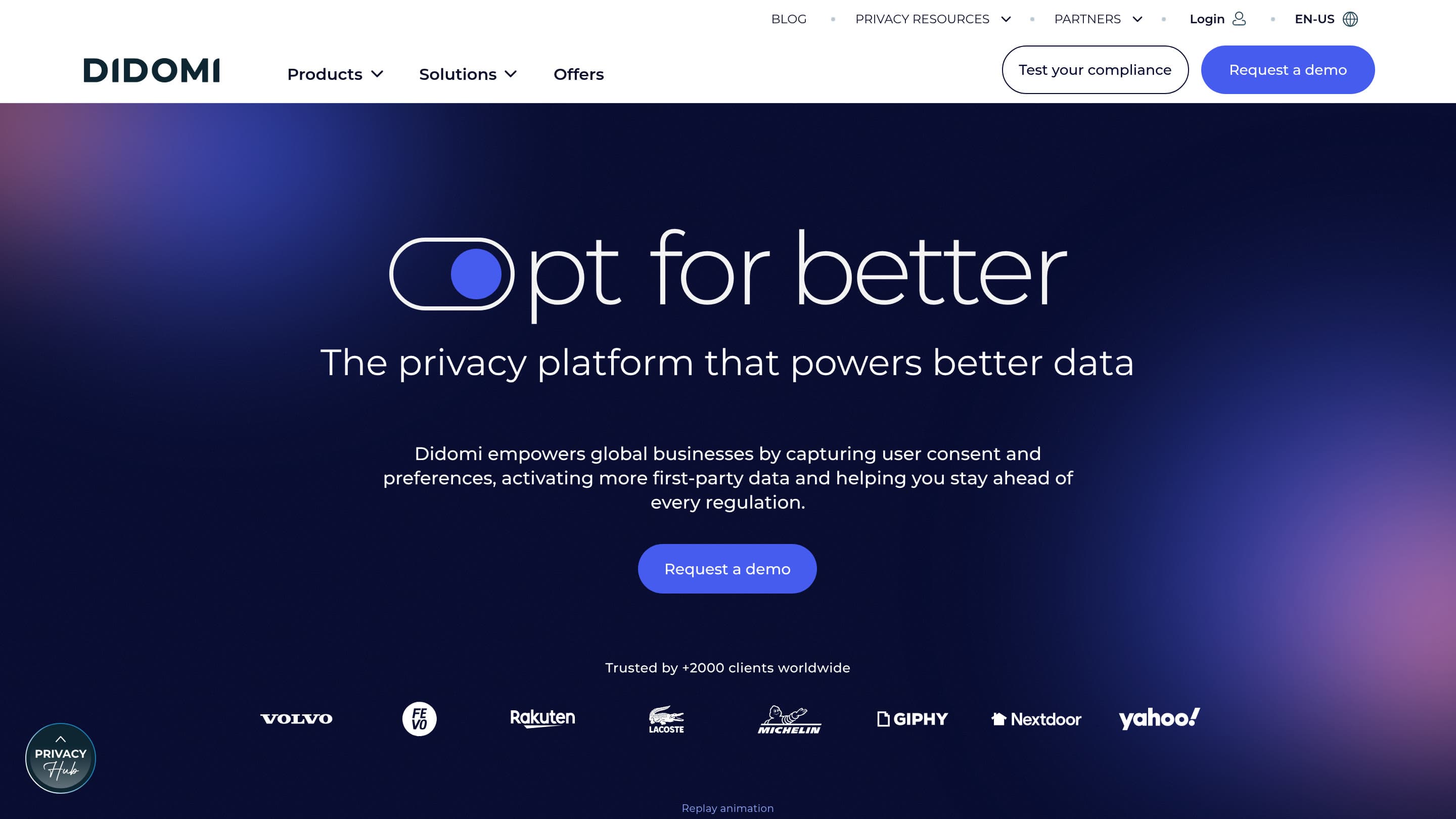
The customers are big publishers, online stores and marketplaces, like Bloomberg and Sky.
- About 2% of global web traffic runs through Didomi's code
- That's billions of consents every month
- Price is based on monthly unique visitors. More traffic, bigger bill.
Small sites aren't the target. Raphaël says they pick something lighter.
The Problem They Solve
Nobody loves a cookie banner. But every big website needs one.
Get consent wrong and you face:
- Fines under privacy laws
- Data you can't legally use for ads
- A different set of rules in every country
Raphaël Boukris co-founded Didomi in Paris in 2017 with Romain Gauthier and Jawad Stouli. He runs revenue. His pitch is simple: help big companies sleep well, avoid fines and still make money from their data.
The scoreboard today:
- $40–60M ARR across the group
- 3,500 customers
- ~200 employees, about half on the revenue team
- At least one multimillion-dollar customer
Nathan Latka asked if he ever pictured this back in 2017:
“We have always been very ambitious but it has been a step-by-step game.”
Watch: He Makes $50M From Those Annoying Cookie Popups? (Nathan Latka)
The Growth Story
2017–2019: the first $1M
Didomi launched in 2017 and started selling in early 2018.
- A tiny angel round: under €300K
- $1M ARR in under 2 years
- A €5M Series A from French VC Breega at the end of 2019
2021: the big round
In July 2021 they raised a €34M (~$40M) Series B. Elephant led it, and Breega put in more.
Elephant came to them first. The founders didn't just say yes:
- They ran a full roadshow to test their value
- Then went back to Elephant with the other offers
- Elephant still wanted in, at above 10x ARR
Some of the round went to early angels as secondary shares.
2022: the plan gets cut
Markets crashed in early 2022. The team looked at the Series B plan and called it “crazy.”
They still had lots of cash. They chose to protect it anyway.
- Growth target: 20–50% a year
- Rule: don't burn a lot of money
- Result: about $10M ARR by the end of 2023
“We are not gamblers with the company, with people's lives.”
2025: bring in PE, then buy
Growth was steady. But there was one product. As CRO, Raphaël had little to cross-sell.
So they ran VC and private equity side by side. PE won. It fit the next phase: buying companies.
- April 2025: Marlin Equity Partners takes a majority stake, with €72M (~$83M). Raphaël puts the multiple somewhere between 2x and 10x ARR.
- Same day: Didomi buys Addingwell, a server-side tracking tool from Lille. It had 1,000+ clients and a few million in ARR.
- July 2025: Didomi buys Sourcepoint, a New York rival that had raised about $48M. It brought 200+ enterprise customers.
Didomi was the bigger company. Sourcepoint brought something Didomi lacked: bigger deals with US and UK enterprise brands.
Just before the deal, Didomi alone was likely in the mid-teens of millions in ARR. When Latka guessed $15–18M, Raphaël said “not too far.” Today the group says $40–60M.
2026: make the deals work
Marlin isn't asking for 200% growth. The asks are calmer:
- Make both acquisitions a success first
- Get the right leaders in place for the next five years
- Hit the Rule of 40: growth plus profit margin of at least 40%
Pricing is up next. Raphaël came to the interview straight from a 2-hour pricing workshop. AI agents and bots on websites are a new question for a visitor-based price.

Key Growth Tactics
Here's what actually moved the numbers.
- Sales-led, on purpose. You ask for a demo and get a salesperson. Almost no resellers. Raphaël tries to shorten the cycle, but a buyer with 20 stakeholders still needs meetings.
- Ask customers what to buy. They asked customers and partners which tools they loved. Addingwell kept coming up. Same buyer, a nearby product.
- Pay up for the right asset. Addingwell was under 3 years old, growing fast and profitable enough to pay dividends. Didomi paid a premium.
- Buy quality, not just size. Sourcepoint had raised more money than Didomi but had less ARR. Its customers were the prize: big US and UK brands with bigger contracts.
- Use AI inside the company first. Compliance buyers can't take big risks. So Didomi put AI into its own operations before its product.
What didn't work, or isn't done yet:
- The 2021 “spend big” plan — dropped within a year
- Selling six-figure deals without a salesperson — not cracked yet
- The Rule of 60 that top companies hit now — Raphaël says they're not there

Key Takeaways for Builders
- ✓Boring, required problems make big businesses. Privacy laws force every big website to ask for consent. Didomi sells the tool that does it.
- ✓Enterprise deals need a salesperson. A deal with 20 stakeholders won’t close self-serve. Didomi has almost no resellers and sells through its own sales team.
- ✓When the market turns, cut the plan before the bank account cuts it for you. After the 2022 crash Didomi chose 20–50% efficient growth over burning its Series B.
- ✓If one product gives you little to cross-sell, buy the second one. Ask customers which tools they love, then buy the one that fits your buyer.
- ✓Pick the investor that fits the next phase. Didomi ran VC and PE side by side. PE won because the next phase was buying companies.
Sources & Further Reading
- 🎤Top Founders with Nathan Latka — He Makes $50M From Those Annoying Cookie Popups? (interview with Raphaël Boukris)
- 🔗GetLatka — Raph Boukris, co-founder and CRO of Didomi
- 🌐Didomi — official website
- 📰Didomi blog — Didomi raises €72M with Marlin Equity Partners and acquires Addingwell (April 22, 2025)
- 📰Marlin Equity Partners — Marlin portfolio company Didomi acquires Sourcepoint (July 8, 2025)
- 📰Tech.eu — Didomi and Sourcepoint join forces to redefine privacy in the age of AI
- 📰FrenchWeb — Didomi raises €34M from Elephant and Breega (July 2021)
- 🔗Jones Day — Elephant leads $40 million Series B financing round of Didomi
- 🔗CB Insights — Sourcepoint financials ($47.8M total raised)
More Case Studies
Golf Genius
$53M ARR Selling Software to Golf Clubs — 8 Years to $1M, 8 More to $53M
Read the case study$1M+ ARRHiro Analytics
$1M ARR in 19 Months — The SaaS That Sells to Agencies, Not Brands
Read the case study$10-25M ARRTeamSupport
$15M+ ARR — How a PE-Backed Support Tool Wins With Community, Not Ad Spend
Read the case study