7 Best AEO Tools for Ecommerce and CPG Brands in 2026
A brand mention is not a product recommendation. These seven tools answer different questions about which products AI shows, which retailer gets the buy link, and what your team can change.
 ByAyush Chaturvedi· Independent Entrepreneur
The best AEO tools for ecommerce and CPG brands must answer a more precise question than “Was our brand mentioned?” A shopper may see your brand in a paragraph, a competitor SKU in a shopping card, and a third-party retailer on the buy link. Those are three different outcomes. A useful tool separates them, shows the actual answer or product tile, and helps the merchandising team find the inaccurate price, missing attribute, weak product page, or absent retail partner behind the result.
This is a purchase guide for stores and consumer brands, not another general AI visibility ranking. We looked for product-level evidence, shopping-card capture, retailer or marketplace context, catalog connections, actions that can be shipped, and a buyable starting point. We checked official product, help, and pricing pages on October 31, 2026. We did not run paid accounts, audit the vendors’ samples, or independently measure whether their recommendations increase sales. Where a feature is limited to one AI shopping surface or a higher plan, we say so.
There is a free baseline before any subscription: keep product pages, prices, availability, variants, and merchant feeds accurate. Google says Product structured data and Merchant Center feeds can be used together. OpenAI says Shopify catalog data is already integrated into ChatGPT for Shopify merchants, while other merchants can seek direct feed access. A monitoring platform cannot guarantee a product placement, and it cannot repair bad catalog data unless the team actually ships the fix.
The short answer
Peec AI is the most practical starting shortlist for a DTC or CPG team that needs a Shopify or CSV catalog, SKU-level visibility, and competitor context at a published entry price. AthenaHQ is stronger when the same team wants content actions and Shopify publishing. Profound is the enterprise choice for detailed ChatGPT Shopping tiles and merchant links. Evertune is the CPG pick when retailer distribution and displayed prices matter. Ecomtent serves Amazon and Walmart listing work; Yotpo Discover is aimed at larger commerce brands; OtterlyAI offers low-cost prompt-level shopping-card checks without catalog-wide SKU analytics.
Compare the picks
Prices are the lowest relevant public plan checked October 31, 2026. A cheap brand-monitoring tier may not include shopping-card analysis; ask for a written quote for your catalog, markets, prompts, and required module.
| Rank | Pick | Best for | Published starting point |
|---|---|---|---|
| 1 | Peec AI | DTC teams starting product-level AI shopping measurement | Starter $95/mo; 50 prompts, 3 models |
| 2 | AthenaHQ | Shopify brands turning visibility gaps into content work | Starter $295/mo; 3,600 response credits |
| 3 | Profound | Enterprise teams auditing ChatGPT product cards and merchant links | Shopping Analysis on Enterprise; custom quote |
| 4 | Evertune | CPG brands comparing products, prices, and retail partners | Shopping insights on Pro: $800/mo, billed annually |
| 5 | Ecomtent | Amazon and Walmart sellers fixing product listings | Seller/Vendor $599/mo monthly; 25 SKUs |
| 6 | Yotpo Discover | Large commerce brands using catalog and shopper-review data | Custom quote; initial release targets $10M+ annual GMV |
| 7 | OtterlyAI | Small stores checking AI answers and ChatGPT shopping cards | Lite $29/mo; 15 prompts and four base engines |
The ranked picks
Peec AI
DTC teams starting product-level AI shopping measurement
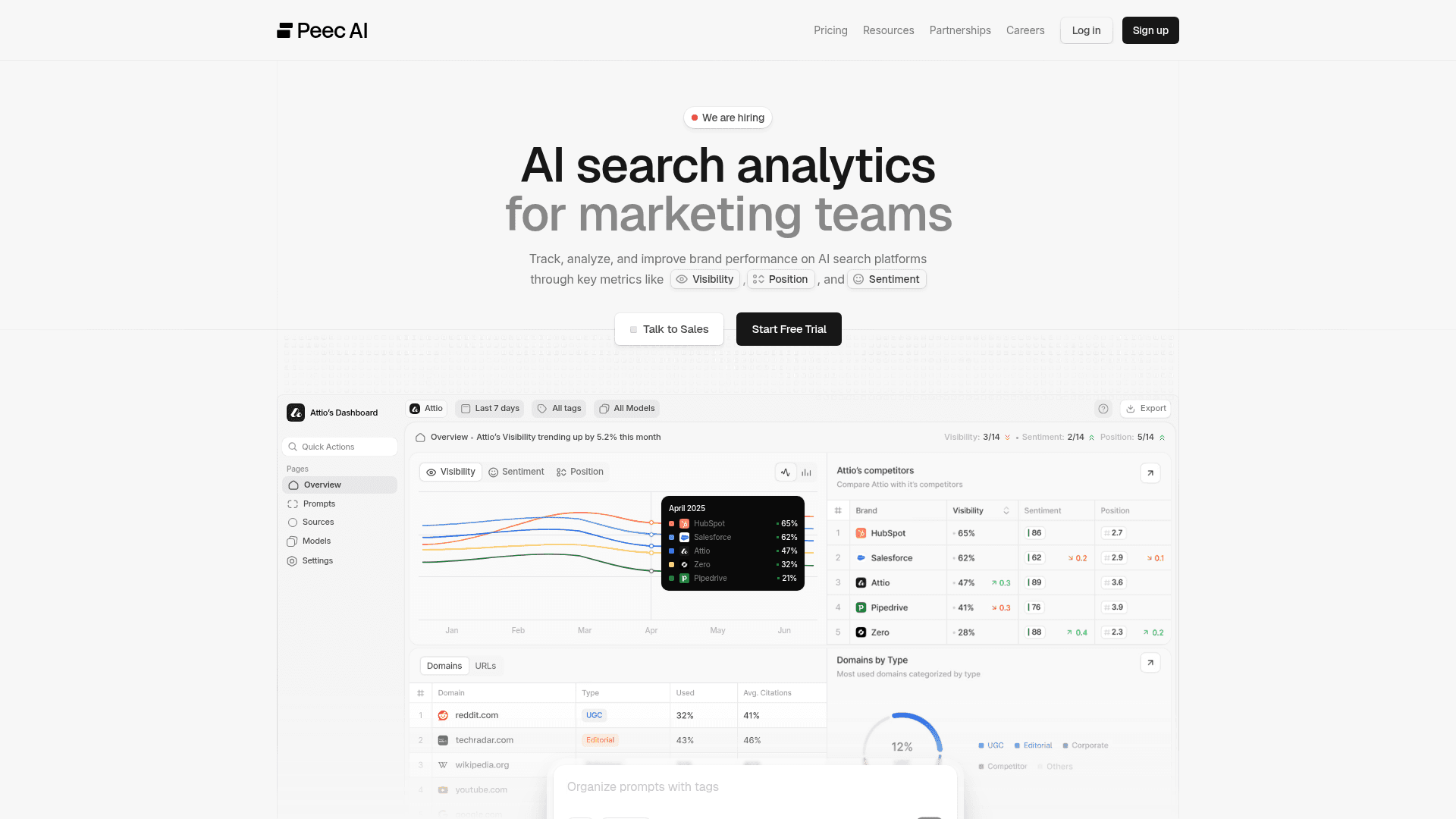
Peec AI ranks first for a small or mid-sized brand because it can import a Shopify catalog or CSV and report visibility, position, and win rate for individual products. The same account also tracks brand mentions and citation sources, so a team can connect a missed recommendation to the pages and third parties shaping the answer.
The published Starter price is $95 per month for 50 prompts, three selected models, and one project; Pro is $245 for 150 prompts and two projects. The AI Shopping page describes product prices, competing products, merchants, and prioritized content actions. Read the measurement boundary carefully: Peec’s help center says its shopping results count products in ChatGPT shopping carousels. A plain-text product mention without a carousel is not counted there, even though its wider brand-monitoring product covers other AI engines. Connect the catalog, choose category and use-case prompts that actually trigger shopping cards, then inspect the raw results before interpreting a zero as lost demand. Ask sales which shopping views are available on the exact plan you buy.
Why it made the list
- Shopify or CSV catalog import with SKU-level visibility and win rate
- Published self-serve price and prompt allowance
- Brand, source, competitor, and shopping views in one tool
Watch the trade-off
The shopping-carousel metric currently centers on ChatGPT. Extra tracked models and more prompts can raise the bill; text mentions and shopping-card appearances must be reported separately.
AthenaHQ
Shopify brands turning visibility gaps into content work
AthenaHQ is the strongest fit when the owner of the AEO dashboard must also update content. Its ecommerce offer describes product-, category-, and brand-level recommendations, Shopify integration, AI-optimized descriptions, and attribution from AI referral to conversion.
The Starter plan is listed at $295 monthly with 3,600 credits, where one credit is one AI response. It includes Shopify and Webflow integration, source and competitor insights, on-page and off-page actions, and a base content optimization agent. The August 2026 release added Shopping Pages with automatic Shopify catalog sync. Those features make AthenaHQ more operational than a mention tracker for a brand whose content team can publish changes quickly. The trade-off is proof: a vendor claim that recommendations or AI referrals rose is not the same as verified incremental orders. Its pricing page also says API access and additional credits cost extra, while multi-country capability and the advanced content agent are on Enterprise. Ask for a live walk-through using one real product, variant, and out-of-stock case before buying.
Why it made the list
- Product and category monitoring tied to a Shopify catalog
- Content actions and publishing workflow in the same platform
- Published Starter plan and clear response-credit unit
Watch the trade-off
The Starter allowance is finite, and API access, extra credits, multiple countries, and some advanced actions need add-ons or Enterprise. Validate the referral-to-order attribution method in your own analytics.
Profound
Enterprise teams auditing ChatGPT product cards and merchant links
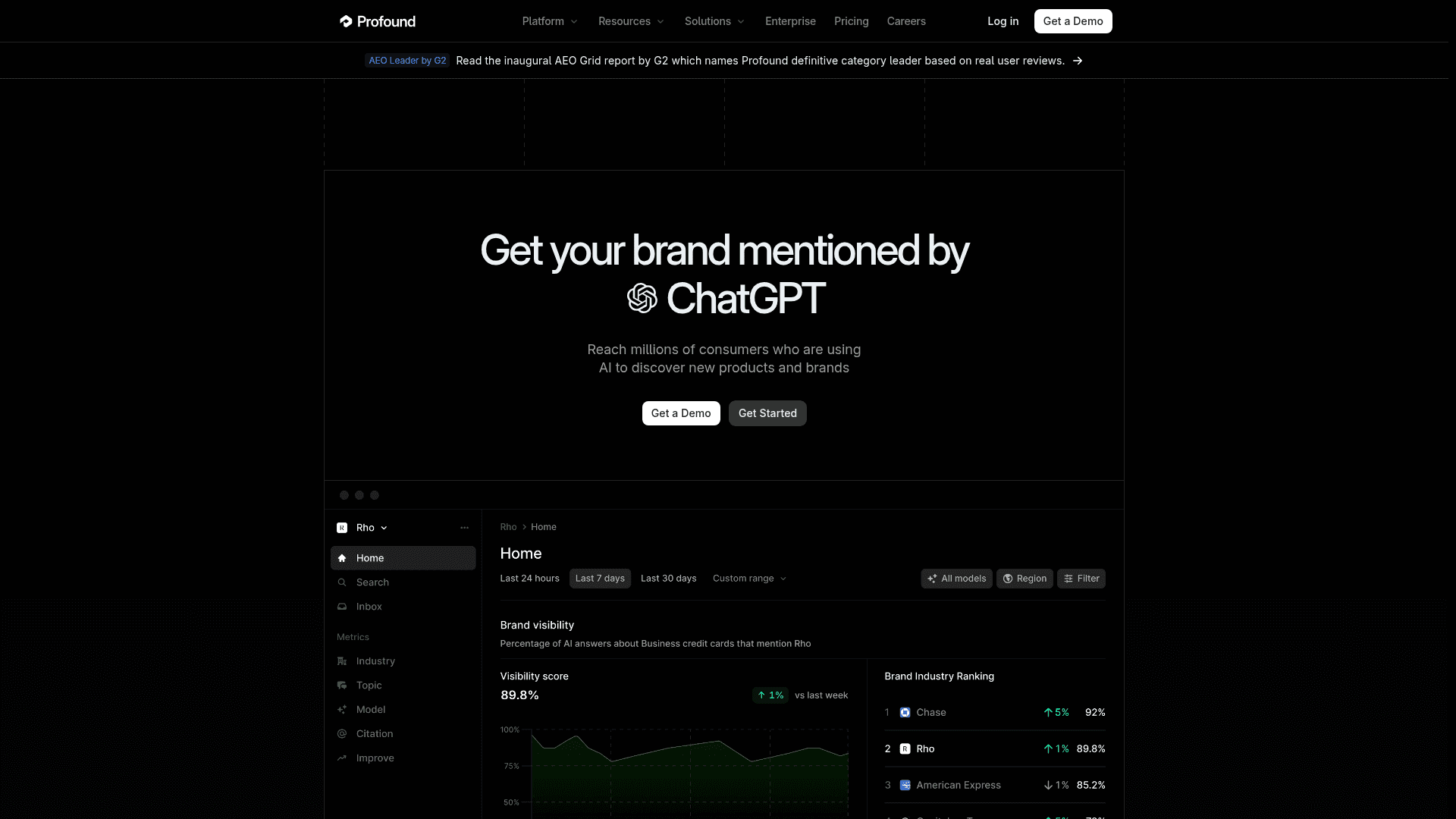
Profound offers the deepest documented view of a ChatGPT shopping result in this shortlist. Shopping Analysis captures the product tile, image, price, merchant link, buy button, prompt, and competing products, then lets a brand inspect specific SKUs and which retailer controls the route to purchase.
Profound’s own help documentation says Shopping Analysis is focused on ChatGPT Shopping; other commerce surfaces are still evolving. Its current pricing matrix marks ChatGPT Shopping “No” for the trial and “Yes” for Enterprise, so the seven-day trial is not a way to test this particular module. That gate makes Profound a better fit for a multi-brand retailer or consumer company with enough catalog value to justify procurement and a custom prompt panel. During the demo, ask Profound to show ten real shopper questions across price bands and use cases, the product tiles captured for each, stale prices or attributes, and merchant links. Request an export and a written scope for the Shopping module, prompt volume, regions, and agent usage before comparing it with a cheaper tracker.
Why it made the list
- Explicit SKU, shopping tile, and merchant-link analysis
- Full response context rather than only an aggregate mention score
- Product attribute checks that can reveal inaccurate AI descriptions
Watch the trade-off
Shopping Analysis is currently ChatGPT-focused and sits behind an Enterprise quote. The free trial does not include ChatGPT Shopping, so request a scoped demo with your products.
Get the next buyer guide
Practical tool research for founders and growth teams, delivered weekly.
Evertune
CPG brands comparing products, prices, and retail partners
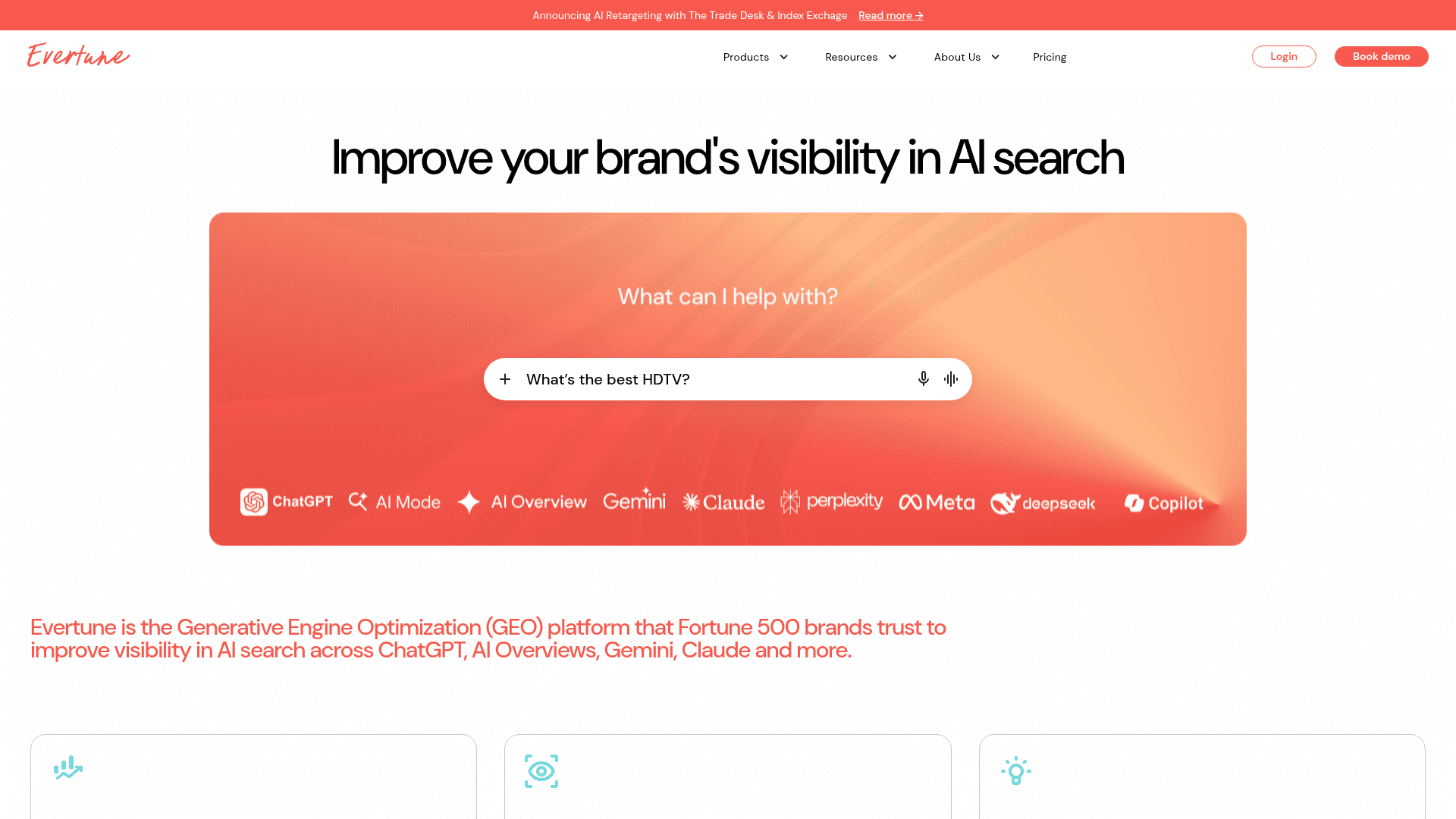
Evertune is the CPG pick when the brand sells through several retailers and needs to know which one AI names beside its product. Shopping Intelligence records ChatGPT product cards, price ranges, competitor products, and the retail partners receiving buy links.
The retailer view is what separates Evertune from a simple share-of-voice chart. If a product appears but the wrong seller gets the click, the team can inspect the listing, availability, price, and retailer relationship instead of rewriting its own blog. Evertune also reports shopping-trigger rate: how often the tracked questions produce product cards at all. Its pricing page lists a $60 monthly Starter billed annually, but ChatGPT shopping insights are on the $800 monthly Pro tier billed annually; using the $60 figure for this buying decision would be misleading. Evertune says the structured shopping report currently tracks ChatGPT, while broader brand monitoring spans other models. Ask for a report by SKU and retailer before signing an annual plan, and compare displayed prices with the actual merchant feeds.
Why it made the list
- Product and retailer analysis built for distributed consumer brands
- Shopping-trigger rate separates missing cards from missing brands
- Displayed-price comparison can surface inconsistent retail listings
Watch the trade-off
The relevant Shopping feature starts on the $800-per-month Pro plan billed annually. Its shopping-card coverage is ChatGPT-focused even though broader brand tracking covers more AI platforms.
Ecomtent
Amazon and Walmart sellers fixing product listings
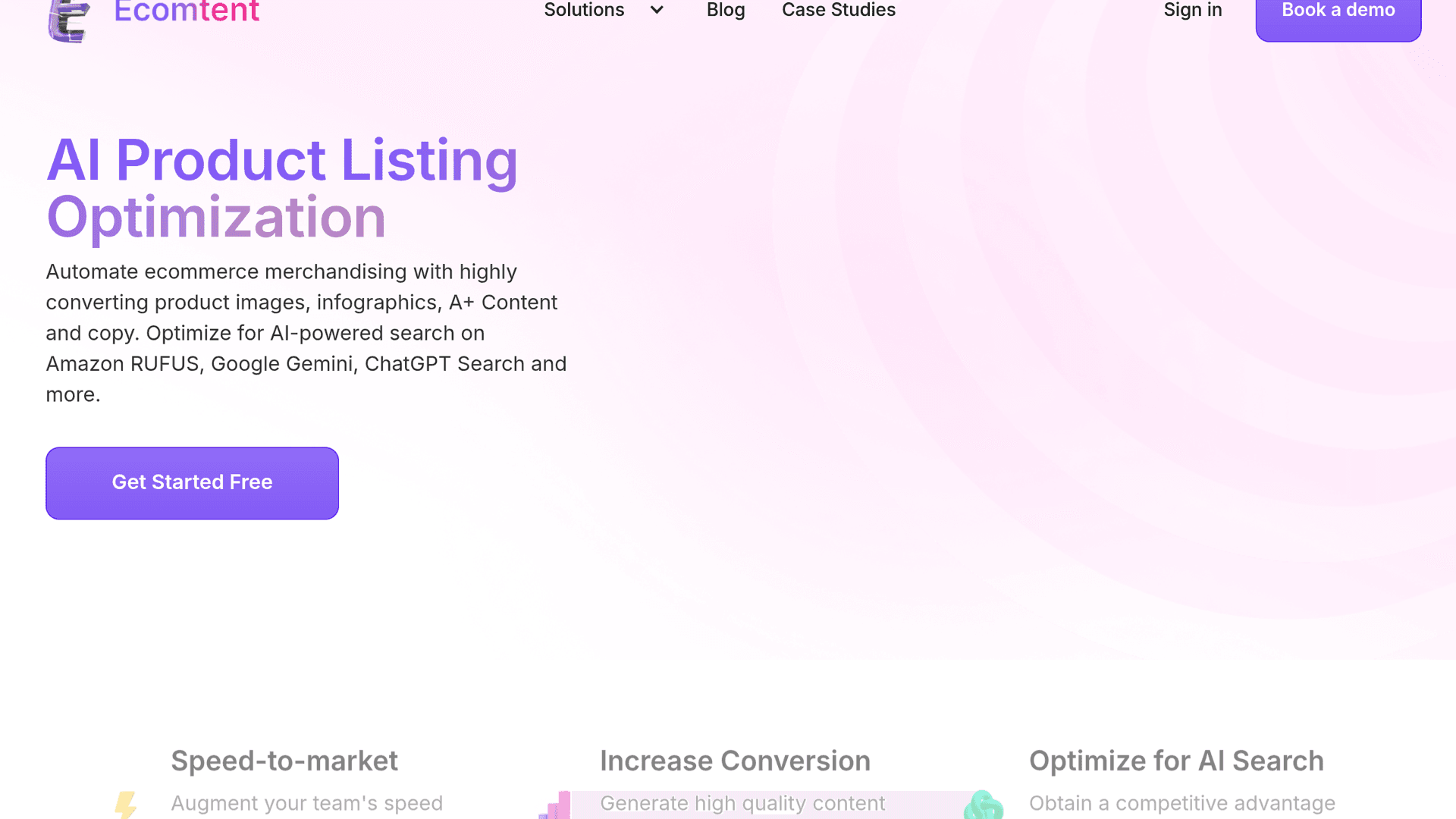
Ecomtent belongs on the list for a different purchase: producing and publishing marketplace product content, rather than only observing AI answers. Its Seller/Vendor tier combines visibility analytics with listing copy, images, infographics, and A+ content for up to 25 SKUs per month.
The published plan is $599 month to month, $510 on quarterly billing, or $450 per month on annual billing. It describes direct publishing to Amazon Seller and Vendor, Walmart, and other marketplaces, plus visibility into the questions Amazon Rufus asks on product pages and COSMO or Item Data Quality signals. For a CPG brand with a large marketplace catalog and thin listings, those are concrete tasks the team can ship. The category boundary is important: Ecomtent is not a substitute for a cross-model product-card monitor on your DTC site. Ask for the exact storefronts, number of listings, approval flow, localization, and proof that the generated copy matches the real product before using bulk publishing. A useful pilot is 25 representative SKUs with a before-and-after check of listing quality and sales.
Why it made the list
- Marketplace listing creation and direct publishing
- Rufus questions and product-data signals tied to individual listings
- Published per-SKU plan limits and monthly billing option
Watch the trade-off
Its strongest workflow is marketplace content production. Seller/Vendor includes only 25 SKUs per month, and claims about ranking improvements are vendor claims until tested on your catalog.
Yotpo Discover
Large commerce brands using catalog and shopper-review data
Yotpo Discover is built around the actual commerce catalog, categories, reviews, loyalty signals, and shopper language. It tracks product and brand visibility across AI answers and suggests onsite content and off-site customer-voice actions, making it a plausible option for an established brand already using Yotpo.
The product page explicitly says its initial release is designed for brands with more than $10 million in annual gross merchandise value and directs smaller brands to a waitlist. Discover pricing is custom rather than a published self-serve tier. Those two facts matter more than a broad feature list for a founder deciding whether to request a demo. If you qualify, ask Yotpo to map your catalog into product, category, and funnel views and show how its recommendations connect to the existing reviews and loyalty data you own. Its reported customer lifts are vendor-published case material; request raw prompt panels, dates, and order attribution before treating them as a forecast. A team without a rich review program or an eligible GMV level should start with a smaller monitoring tool and basic catalog hygiene.
Why it made the list
- Commerce-native product, category, and funnel tracking
- Review and loyalty data can inform shopper-language content
- Onsite and content agents turn gaps into proposed work
Watch the trade-off
Custom pricing and the stated $10M+ annual GMV initial-release target make it a poor first purchase for a small store. Public case results are vendor-reported.
OtterlyAI
Small stores checking AI answers and ChatGPT shopping cards
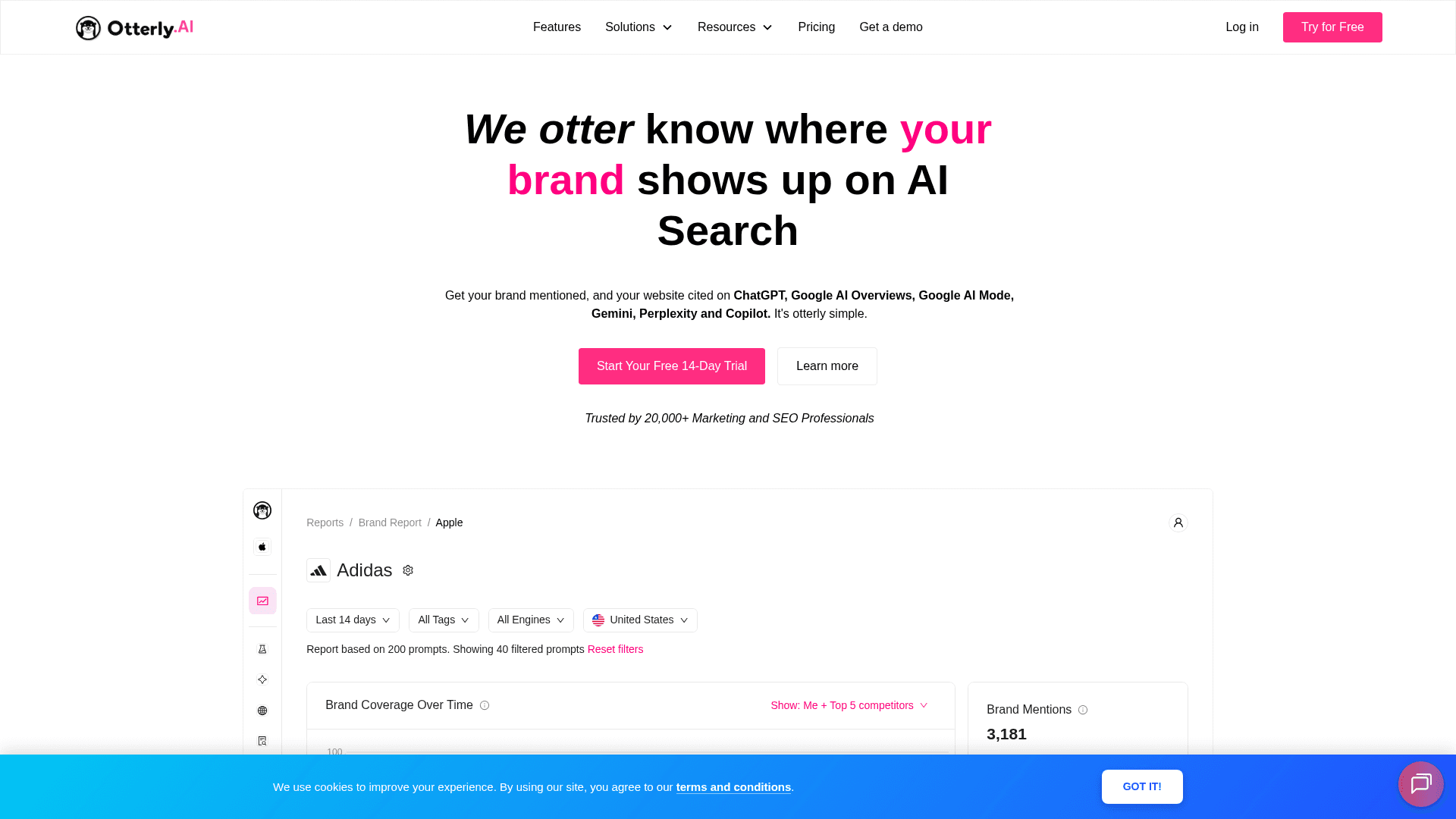
OtterlyAI is the affordable baseline for a store that needs to know whether AI answers name the brand, cite its pages, or show shopping cards for tracked prompts. Lite lists 15 prompts, daily tracking, and four included AI search engines at $29 per month, making it easier to test a small set of buyer questions before buying catalog-wide analytics.
Use the 15 prompts for actual purchase decisions: ingredient or material constraints, price bands, compatibility, alternatives, and product comparisons. OtterlyAI says ChatGPT Ads and Shopping Card tracking is included in every plan and appears inside its prompt and brand reports; you can inspect which products and competitors surface when a card appears. The ceiling is catalog depth: its public documentation describes prompt-level card inspection, not a Shopify or CSV catalog import with automatic SKU-level win rates or feed editing. A brand can appear in a text response and still lose the product tile or buy link. Standard is $189 per month for 100 prompts; Claude, Gemini, and Google AI Mode are add-ons, and a prompt repeated across four countries uses four slots.
Why it made the list
- Low published entry price for a brand-level baseline
- Daily AI answer, citation, and ChatGPT shopping-card monitoring
- A small prompt set can validate whether deeper shopping analytics are needed
Watch the trade-off
Shopping-card inspection follows tracked prompts; there is no documented catalog import, automatic SKU-level win-rate view, or feed editor. Extra engines, markets, and prompt volume change the cost.
How we chose and ranked these picks
We included products that can help an ecommerce or CPG team make a distinct AI-discovery purchase decision. The main ranking weights evidence at the product or catalog level, visibility into shopping cards and retailers, a path from finding a gap to shipping a fix, and the cost and accessibility of the required plan. A marketplace content tool and a low-cost brand monitor appear because those are real alternatives for specific teams; they are labeled by their actual job rather than presented as direct substitutes for SKU-level shopping analytics.
All feature and price statements come from vendors’ own pages checked October 31, 2026. We did not run paid accounts or independently verify result accuracy, causal lift, or case-study claims. We did not invent review scores for new modules with thin or mismatched review histories. The same “product visibility” label can mean a text mention, a product recommendation, or a shopping tile. Ask vendors for raw dated answers and the exact counting rule before comparing percentages.
How to choose
Define the unit you want to win
Write down whether the objective is a brand mention, a named product in a text answer, a ChatGPT shopping tile, a retailer buy link, an Amazon Rufus answer, or an AI-referred order. These are different units. Ask the seller to show one raw example of each unit it claims to track and the rule used to count it. A share-of-voice score cannot explain a wrong price in a product card.
Start with a small, repeatable shopper panel
Choose 10 to 20 questions across category, comparison, compatibility, ingredient or material, price, and availability intent. Include at least two markets if you sell internationally. Run the same panel before and after a catalog change and keep dated answer snapshots. Ask whether the platform samples a consumer interface, uses an API model, or mixes both; those methods do not necessarily return the same product cards.
Audit the catalog before buying a dashboard
Check one representative PDP, one variant-heavy product, and one frequently out-of-stock SKU. Compare visible page text, Product and Offer markup, Google Merchant Center feed data, Shopify catalog data, and third-party retailer listings for price, availability, identifiers, shipping, and descriptions. Google explicitly supports both on-page structured data and merchant feeds. OpenAI says Shopify catalog data is already integrated into ChatGPT for Shopify merchants. Fixing those basics is useful even if you never subscribe to a monitor.
Price the required module, not the vendor homepage
Request a quote for your SKU count, number of shopper prompts, AI engines, markets, refresh cadence, users, and exports. Confirm whether product-card capture is included at that tier. Profound’s trial lacks Shopping Analysis; Evertune’s low Starter tier lacks shopping insights; Yotpo Discover is custom-priced. The relevant price is the plan that answers your product question, not the cheapest plan a vendor advertises.
Measure orders with care
Keep AI-referred sessions and orders in your own analytics, then compare them with brand and SKU visibility. A product may be recommended without a trackable referral, and a referral may occur after other marketing touches. Treat a vendor’s attribution dashboard as a lead for investigation, not a causal revenue claim, unless the method and raw data support it.
Make the next choice with evidence
Get our weekly research on tools and growth decisions.
Frequently asked questions
What is the best AEO tool for an ecommerce brand with a Shopify catalog?
Peec AI is the most practical first shortlist for a Shopify brand that wants SKU-level AI shopping visibility at a published entry price. AthenaHQ is a stronger choice when the team also wants Shopify-connected content actions. Test both with the same products and shopping prompts before buying.
Which tool shows whether ChatGPT recommends my specific product rather than only mentioning my brand?
Peec AI, Profound Shopping Analysis, and Evertune Shopping Intelligence document product-level shopping views. Peec counts products in ChatGPT shopping carousels for its Shopping metric; Profound and Evertune also describe the displayed product, price, and merchant context. Ask each vendor to show the raw result for your SKU and confirm the plan that includes it.
Does a Shopify store need a paid AEO tool to appear in ChatGPT Shopping?
No. OpenAI says Shopify catalog data is already integrated into ChatGPT for Shopify merchants, and product results are selected for relevance rather than sold as ads. A paid tool can help measure or improve the work, but it cannot guarantee a recommendation. Keep the catalog and product pages accurate first.
What is the best AEO tool for a CPG brand sold by multiple retailers?
Evertune is the clearest shortlist choice when the buying question is which products and retail partners appear in ChatGPT shopping cards, and what prices are displayed. Yotpo Discover is an additional option for larger commerce brands that want catalog and shopper-review data in the same workflow.
What should an Amazon-first CPG brand buy for Rufus and marketplace listings?
Ecomtent is the specialized pick for Amazon and Walmart teams that need to improve and publish product listings. Its seller plan covers 25 SKUs per month and exposes Rufus questions and listing-quality signals. Use a separate tool if the main objective is to monitor ChatGPT product cards across retailers.
The decision
Start with the purchase question, then buy the view that answers it. Peec AI is the sensible first pilot for a Shopify or CSV catalog that needs product-level monitoring. AthenaHQ adds content execution. Profound and Evertune justify larger budgets when shopping tiles, displayed prices, and merchant links are the real decision. Ecomtent serves marketplace listing production; Yotpo Discover fits larger review-rich commerce brands; OtterlyAI offers a lean shopping-card spot check. Whichever platform you choose, preserve raw answers, check the actual product feed, and judge success against orders as well as mentions.
Stay Ahead of the Tool Curve
We research tools so you can make better decisions. Get the next buyer guide in your inbox.
Keep Reading
7 Best AI SEO Agencies for Ecommerce in 2026
Seven ecommerce AI SEO agencies compared by product data, Shopify and enterprise catalog work, AI answer measurement, published scope, and proof.
7 Best AI Search Visibility Tools for Agencies in 2026
Seven AI search visibility tools ranked for agencies by client workspaces, reporting, prompt economics, and the real cost of managing multiple brands.
10 Best AI Search Visibility Tools (AEO/GEO) for 2026 (Ranked for Founders, Not Brand Teams)
The 10 best AI search visibility tools for 2026 — LLMrefs, Ahrefs Brand Radar, Semrush AI Visibility Toolkit, Brandlight, AIClicks, Mangools, Hall, Evertune, Gauge, and SE Ranking. Ranked by founders-first criteria: starting price, AI engine coverage, and whether you can validate without a 6-figure budget.