
Best Product Hunt Alternatives for Launching Your Product in 2026
Product Hunt isn't your only option. We ranked the 10 best Product Hunt alternatives for indie hackers, SaaS founders, and makers who want real users—not just upvotes.
Key Takeaways
- Product Hunt is still the biggest launch platform, but its algorithm now favors established brands with existing audiences—making it harder for unknown indie hackers to break through.
- Niche platforms like DevHunt (developer tools), MicroLaunch (indie hackers), and Uneed (curated picks) often convert better because the audience is more targeted.
- Hacker News Show HN posts are free, unranked by followers, and can drive thousands of technical users in a single day—if your product is genuinely interesting.
- Combining 3–4 platforms in a coordinated launch week consistently outperforms a single Product Hunt launch.
- AppSumo is the only platform on this list that generates direct revenue on launch day—but it comes with margin trade-offs.
Product Hunt has been the default launch platform for startups since 2013. A top-5 finish can drive thousands of visitors, generate social proof, and put your product in front of investors. That part hasn't changed.
What has changed: the algorithm now heavily favors founders with existing audiences. Products from well-known makers and companies with large followings consistently outrank genuinely innovative indie products. The voting system is gamed by launch services that sell upvote packages. And the 24-hour launch window creates do-or-die pressure that doesn't suit every product or founder.
Here's the thing: Product Hunt isn't your only option—and for many indie hackers, it shouldn't even be your primary one. We researched and ranked 10 best Product Hunt alternatives, from developer-focused communities to revenue-generating marketplaces. Each serves a different purpose, and the smartest launch strategy uses 3–4 of them together.
Why Founders Are Looking Beyond Product Hunt
Follower-Dependent Rankings
Products from founders with large Twitter/X followings consistently outrank unknown indie products, regardless of quality. The meritocracy promise has eroded.
Upvote Manipulation
Services selling Product Hunt upvote packages are everywhere. This inflates rankings and makes organic competition harder for honest founders.
One-Day Pressure
The 24-hour launch window creates intense pressure that doesn't suit every product. Miss your day and you wait months. A bad day means wasted preparation.
Broad Audience
Product Hunt's audience is generalist. If you're building dev tools, B2B SaaS, or niche products, most visitors won't be your target customer.
Quick Comparison
| # | Platform | Best For | Audience | Price |
|---|---|---|---|---|
| 1 | Hacker News (Show HN) | Technical products | 10M+ monthly visitors | Free |
| 2 | Indie Hackers | Bootstrapped founders | 100K+ registered members | Free |
| 3 | Uneed | Curated exposure | Growing — 50K+ monthly visitors | Free (long queue), $30 to skip the queue |
| 4 | BetaList | Pre-launch / beta | 30K+ email subscribers, 500K+ monthly visitors | Free (standard queue), $129 for priority listing |
| 5 | MicroLaunch | Indie hackers | Growing indie community | Free to launch |
| 6 | DevHunt | Developer tools | Developer-focused community | Free |
| 7 | AppSumo | Revenue on day one | 1M+ active buyers | Revenue share (70/30 split — AppSumo keeps 70% on Marketplace deals) |
| 8 | SaaSHub | Long-term SEO | 4M+ monthly visitors | Free listing, promoted options available |
| 9 | Peerlist | Professional network | Growing professional network | Free |
| 10 | BetaPage | Free directory | Established directory | Free |

Hacker News (Show HN)
Best for Technical Products — Free, Meritocratic, Massive Reach
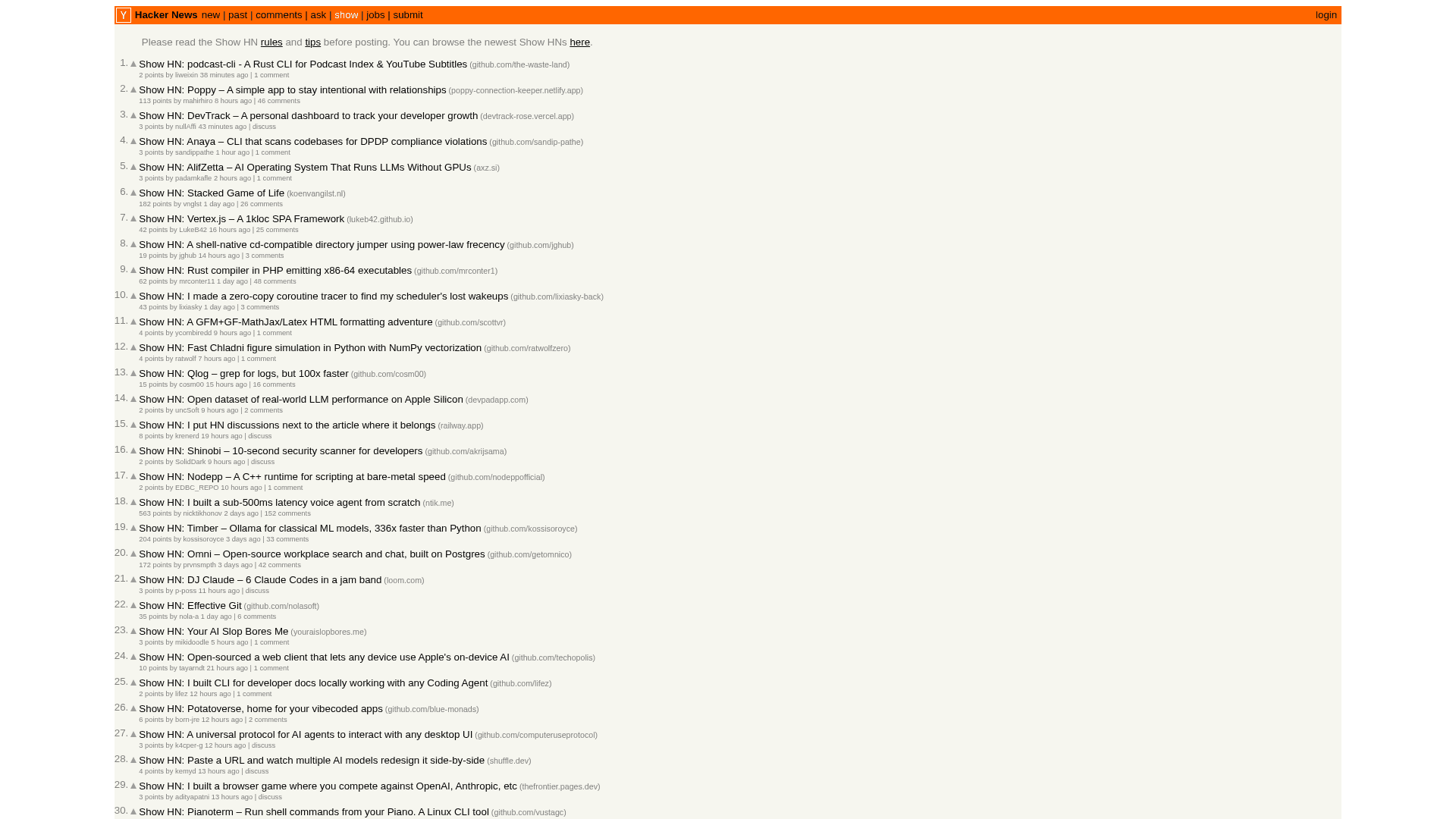
Show HN is Hacker News's dedicated format for sharing what you've built with one of the internet's most influential technical communities. Unlike Product Hunt, there's no follower count, no scheduled launch windows, and no algorithm favoring repeat launchers. Your post succeeds or fails based on one thing: whether the HN community finds it genuinely interesting.
A front-page Show HN post can drive 10,000–50,000 visits in 24 hours from developers, CTOs, and technical decision-makers—the exact people who adopt tools. There's no cost, no application, and no social capital required. Dropbox, Stripe, and countless YC startups launched here first. The downside: HN is brutally honest. If your product isn't ready, they'll tell you.
Key Features
- Zero cost — completely free to post
- Pure meritocracy — no follower counts or social graph advantages
- Massive technical audience — developers, founders, CTOs
- Real-time feedback from experienced builders
- High domain authority backlink for SEO
- No application or approval process required
Pricing
Free
Best For
Technical products, developer tools, open-source projects, and anything that app...
Community
10M+ monthly visitorsPros
- Largest engaged technical audience on the internet
- Completely free and meritocratic — no pay-to-play
- Can drive 10K–50K visits from a single post
- High-quality feedback from experienced developers
Cons
- Unpredictable — great products can get ignored
- Audience skews heavily technical — not ideal for consumer products
- Brutally honest feedback can be demoralizing for early-stage products
Indie Hackers
Best Community for Bootstrapped Founders — Show + Tell + Revenue Transparency
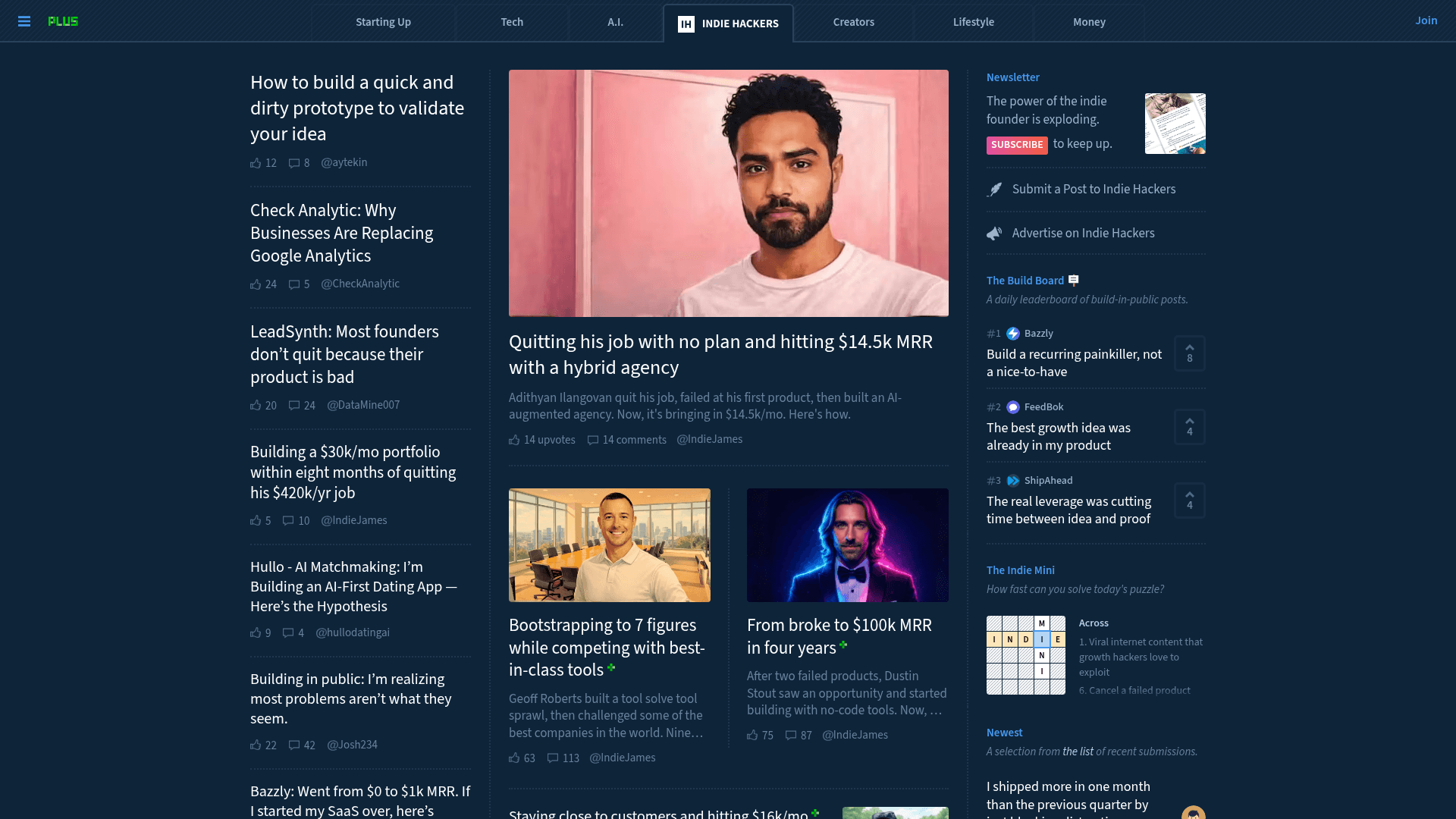
Indie Hackers is the largest online community specifically for bootstrapped founders and indie makers. Founded by Courtland Allen and acquired by Stripe, it combines product showcases with revenue interviews, transparent growth stories, and an active forum of builders who actually use and pay for tools. It's less about launch day fireworks and more about building an audience over time.
Product Hunt gives you a 24-hour window. Indie Hackers gives you an ongoing community. Posts about your product, milestone updates, and revenue transparency threads can drive sustained traffic for weeks. The audience is specifically bootstrapped founders—people who are both potential users and potential evangelists. The revenue interviews (with real numbers) give you credibility you can't buy.
Key Features
- Product showcase pages with descriptions and links
- Revenue-transparent founder interviews
- Active forum with 100K+ registered members
- Milestone and growth update posts
- Built-in audience of bootstrapped founders
- Stripe-backed platform with long-term stability
Pricing
Free
Best For
Bootstrapped SaaS products, indie projects, and founders who want ongoing commun...
Community
100K+ registered membersPros
- Audience is specifically indie founders — your exact target market
- Ongoing visibility, not just a one-day launch spike
- Revenue transparency builds credibility and trust
- Active community provides feedback, support, and early adopters
Cons
- No structured "launch day" format like Product Hunt
- Community engagement has declined since Stripe acquisition
- Smaller audience than Product Hunt or Hacker News
Uneed
Best Rising Platform — Curated Daily Picks With Genuine Founder Support
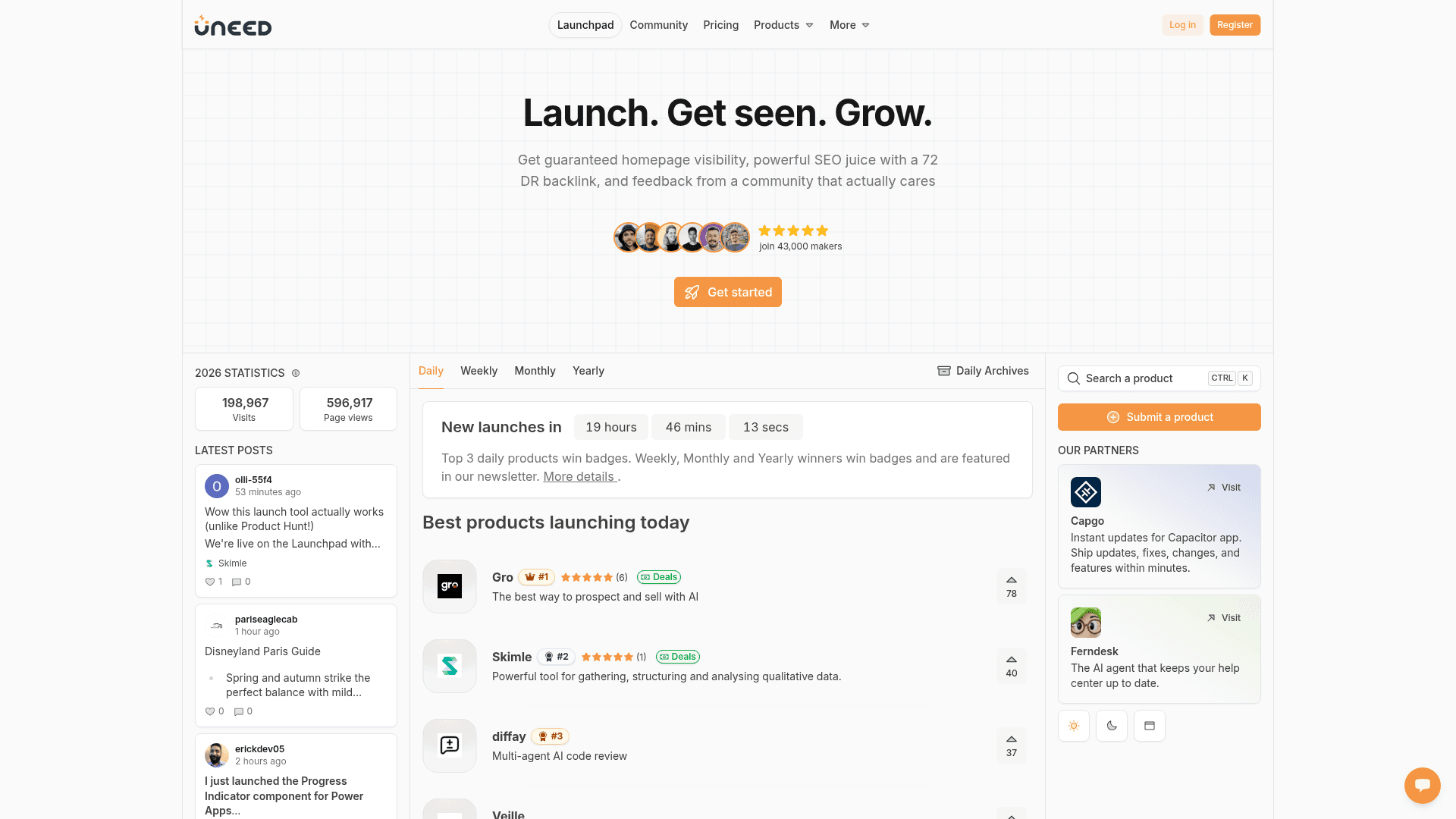
Uneed is a curated product discovery platform that has quickly become one of the most talked-about Product Hunt alternatives. Built by a solo founder, it features daily curated product picks, a supportive community, and a transparent submission process. Unlike Product Hunt's algorithm-driven rankings, Uneed's editorial curation means smaller products get genuine spotlight time.
Product Hunt's biggest complaint is that established brands with large followings dominate the rankings. Uneed flips this by hand-curating products, which gives unknown founders a real shot at being featured. The community is smaller but highly engaged—people on Uneed are specifically looking for new tools to try. Multiple indie hackers have reported better conversion rates from Uneed features than from Product Hunt top-5 finishes.
Key Features
- Hand-curated daily product features
- Transparent submission and review process
- Supportive community of early adopters
- SEO-optimized product listings with DR 72 dofollow backlinks
- Launch analytics and referral tracking
- Active social media promotion of featured products
Pricing
Free (long queue), $30 to skip the queue
Best For
Indie hackers and early-stage founders who want curated exposure without competi...
Community
Growing — 50K+ monthly visitorsPros
- Curated format gives unknown products real visibility
- Higher conversion rates reported vs. Product Hunt
- DR 72 dofollow backlinks boost SEO significantly
- Founder-friendly community that genuinely tries new products
Cons
- Smaller audience than established platforms
- Curation means no guaranteed feature — your product must fit
- Relatively new platform — still building its reputation
BetaList
Best for Pre-Launch — Build Your Waitlist Before You Ship
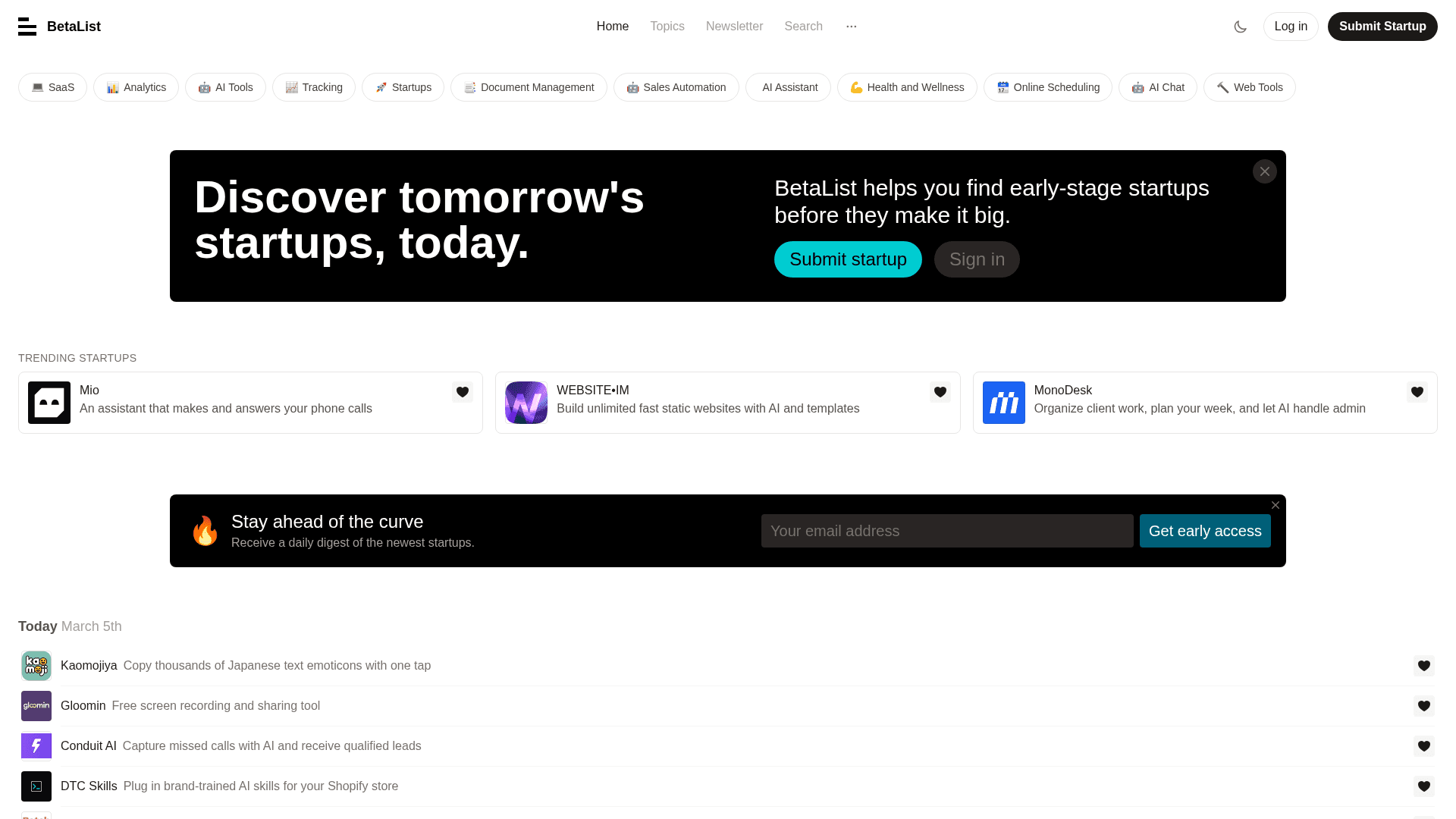
BetaList is the OG product launch platform for early-stage startups. Founded in 2011, it specializes in pre-launch and beta products—connecting founders with early adopters who are specifically looking to try new, unpolished tools. If Product Hunt is for launch day, BetaList is for the months before launch when you need beta testers and waitlist signups.
Most Product Hunt alternatives focus on launch day. BetaList focuses on the pre-launch phase—when you need validation, beta testers, and early signups more than you need upvotes. A BetaList feature has driven 500–2,000 email signups for early-stage products. The audience expects rough edges, which means less pressure to have a polished product.
Key Features
- Dedicated to pre-launch and beta-stage products
- Email subscriber base of early adopters
- Featured listings with product descriptions and links
- Newsletter distribution to 30K+ subscribers (DR 74 backlink)
- Category filtering for targeted discovery
- Track record since 2011 — proven platform
Pricing
Free (standard queue), $129 for priority listing
Best For
Pre-launch startups looking for beta testers, waitlist signups, and early valida...
Pros
- Perfect for pre-launch — audience expects early-stage products
- Can drive 500–2,000 email signups from a single feature
- Established platform with 13+ years of track record
- Email newsletter amplifies reach beyond the website
Cons
- Long free submission queue — can take weeks to be featured
- $129 priority listing fee is steep for bootstrapped founders
- Less effective for mature/launched products
Want More Recommendations?
Subscribe for curated tool picks every week.
MicroLaunch
Best for Indie Hackers — Built by Founders, for Founders
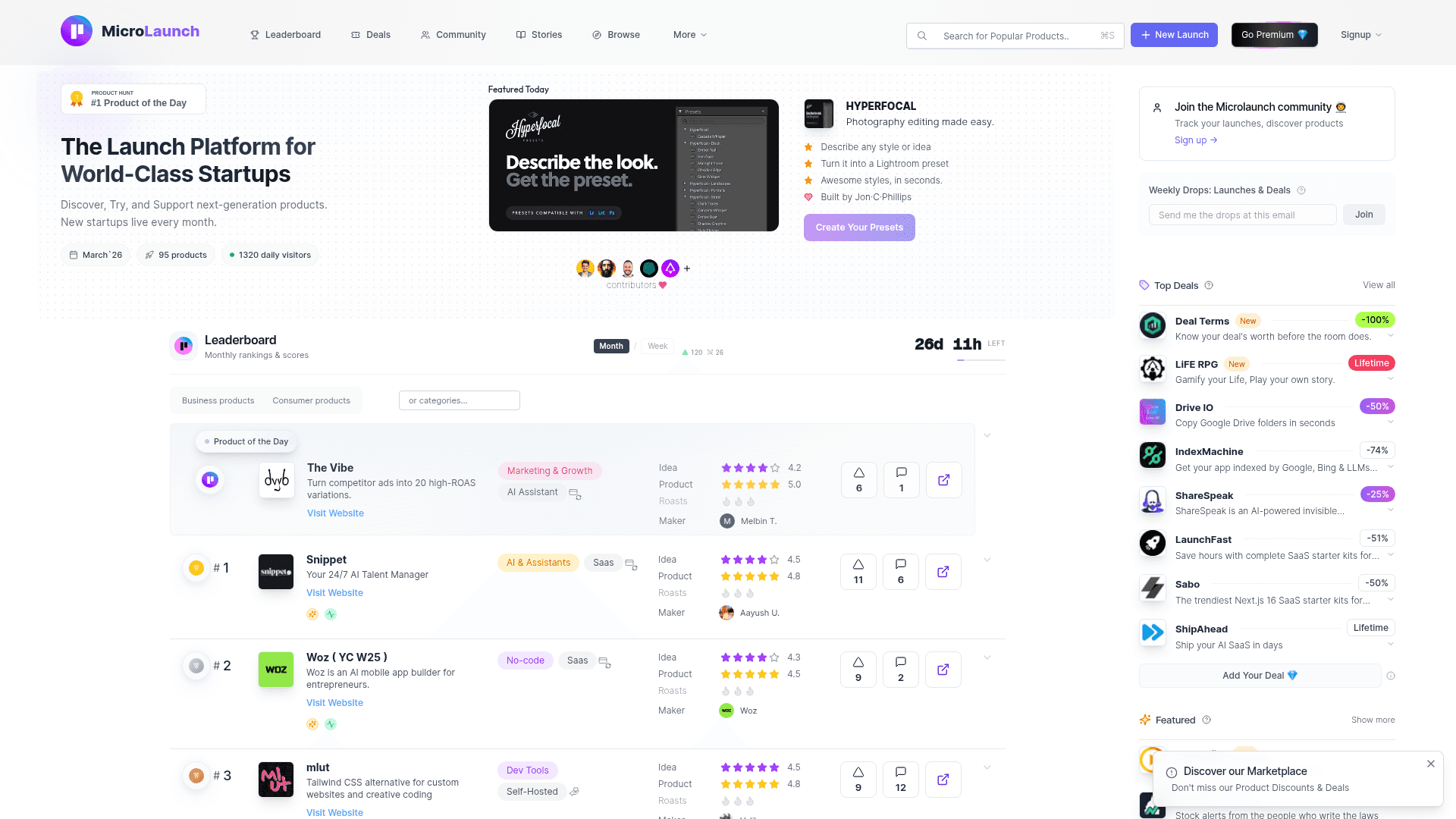
MicroLaunch is a product launch platform built specifically for indie hackers and solo founders. It features daily launches with community voting, detailed product pages, and a growing community of makers who actively support each other's launches. The platform was created as a direct response to frustrations with Product Hunt's algorithm favoring established players.
MicroLaunch was purpose-built for the indie hacker community. Every feature—from the voting system to the product pages—is designed for solo founders launching bootstrapped products. There's no corporate presence drowning out indie products. The community actively rallies around launches, and the founders who use it are the same people who might become your customers.
Key Features
- Month-long launch window with community voting (not just 24 hours)
- Detailed product pages with descriptions and media
- Active community of indie hackers and makers
- Launch day email notifications to subscribers
- Founder-first platform — no big brand advantage
- Free submission process
Pricing
Free to launch
Best For
Solo founders and indie hackers launching bootstrapped SaaS, tools, and side pro...
Community
Growing indie communityPros
- Purpose-built for indie hackers — no competing with big brands
- Supportive community that actively tries new products
- Free to use with no premium tiers required
- Growing platform with momentum in the indie hacker space
Cons
- Smaller audience than Product Hunt or Hacker News
- Newer platform — less established reputation
- Limited to indie hacker audience — not ideal for B2B enterprise
DevHunt
Best for Developer Tools — The "Product Hunt for Devs"
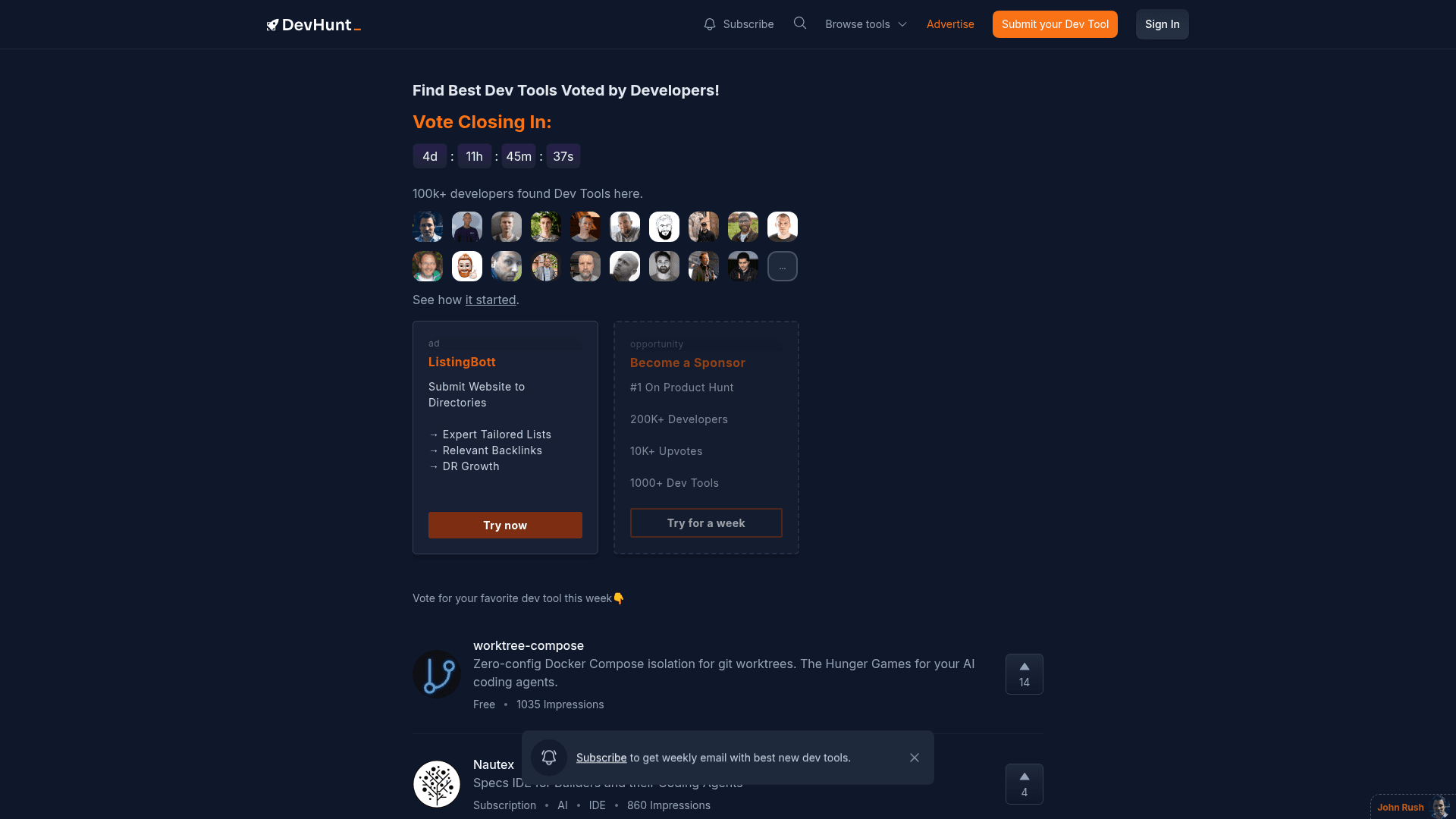
DevHunt is a launch platform built exclusively for developer tools and open-source projects. Backed by Madkudu, it features weekly launches, GitHub integration, and a community of developers who are specifically looking for new dev tools to adopt. If you're building for developers, this is where your audience already hangs out.
Product Hunt's audience is broad—consumer apps, AI tools, design resources, productivity apps. If you're launching a developer tool, most of that audience isn't relevant. DevHunt solves this by focusing exclusively on dev tools. Every person browsing DevHunt is a potential user. GitHub authentication ensures the community is real developers, not marketers farming upvotes.
Key Features
- Focused exclusively on developer tools and open-source
- GitHub-authenticated community of real developers
- Weekly launch cycles with community voting
- Integration with GitHub for star counts and activity
- Open-source project itself — transparent and community-driven
- SEO-optimized product pages with backlinks
Pricing
Free
Best For
Developer tools, CLI tools, APIs, SDKs, and open-source projects.
Community
Developer-focused communityPros
- Audience is 100% developers — no noise from non-technical users
- GitHub authentication ensures genuine developer community
- Free and open-source platform
- High intent audience — people are specifically looking for dev tools
Cons
- Only relevant for developer-facing products
- Smaller total audience than general platforms
- Weekly launch cycles mean less frequent exposure windows
AppSumo
Best for Revenue on Day One — Lifetime Deals That Drive Thousands of Sales
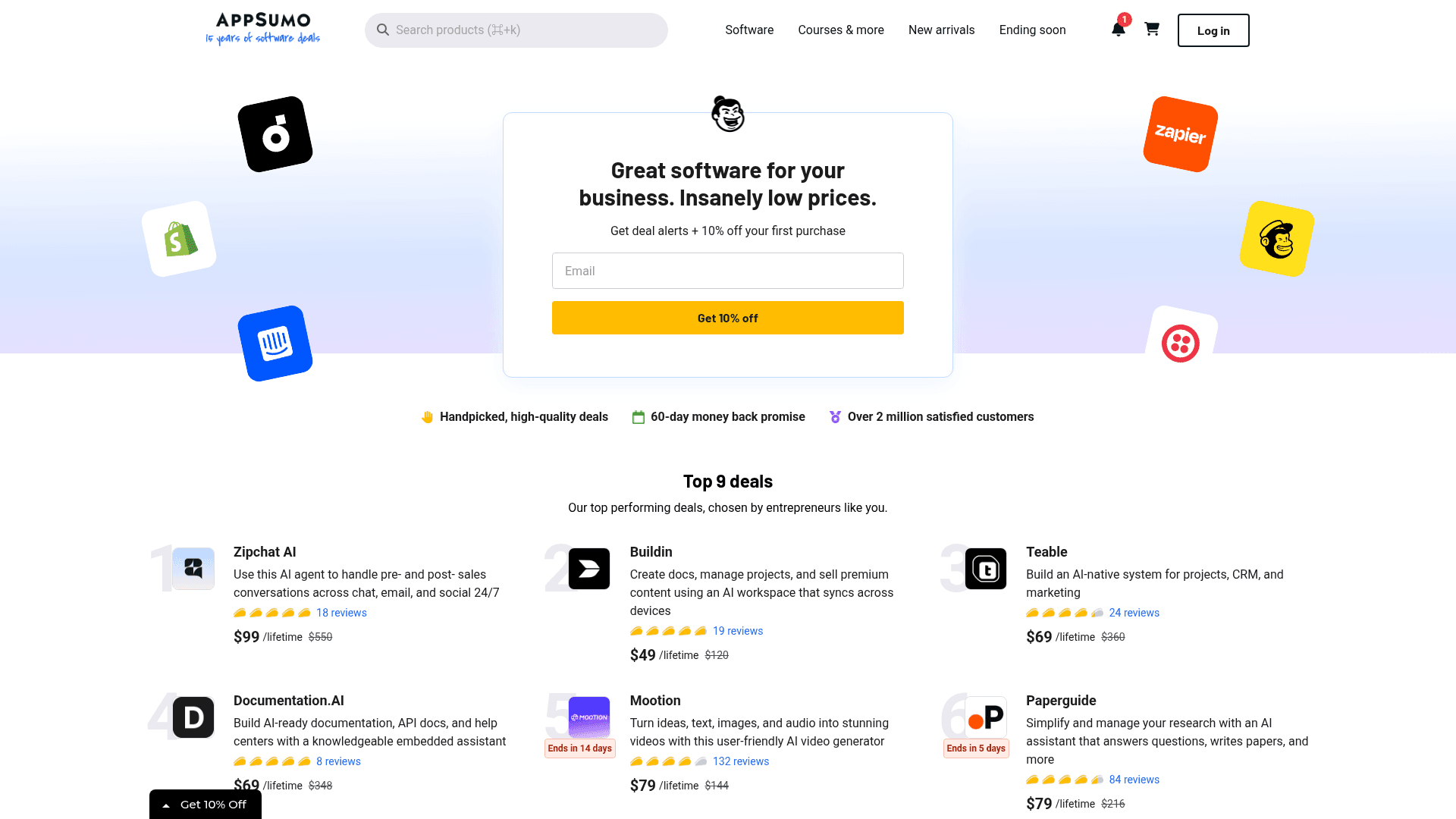
AppSumo is a digital marketplace that sells lifetime deals (LTDs) on software products. With over 1 million active buyers, it's the only platform on this list that generates direct revenue on launch day. AppSumo takes a revenue share, but in return you get access to their massive email list, marketing support, and a community of deal-hunting early adopters.
Every other platform on this list drives traffic and signups. AppSumo drives revenue. A successful AppSumo launch can generate $10,000–$100,000+ in the first month through lifetime deal sales. The trade-off: you're selling lifetime access at a deep discount, which impacts long-term recurring revenue. For bootstrapped founders who need cash flow to fund development, it's a powerful option.
Key Features
- 1M+ active buyers with purchase intent
- Marketing support including email promotion to entire list
- Lifetime deal format drives high-volume sales
- Built-in review system for social proof
- AppSumo Select program for top products
- Revenue share model — you only pay when you sell
Pricing
Revenue share (70/30 split — AppSumo keeps 70% on Marketplace deals)
Best For
SaaS products that need immediate revenue and can sustain lifetime deal pricing.
Community
1M+ active buyersPros
- Only platform that generates direct revenue on launch day
- Access to 1M+ buyers with credit cards ready
- Marketing and email promotion included
- Social proof from reviews and sales numbers
Cons
- Heavy revenue share — AppSumo keeps 70% on marketplace deals
- Lifetime deals can cannibalize recurring revenue
- Deal-hunter audience may not convert to full-price later
SaaSHub
Best for Long-Term SEO — Your Product Listed Among Alternatives Forever
SaaSHub is a software discovery platform that organizes products as alternatives to each other. Think of it as an "AlternativeTo" specifically for SaaS products. When someone searches "[competitor] alternative" on Google, SaaSHub pages frequently rank on page one. Getting listed means ongoing organic traffic from people actively looking for tools like yours.
Most launch platforms give you a traffic spike that fades within a week. SaaSHub gives you a permanent listing that continues to drive traffic through SEO. When someone Googles "Notion alternative" or "Slack alternative," SaaSHub pages rank. Your product shows up alongside established competitors, which builds credibility and drives high-intent traffic from people actively evaluating tools.
Key Features
- Product listed as alternative to competitors
- High-ranking pages for "[product] alternative" searches (DR 76)
- User reviews and ratings system
- Detailed product pages with features and pricing
- Category-based browsing and discovery
- Free listing with optional promoted placement
Pricing
Free listing, promoted options available
Best For
SaaS products that want long-term organic discovery through "alternative to X" s...
Community
4M+ monthly visitorsPros
- Permanent SEO value — drives traffic for months/years
- High-intent visitors actively searching for alternatives
- Free to list your product
- Builds credibility by appearing alongside established competitors
Cons
- No "launch day" event — passive discovery only
- Smaller community engagement than active launch platforms
- Promoted listings can push organic listings down
Peerlist
Best for Professional Network — Launch Where Builders Have Profiles
Peerlist is a professional network for tech workers that includes a product launch feature called Peerlist Launch. Unlike Product Hunt where you launch to anonymous upvoters, on Peerlist you launch to a network of verified professionals with real profiles, work histories, and peer endorsements. The result is higher-quality engagement and more meaningful connections.
Product Hunt upvotes are largely anonymous. Peerlist launches get engagement from verified professionals—people with real names, job titles, and portfolios. This means the feedback is more actionable, the connections are more valuable, and the social proof carries more weight. For B2B products especially, having verified CTOs and engineers engage with your launch is worth more than 500 anonymous upvotes.
Key Features
- Verified professional profiles with work history
- Product launch feature with community engagement
- Peer endorsements and skill verification
- Project showcase pages integrated with profiles
- Weekly spotlight features for top launches
- Growing professional network of tech builders
Pricing
Free
Best For
B2B products, professional tools, and founders who value quality connections ove...
Community
Growing professional networkPros
- Verified professional audience — not anonymous upvoters
- Higher quality engagement and feedback
- Professional networking value beyond just the launch
- Free to use with no premium requirements
Cons
- Smaller audience than established launch platforms
- Still building launch feature momentum
- Less effective for consumer-facing products
BetaPage
Best Free Directory — Simple Listing With No Gatekeeping
BetaPage is a startup discovery platform where founders can list their products for free. It's straightforward—submit your product, get a listing page, and appear in the directory for early adopters to discover. There's no complex ranking algorithm, no follower-dependent visibility, and no premium-only features required to get noticed.
Not every launch needs a grand strategy. Sometimes you just need your product listed in as many relevant directories as possible. BetaPage is a reliable, free directory that adds to your overall launch footprint. The SEO backlink alone is worth the 10 minutes it takes to submit. Combined with other platforms on this list, it contributes to a wider discovery net.
Key Features
- Free product listing with no approval barriers
- Startup directory browsed by early adopters
- Simple submission process — under 10 minutes
- Category-based browsing for targeted discovery
- SEO backlink from established domain
- Newsletter features for select products
Pricing
Free
Best For
Any startup looking to maximize directory presence and SEO backlinks as part of ...
Community
Established directoryPros
- Completely free with no gatekeeping
- Quick and easy submission process
- SEO backlink from established domain
- Part of a broader discovery strategy
Cons
- Lower traffic than dedicated launch platforms
- No community engagement or voting mechanics
- Passive directory — no launch event format
How to Choose the Right Launch Platform
The best platform depends on what you're building, who you're building for, and what stage you're at. Here's the decision framework:
If you're building a developer tool...
Start with Hacker News (Show HN) and DevHunt. Both audiences are 100% developers. Add Product Hunt as a secondary channel for broader visibility.
If you're a bootstrapped indie hacker...
Go with MicroLaunch + Indie Hackers + Uneed. These communities are your people—they'll try your product, give feedback, and spread the word.
If you're pre-launch and need beta testers...
BetaList is purpose-built for this. The audience expects rough edges and is looking to be early adopters. Combine with BetaPage for extra directory coverage.
If you need revenue fast...
AppSumo is the only platform that generates direct sales. The margin trade-off is real, but if you need cash to fund development, 1M+ buyers with purchase intent is hard to beat.
The Multi-Platform Launch Strategy
Don't pick one platform—combine 3–4 for maximum impact. Here's a proven sequence:
Day 1: Primary Launch
Product Hunt or Hacker News (Show HN). This is your highest-traffic day. Focus all energy here.
Day 2: Indie Communities
Post on Indie Hackers, MicroLaunch, and Uneed. Share your launch story and day-1 results.
Day 3\u20134: Niche Platforms
Submit to DevHunt (if dev tool), SaaSHub, Peerlist, and BetaPage. These build long-term SEO value.
Week 2+: Revenue Channel
If applicable, launch an AppSumo deal to convert launch momentum into direct revenue.
Stay Ahead of the Tool Curve
We research dozens of tools so you don't have to. Get our top picks and insider insights delivered weekly.
Frequently Asked Questions
Is Product Hunt still worth it in 2026?
Yes, but with caveats. Product Hunt still has the largest single-day audience for product launches, and a top-5 finish can drive 5,000–15,000 visits. However, the platform increasingly favors products from founders with large existing followings—making it harder for unknown indie hackers to rank well. The best strategy is to use Product Hunt as one part of a multi-platform launch, not your only channel.
What is the best free Product Hunt alternative?
Hacker News (Show HN) is the best free alternative for technical products. It has the largest audience, is completely meritocratic, and requires zero social capital. For non-technical products, Indie Hackers and MicroLaunch are both free and have engaged communities. Uneed is also free to submit and offers high-quality curated exposure.
How many platforms should I launch on simultaneously?
We recommend 3–4 platforms in a coordinated launch week. Start with your primary platform (Product Hunt or Hacker News) on day one, then roll out to secondary platforms (Uneed, MicroLaunch, DevHunt) over the next 2–3 days. This extends your launch momentum and reaches different audience segments without spreading yourself too thin.
Which Product Hunt alternative has the highest conversion rate?
Niche platforms like DevHunt (developer tools) and Uneed (curated picks) consistently report higher conversion rates than broader platforms. The logic is simple: a smaller, targeted audience converts better than a large, general one. Multiple founders have reported 3–5x better conversion rates from niche platform features vs. Product Hunt top-10 finishes.
Can I launch on Product Hunt and other platforms at the same time?
Yes, and you should. There's no exclusivity requirement on any of these platforms. The key is to stagger your launches by 1–2 days so you can give each platform focused attention. Launch on Product Hunt first (it's most time-sensitive with the 24-hour cycle), then roll out to Indie Hackers, Uneed, and others over the following days.
What makes a Product Hunt alternative "good"?
Three things: audience relevance (are your target users on this platform?), engagement quality (do visitors actually try products or just browse?), and lasting value (does the listing continue driving traffic after launch day?). Platforms like SaaSHub score high on lasting value through SEO, while Hacker News and MicroLaunch score high on engagement quality.
The Bottom Line
Product Hunt is still valuable, but it's no longer the only game in town. The founders getting the best launch results in 2026 are using multiple platforms strategically—matching each platform's audience to their product's target customer.
Hacker News is our top pick for technical products—free, meritocratic, and capable of driving massive traffic from the right audience. Indie Hackers is the go-to for bootstrapped founders who want community, not just traffic. Uneed is the rising star offering curated exposure that actually converts. And AppSumo is unmatched if you need revenue on launch day.
The smartest move? Don't pick one. Use our multi-platform launch strategy to combine 3–4 platforms across a launch week. Different audiences, different formats, compounding results.
And launches are only the ignition—for what a distribution engine compounds into, see our Postiz case study: the open-source scheduler that repositioned for AI agents and 7x'd to $145K MRR in four months.
For more on building your launch strategy, check out our Best Micro SaaS Ideas for Solopreneurs.
Sources
- Hacker News Show HN Guidelines
- Indie Hackers Community
- Uneed — Curated Product Discovery
- BetaList — Startup Discovery Platform
- MicroLaunch — Launch Platform for Indie Hackers
- DevHunt — Developer Tool Launch Platform
- AppSumo Marketplace
- SaaSHub — Software Alternatives and Reviews
- Peerlist — Professional Network for Builders
- BetaPage — Startup Directory
Stay Ahead of the Tool Curve
We research dozens of tools so you don't have to. Get our top picks and insider insights delivered weekly.
Trusted by indie hackers and startup founders
Keep Reading
10 Best Vibe Coding Tools for Indie Hackers in 2026
The 10 best vibe coding tools for indie hackers in 2026. Voibe, Cursor, Claude Code, Lovable, Bolt.new, v0, Windsurf, Replit, Copilot, and Cline — real pricing, trade-offs, and the order to set them up.
Best Places to Sell Your Startup or Micro-SaaS in 2026
The 11 best marketplaces and brokers to sell your bootstrapped startup, micro-SaaS, or indie hacking project. From free listings on Microns to premium exits on Acquire.com, verified deals on TrustMRR, and Reddit communities.
OpenClaw Side Hustle Ideas: Start Earning This Weekend
The best OpenClaw side hustle ideas for 2026. From selling ClawHub skills to freelance agent builds, these AI agent side hustles can start generating income in days, not months.